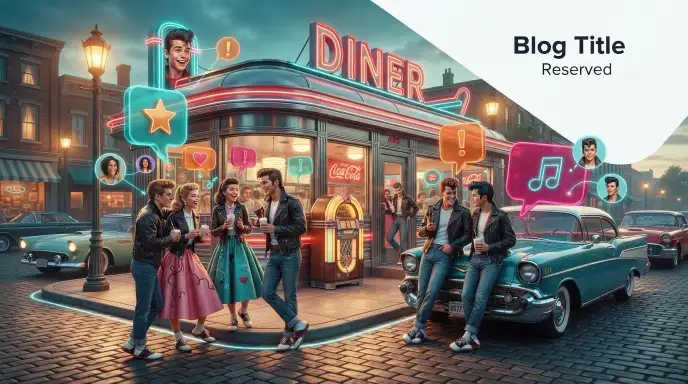
Discover popular 1950s slang words, their meanings, and everyday uses to understand the language, culture, and conversations of the 1950s era.
The 1950s was a decade full of change, excitement, and creativity. Rock and roll music, drive-in theaters, classic cars, television, and youth culture all became a big part of everyday life. Along with these changes came a fresh way of speaking. Teenagers and young adults started using fun, informal words that made conversations more expressive and memorable.
Many of these slang terms reflected friendship, fashion, music, dating, and everyday experiences. While some expressions disappeared over time, others became part of modern English. Words like “cool” and “dig” are still recognized around the world today.
if you’re reading a classic novel, watching an old movie, writing historical fiction, or simply curious about vintage language, learning slang in the 1950s offers a fascinating look at how people communicated during one of America’s most memorable decades.
What Is Slang in the 1950s?
Slang in the 1950s refers to informal words and phrases that became popular during the decade. These expressions were commonly used by teenagers, musicians, students, and young adults in casual conversations.
Unlike formal English, slang was creative, playful, and constantly changing. It helped people express personality, fit in with friends, and describe everyday experiences in a more interesting way.
Simple Definition
1950s slang is informal language that people used in everyday conversations during the 1950s.
Why It Became Popular
After World War II, teenagers gained more independence than previous generations. New music, television, and movies inspired young people to develop their own style of speaking.
The History of 1950s Slang
The language of the 1950s reflected major cultural changes happening across the United States. Economic growth, popular entertainment, and youth culture all influenced the words people used every day.
Post-War America
After World War II ended, many families experienced greater financial stability. New neighborhoods, schools, and shopping centers created opportunities for young people to spend more time together, allowing slang to spread quickly.
The Rise of Teen Culture
The 1950s marked one of the first decades when teenagers became an important part of popular culture. Fashion, music, and entertainment were increasingly designed with young audiences in mind.
Rock and Roll Changed Everything
Artists such as Elvis Presley, Chuck Berry, and Little Richard inspired a generation of young listeners. Their music introduced exciting new expressions that soon became everyday slang.
Television and Hollywood
Television entered millions of homes during the 1950s. Popular actors and performers introduced catchy phrases that audiences copied in daily conversations.
Why the 1950s Produced So Much Slang
Several cultural trends made this decade one of the most influential periods for informal language.
Music Inspired New Expressions
Rock and roll encouraged energetic, confident, and playful ways of speaking.
Young People Wanted Their Own Identity
Teenagers enjoyed creating words that separated their generation from adults.
Cars Became Part of Everyday Life
Driving wasn’t just transportation. Cruising with friends became a favorite activity and inspired many slang expressions.
School Helped Spread New Words
Students heard and repeated slang every day, helping new expressions travel from one community to another.
Most Popular 1950s Slang Words
Cool
Meaning
A compliment for something fashionable, impressive, enjoyable, or socially accepted.
Tone and Context
“Cool” was one of the biggest compliments someone could receive. It was positive and friendly.
Examples
- “Your new jacket looks cool.”
- “That song is really cool.”
- “He’s one of the coolest students at school.”
Dig
Meaning
To understand, appreciate, or enjoy something.
Tone and Context
People often used “dig” when they liked music, ideas, or someone’s personality.
Examples
- “I really dig this band.”
- “Do you dig what I’m saying?”
- “Everyone digs the new diner.”
Square
Meaning
Someone who avoided new trends or seemed old-fashioned.
Tone and Context
Calling someone a “square” was usually playful but could also sound insulting.
Examples
- “Don’t be such a square.”
- “He never wants to dance because he’s a square.”
- “Everyone else joined except the square.”
Daddy-O
Meaning
A friendly nickname for a stylish or confident man.
Tone and Context
The phrase was popular in jazz clubs and among young people.
Examples
- “Thanks for the help, Daddy-O.”
- “See you later, Daddy-O.”
Cat
Meaning
A fashionable or interesting person, especially someone involved in music.
Tone and Context
The word was especially popular among jazz musicians before becoming common in everyday speech.
Examples
- “He’s one cool cat.”
- “That cat can really play the guitar.”
baffling
Meaning
Very exciting, surprising, or unbelievable.
Tone and Context
Unlike its literal meaning, this slang use usually described something fun.
Examples
- “That dance was wild.”
- “The concert was absolutely baffling.”
Neat
Meaning
Something attractive, enjoyable, or impressive.
Tone and Context
People often used “neat” instead of “great” or “excellent.”
Examples
- “That’s a neat idea.”
- “Your bicycle looks neat.”
Hip
Meaning
Someone who understood the latest music, fashion, or trends.
Tone and Context
Being called “hip” meant you were modern and knowledgeable.
Examples
- “She’s hip to all the latest songs.”
- “He’s one hip musician.”
Hep
Meaning
Another word for fashionable or well-informed.
Tone and Context
“Hep” became popular before “hip” eventually became more common.
Examples
- “He’s hep to the newest styles.”
- “Only the hep crowd knows that club.”
Solid
Meaning
Reliable, dependable, or excellent.
Tone and Context
People used “solid” to compliment someone’s character or performance.
Examples
- “She’s a solid friend.”
- “That was a solid performance.”
More Popular 1950s Slang Words
Sharp
Meaning
A person who looked stylish, dressed well, or appeared intelligent.
Tone and Context
“Sharp” was a compliment and often referred to someone’s appearance.
Examples
- “You look sharp in that suit.”
- “She’s always dressed sharp.”
- “That’s a sharp-looking car.”
Doll
Meaning
An attractive or kind young woman.
Tone and Context
The word was usually used as a friendly compliment and was common in casual conversations during the 1950s.
Examples
- “She’s a real doll.”
- “Everyone says she’s a doll.”
Bird
Meaning
A casual slang term for a young woman.
Tone and Context
The expression was informal and mostly used among friends.
Examples
- “Who’s that bird over there?”
- “He met a nice bird at the dance.”
Dreamboat
Meaning
A very attractive person, especially someone admired for their appearance.
Tone and Context
Teen magazines and movies often used this word to describe popular actors and singers.
Examples
- “Everyone thought he was a dreamboat.”
- “She’s talking about her favorite dreamboat from Hollywood.”
Beat
Meaning
Very tired or exhausted.
Tone and Context
People often used this after work, school, or sports.
Examples
- “I’m beat after football practice.”
- “We walked all day, and now I’m beat.”
Cruisin’
Meaning
Driving around town for fun, often with friends and music playing.
Tone and Context
Cruising became a popular social activity during the 1950s.
Examples
- “We’re cruisin’ downtown tonight.”
- “They spent Saturday evening cruisin’ together.”
Threads

Meaning
Clothes or fashionable outfits.
Tone and Context
Young people often used this word when talking about new fashion.
Examples
- “I bought new threads for the party.”
- “Those are some cool threads.”
Pad
Meaning
A person’s home or apartment.
Tone and Context
Friends often invited each other to their pad after school or work.
Examples
- “Come over to my pad later.”
- “We’re watching a movie at his pad.”
Chick
Meaning
An informal word for a young woman.
Tone and Context
This word was common in the 1950s but may sound dated today. In modern conversations, some people consider it too informal, so it is best used when discussing historical slang.
Examples
- “He met a chick at the diner.”
- “That chick loves rock and roll.”
Gas
Meaning
Something very funny, exciting, or enjoyable.
Tone and Context
If someone called an event “a gas,” they meant everyone had a great time.
Examples
- “The dance was a gas.”
- “That movie was a real gas.”
Popular 1950s Slang Phrases
Besides single words, people also used many memorable phrases that reflected the fun and energetic spirit of the decade.
Cool Cat
Meaning
A stylish, confident, and fashionable person.
Tone and Context
This phrase was especially popular among jazz musicians before becoming widely used by teenagers.
Examples
- “He’s one cool cat.”
- “Everyone wanted to be the cool cat at school.”
What’s Buzzin’, Cousin?
Meaning
A playful way to ask someone how they’re doing or what’s happening.
Tone and Context
Friends often used this greeting in a cheerful way.
Examples
- “Hey, what’s buzzin’, cousin?”
- “Long time no see. What’s buzzin’?”
Keep Cool
Meaning
Stay calm and don’t panic.
Tone and Context
People said this to comfort someone during a stressful situation.
Examples
- “Keep cool. Everything will work out.”
- “Just keep cool during the interview.”
Cut It Out
Meaning
Stop doing something annoying or unnecessary.
Tone and Context
Parents, teachers, and friends all used this phrase.
Examples
- “Cut it out before someone gets hurt.”
- “Cut it out and pay attention.”
Made in the Shade
Meaning
Everything is going perfectly or successfully.
Tone and Context
People used this expression when life felt easy or successful.
Examples
- “After getting the job, I was made in the shade.”
- “We finished early, so we’re made in the shade.”
Flip Your Lid
Meaning
To become extremely angry or lose your temper.
Tone and Context
Usually used in a humorous way rather than a serious one.
Examples
- “Dad flipped his lid when he saw the broken window.”
- “She nearly flipped her lid over the surprise.”
Burn Rubber
Meaning
To drive away very quickly, causing the tires to spin.
Tone and Context
The phrase became popular because of the growing car culture of the 1950s.
Examples
- “The driver burned rubber after the race.”
- “They burned rubber leaving the parking lot.”
Knock Yourself Out
Meaning
Go ahead and enjoy yourself or do whatever you want.
Tone and Context
A friendly way of giving someone permission.
Examples
- “Want another cookie? Knock yourself out.”
- “If you’d like to help, knock yourself out.”
That’s a Gas
Meaning
Something is extremely enjoyable or entertaining.
Tone and Context
The phrase was often used after parties, dances, or fun events.
Examples
- “That concert was a gas.”
- “We had a gas at the carnival.”
Slang in School During the 1950s
Schools played a major role in spreading new slang. Students heard fresh expressions every day and quickly adopted them.
Talking With Friends
Teenagers used slang to sound relaxed and fit in with their classmates.
During Class
Students often whispered slang expressions before lessons or during lunch breaks.
School Dances
Many popular slang words became even more common during dances and social events where teenagers gathered.
Sports and Clubs
Athletes and club members also helped spread new expressions throughout their schools.
Slang About Dating in the 1950s
Dating became an important part of teenage life during the 1950s. Young people used fun and lighthearted slang to compliment each other, talk about relationships, and make conversations feel more relaxed.
Compliments
Many slang words were used instead of formal compliments.
Examples
- “She’s a real doll.”
- “He looks sharp today.”
- “They’re both cool cats.”
Romantic Nicknames
Couples often used affectionate nicknames in everyday conversations.
Examples
- Dreamboat
- Doll
- Baby
- Sweetheart
Asking Someone Out
Teenagers often invited someone to go dancing, watch a movie, or enjoy a milkshake at a diner.
Examples
- “Would you like to go cruisin’ tonight?”
- “Let’s catch a movie after school.”
Slang About Cars in the 1950s
Cars were a symbol of freedom and independence. It is no surprise that many slang terms focused on driving and automobiles.
Hot Rod
Meaning
A customized car built for speed and performance.
Example
“His hot rod always turns heads.”
Burn Rubber
Meaning
To accelerate quickly so the tires leave marks on the road.
Example
“They burned rubber after the traffic light changed.”
Cruisin’
Meaning
Driving around town for fun without a specific destination.
Example
“We spent Friday night cruisin’ with friends.”
Heap
Meaning
An old car in poor condition.
Example
“My first car was an old heap, but I loved it.”
Slang in Music During the 1950s
Music played a huge role in spreading slang across the country. Rock and roll, rhythm and blues, and jazz all influenced the way people spoke.
Rock and Roll
The popularity of rock and roll introduced exciting new expressions that matched the energy of the music.
Example
“That band is really cool.”
Jazz Culture
Jazz musicians helped popularize words like “cool,” “cat,” and “dig” before they became part of everyday speech.
Dance Culture
Young people often used slang while talking about dances and parties.
Examples
- “Let’s rock.”
- “That dance was a gas.”
- “Everyone had a great time.”
Slang in Movies and Television
Hollywood movies and television shows helped introduce 1950s slang to millions of people.
Classic Movies
Popular films featured stylish characters who used memorable slang.
Example
“He’s one cool cat.”
Television Shows
Television made it easier for new expressions to spread from one part of the country to another.
Hollywood’s Influence
Actors and musicians inspired young people to copy both fashion and language.
Funny 1950s Slang Words
Some expressions from the 1950s sound humorous today but were completely normal at the time.
Ankle Biter
Meaning
A playful nickname for a small child.
Example
“The ankle biters are playing outside.”
Greaser
Meaning
A teenager known for slicked-back hair, leather jackets, and a love of rock and roll.
Example
“He dressed like a classic greaser.”
Ginchy
Meaning
Excellent, fashionable, or impressive.
Example
“That’s a ginchy outfit.”
Wet Rag
Meaning
Someone who spoils the fun by complaining.
Example
“Don’t be a wet rag. Join us.”
1950s Slang Still Used Today
Some slang from the 1950s remains part of modern English.
Cool
Still one of the most common compliments in English.
wild
Often used to describe surprising or exciting situations.
Sharp
A popular compliment for someone’s appearance.
Dig
Still used occasionally to mean understand or enjoy.
Neat
Although less common than before, many people still say “That’s neat.”
Slang That Has Mostly Disappeared
Some expressions are now mainly heard in classic movies or books.
Daddy O
Rarely used outside retro events.
Ginchy
Almost never used in modern conversations.
Square
Sometimes used jokingly but much less often than before.
Bird
This slang term for a young woman has largely fallen out of everyday American English.
How 1950s Slang Influenced Modern English
The creativity of 1950s slang continues to shape everyday language.
It Made Casual English More Expressive
Many modern slang words follow the same pattern of being short, memorable, and easy to say.
It Influenced Pop Culture
Classic movies, television shows, and music still introduce younger generations to vintage slang.
It Inspired Future Generations
Every generation creates its own slang, but many ideas behind modern expressions can be traced back to the 1950s.
1950s Slang vs Modern Slang
Communication
People in the 1950s learned slang from friends, school, radio, movies, and television. Today, slang spreads much faster through social media, videos, and online communities.
Popular Topics
1950s slang focused on cars, music, dancing, dating, and fashion. Modern slang often reflects internet culture, gaming, memes, and digital communication.
Speed of Change
Slang in the 1950s often remained popular for years. Today, new expressions can become popular and disappear within weeks.
Tips for Using 1950s Slang Today
Learn the Context
Understanding the original meaning helps you use vintage slang naturally.
Use It in Creative Writing
These expressions can make historical stories and scripts feel authentic.
Enjoy Classic Movies
Watching films from the 1950s is one of the best ways to hear these words used naturally.
Have Fun With It
Vintage slang can add personality to conversations, especially during retro-themed events or discussions about language history.
Frequently Asked Questions
What was the most popular slang in the 1950s?
Some of the best-known terms include “cool,” “dig,” “Daddy-O,” “cat,” “square,” “sharp,” “dreamboat,” and “that’s a gas.”
What does “Daddy-O” mean?
It was a friendly nickname for a stylish or confident man and was commonly used in casual conversations.
What does “square” mean in 1950s slang?
A square was someone considered old-fashioned, serious, or not interested in new trends.
Is “cool” really from the 1950s?
The word existed earlier, but it became widely popular during the 1950s because of jazz, rock and roll, and youth culture.
Do people still use 1950s slang today?
Yes. Words like “cool,” and sometimes “dig” are still used, while many others are mostly remembered through classic films and books.
Final Thoughts
Slang in the 1950s captured the excitement of a generation shaped by music, movies, cars, and new opportunities. These expressions gave people a fun and creative way to connect with one another, and many continue to influence modern English. if you enjoy language history, classic films, or vintage culture, exploring 1950s slang offers a unique window into one of the most memorable decades in modern history
Read more about!
I Got You Slang: Meaning, Uses, Examples, and Texting Guide
Brother in Italian Slang: Meaning and Uses
Chulo in Spanish Slang: Meaning, Uses, and Examples

Daniel Carter – Short Bio (First Person)
Hi, I’m Daniel Carter, a slang language researcher and content writer. I enjoy exploring internet slang, texting abbreviations, and modern expressions to make them easy for everyone to understand. My goal is to explain slang in clear, simple English with real-life examples so readers can communicate confidently online and stay up to date with the latest language trends.