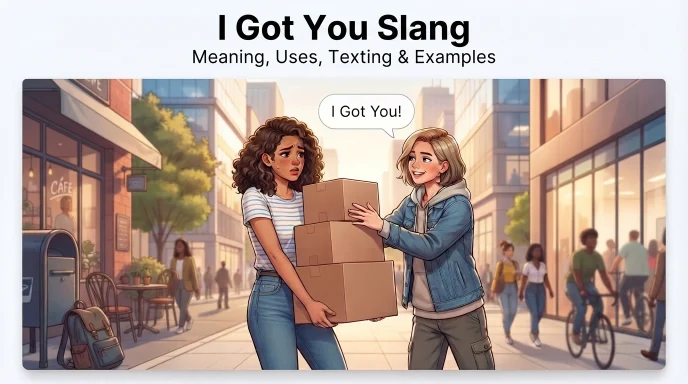
Have you ever received a message saying, “I got you,” and wondered what it really means? This common English slang appears in text messages, social media, gaming, and everyday conversations. Depending on the situation, it can mean “I’ll help you,” “I understand you,” or “I’ll take care of it.”
The phrase “I got you slang” is popular because it sounds friendly, supportive, and casual. Native English speakers use it with friends, family, coworkers, and teammates. Learning this expression can help students, travelers, bloggers, and English learners understand real conversations more naturally.
In this guide, you’ll learn the meaning of “I got you,” where it came from, when to use it, common examples, texting meanings, and similar slang expressions. By the end, you’ll know exactly how to use this phrase with confidence.
What Does “I Got You” Mean in Slang?
In slang, “I got you” means that someone is ready to help, support, protect, understand, or handle something for another person.
The exact meaning depends on the conversation.
Examples:
- “Don’t worry about dinner. I got you.”
- “Need a ride? I got you.”
- “I got you, I know what you mean.”
It is a positive phrase that shows kindness, confidence, or reassurance.
Simple Meaning of “I Got You”
In simple English, “I got you” can mean:
- I’ll help you.
- I’ll take care of it.
- I understand you.
- You can count on me.
- I’ve got your back.
People often use it instead of saying long sentences because it feels natural and friendly.
Origin of “I Got You”
The expression comes from everyday American English.
Originally, “I’ve got you” meant physically catching or protecting someone. Over time, people started using it in a figurative way to mean offering help, understanding, or support.
The phrase became even more popular through:
- Hip-hop culture
- Movies
- TV shows
- Online gaming
- Social media
- Text messaging
Today, it is used worldwide by English speakers.
Why Is “I Got You” So Popular?
Reasons people like this phrase include:
- It is short and easy.
- It sounds friendly.
- It shows support.
- It works in many situations.
- It is common in texting.
- It feels more natural than formal English.
Because of its flexibility, it has become one of the most used casual English expressions.
Different Meanings of “I Got You” in Slang
The phrase can have several meanings depending on the context.
I’ll Help You
This is the most common meaning.
Examples:
- “You forgot your wallet? I got you.”
- “Need someone to cover your shift? I got you.”
I Understand You
Sometimes it means you understand someone’s feelings or opinion.
Examples:
- “I got you. That situation sounds frustrating.”
- “I know exactly what you mean. I got you.”
I’ll Pay for It
Friends often use the phrase when paying for food, drinks, or tickets.
Examples:
- “Put your money away. I got you.”
- “Lunch is on me. I got you.”
I’ll Handle It
It can also mean someone will take care of a task.
Examples:
- “Don’t stress about the report. I got you.”
- “I’ll answer the emails. I got you.”
I’ve Got Your Back
Sometimes the phrase shows loyalty and support.
Examples:
- “No matter what happens, I got you.”
- “You’re not alone. I got you.”
“I Got You” in Text Messages
In texting, “I got you” is one of the most common supportive replies.
Example conversations:
Friend: Can you send me the notes?
Reply: I got you.
Friend: Can you pick me up after work?
Reply: Yeah, I got you.
Friend: I don’t understand this homework.
Reply: I got you. I’ll explain it.
In text messages, the phrase usually means:
- I’ll help.
- Sure.
- No problem.
- I’m on it.
- I understand.
“I Got You” on Social Media
People use the phrase in comments, captions, and direct messages to show encouragement.
Examples:
- “Need advice? I got you.”
- “Don’t give up. I got you.”
- “We’re all here for you. I got you.”
It creates a positive and supportive tone.
“I Got You” in Gaming
Gamers often use the phrase during multiplayer matches.
Examples:
- “Enemy behind you—I got you!”
- “Need healing? I got you.”
- “I’ll cover this side. I got you.”
Here, it usually means helping teammates or providing protection.
“I Got You” in Everyday Conversations
You can hear this phrase almost anywhere.
Examples include:
At school:
- “Forgot your pen? I got you.”
At work:
- “I’ll finish that task. I got you.”
With family:
- “Need groceries? I got you.”
With friends:
- “Want coffee? I got you.”
Because it is so flexible, it fits many casual situations.
Is “I Got You” Formal or Informal?
“I got you” is an informal expression.
It works well in:
- Text messages
- Casual conversations
- Social media
- Gaming
- Talking with friends
- Family discussions
Avoid using it in very formal situations such as:
- Academic writing
- Business reports
- Legal documents
- Professional emails to clients
Instead, use phrases like:
- I’ll assist you.
- I’ll take care of it.
- I understand your concern.
- I’ll handle the matter.
- I’m happy to help.
Common Variations
Native speakers often use similar versions.
- I gotcha.
- I’ve got you.
- Got you.
- I got your back.
- We got you.
- Don’t worry, I got you.
- Yeah, I got you.
- Bro, I got you.
- I got ya.
- I got you covered.
All of these express support, understanding, or willingness to help.
Common Examples of “I Got You”
Here are examples from everyday life.
Helping a Friend
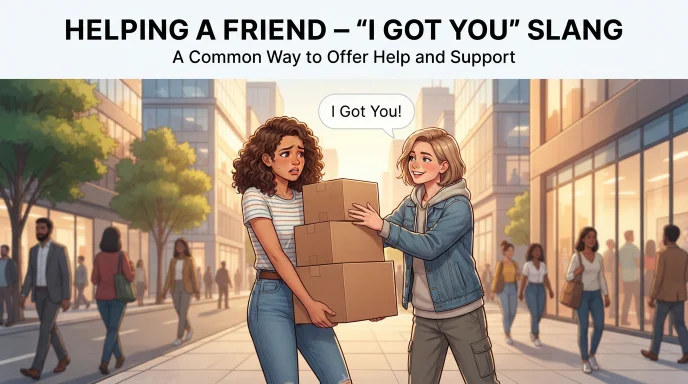
Friend: “Can you help me move tomorrow?”
Reply: “Of course. I got you.”
Buying Coffee
Friend: “How much do I owe you?”
Reply: “Nothing. I got you.”
Understanding Someone
Friend: “I’m really stressed about work.”
Reply: “I got you. It has been a tough week.”
Teamwork
Coworker: “Can you finish this while I’m in a meeting?”
Reply: “I got you.”
Online Gaming
Teammate: “I’m low on health.”
Reply: “I got you.”
Similar Slang Expressions
If you like using “I got you,” you may also hear these phrases:
| Slang | Meaning |
| I’ve got your back | I’ll support or protect you. |
| No worries | It’s not a problem. |
| Say less | I understand and I’ll do it. |
| You bet | Absolutely. |
| I’m on it | I’ll handle it right away. |
| Count on me | You can trust me. |
| Leave it to me | I’ll take care of it. |
| No problem | Happy to help. |
| For sure | Definitely. |
| Anytime | I’m always willing to help. |
Common Mistakes to Avoid
Many English learners misunderstand this phrase. Here are a few common mistakes.
Thinking It Always Means “I Understand”
While it can mean “I understand,” it often means “I’ll help” or “I’ll take care of it.” Always look at the context.
Using It in Formal Writing
“I got you” is casual. In formal situations, choose more professional wording.
Using It with Strangers
Although it isn’t rude, it sounds more natural with friends, family, or people you know well.
Frequently Asked Questions
What does “I got you” mean in slang?
It usually means “I’ll help you,” “I understand you,” or “I’ll take care of it.”
Is “I got you” a positive phrase?
Yes. It usually shows kindness, support, loyalty, or reassurance.
Can “I got you” mean “I understand”?
Yes. In many conversations, it means you understand what someone is saying or feeling.
Is “I got you” common in texting?
Yes. It is one of the most popular casual replies in text messages and social media chats.
Can I use “I got you” at work?
You can use it with coworkers in casual conversations. For formal communication, use more professional language.
Is “I got you” American slang?
It is strongly associated with American English, but today it is widely used in many English-speaking countries.
Final Thoughts
“I got you” is one of the most useful slang expressions in modern English. It can mean offering help, showing understanding, paying for someone, handling a task, or simply letting another person know they are supported.
Because it is short, friendly, and easy to remember, you’ll hear it everywhere—from text messages and social media to workplaces, schools, and online games. Learning how to use “I got you” naturally will make your English sound more fluent and conversational.
if you’re chatting with friends, helping a teammate, or comforting someone, this simple phrase is a great way to show that you’re there for them.
Read more about!
Eggplant Slang: Meaning, Uses, and Examples
Spanish Slang Book: Common Words and Phrases
Chulo in Spanish Slang: Meaning, Uses, and Examples

Hi, I’m Ethan Carter. I write easy-to-read articles about slang, texting abbreviations, and digital communication. My goal is to make modern English simple and useful for students, professionals, and anyone curious about internet language.