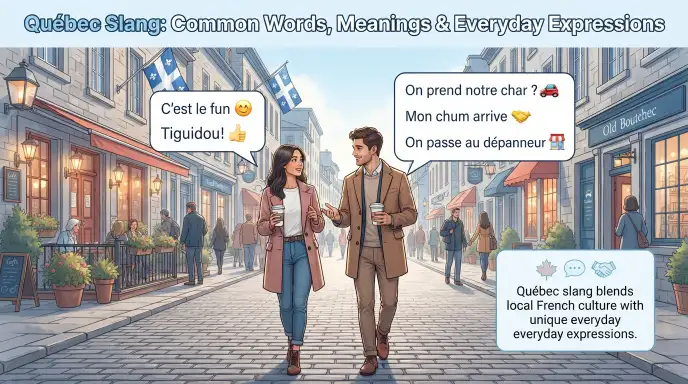
Quebec slang is a unique part of Canadian French that reflects the province’s history, culture, and everyday life. While standard French is spoken across many countries, people in Québec often use informal words and expressions that are rarely heard elsewhere.
If you’re travelling to Québec, learning French, or chatting with native speakers online, you’ll likely come across slang that sounds unfamiliar. Many Quebec slang terms have evolved over generations, while others mix French and English to create expressions that are unique to the region.
Understanding Quebec slang isn’t just about learning new vocabulary. It also helps you understand local humour, casual conversations, social media posts, films, music, and everyday communication more naturally.
Quebec slang refers to informal words and expressions commonly used in Québec, Canada. Most terms come from Québec French, while others combine French and English influences. These expressions are widely used in everyday conversations, local media, and social platforms, making them an important part of modern Canadian French.
Quick Answer
Quebec slang is the informal language spoken by many people in Québec, Canada. It includes unique French expressions, local vocabulary, and everyday phrases that differ from standard French. You’ll hear Quebec slang in casual conversations, social media, music, television, and daily life.
What Is Quebec Slang?
Meaning and Definition
Quebec slang is a collection of informal words, phrases, and expressions used by French speakers in Québec. These terms add personality to conversations and often reflect the province’s history, traditions, and local culture.
Unlike standard French, Quebec slang includes expressions that may sound unfamiliar to people from France or other Frenchspeaking countries. Some words have completely different meanings, while others are unique to Québec.
Why Is Quebec Slang Unique?
Several factors make Quebec slang different from other forms of French:
- It developed separately from European French.
- It reflects Québec’s local history and culture.
- Many expressions have religious or historical origins.
- Some slang combines French and English words.
- New terms continue to appear through music, television, and social media.
These influences have created a style of speech that is distinctly Québécois.
Where Is Quebec Slang Commonly Used?
Everyday Conversations
Most Quebec slang appears in informal conversations between friends, family members, classmates, and coworkers. Native speakers use these expressions naturally in daily life.
Social Media and Online Chats
Quebec slang is also common on:
- TikTok.
- Instagram.
- Facebook.
- Reddit.
- Discord.
- Snapchat.
- YouTube comments.
- Text messages.
Many younger speakers use slang in memes, captions, and casual online conversations.
TV Shows, Music, and Movies
Local television programmes, comedy shows, podcasts, films, and Québec music frequently include slang. Understanding these expressions makes it easier to enjoy authentic Canadian French content.
Common Quebec Slang Words
Char
“Char” means a car or automobile. It is one of the most common Quebec slang words and is used instead of the standard French word voiture.
Example:
- “I’m taking my char to work today.”
Blonde
In Québec, “blonde” often means a girlfriend rather than someone’s hair colour.
Example:
- “I’m going to the cinema with my blonde.”
Chum
“Chum” refers to a boyfriend or a close male friend. The word comes from English but is widely used in Québec French.
Example:
- “Her chum is waiting outside.”
Magasiner
“Magasiner” means to go shopping or browse stores. Although it’s widely accepted in Canadian French, it’s much more common in Québec than in France.
Example:
- “Let’s go magasiner this afternoon.”
Dépanneur
A “dépanneur,” often shortened to “dep,” is a neighbourhood convenience store.
Example:
- “I’ll stop at the dépanneur to buy some snacks.”
C’est le fun
This popular expression means “It’s fun” or “It’s enjoyable.”
Example:
- “The festival was really le fun.”
Pantoute
“Pantoute” means “not at all” or “absolutely not.”
Example:
- “I don’t like that movie pantoute.”
Fin de semaine
Instead of saying weekend, many people in Québec say “fin de semaine” to mean the weekend.
Example:
- “What are your plans for the fin de semaine?”
How Is Quebec Slang Different from Standard French?
Different Vocabulary
One of the biggest differences is vocabulary. Many everyday words used in Québec are uncommon or completely unknown in France.
For example:
| Quebec Slang | Standard French | English Meaning |
| Char | Voiture | Car |
| Blonde | Petite amie | Girlfriend |
| Chum | Petit ami | Boyfriend |
| Dépanneur | Épicerie de quartier | Convenience store |
| Fin de semaine | Weekend | Weekend |
Different Pronunciation
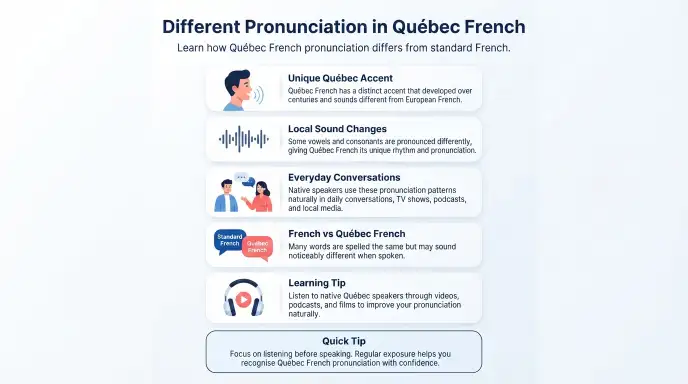
Québécois French also has a unique accent and pronunciation. Even familiar words may sound different from European French because of local speech patterns.
English Influence
Because Québec is part of Canada, English has influenced some everyday expressions. However, many borrowed words have developed unique meanings in Québec.
Why Do People Use Quebec Slang?
To Sound Natural
Native speakers use slang because it feels more relaxed and natural than formal French. It’s part of everyday communication.
To Express Local Identity
Quebec slang reflects the province’s culture, history, and identity. Many expressions have been passed down through generations.
To Make Conversations More Casual
Like slang in any language, Quebec expressions help conversations feel friendly, informal, and engaging.
Is Quebec Slang Used on Social Media?
Popular Online Platforms
Yes. Quebec slang is commonly used on:
- TikTok.
- Instagram.
- Facebook.
- Reddit.
- Discord.
- Snapchat.
- YouTube.
- Text messages.
You’ll often see these expressions in memes, captions, comments, and casual chats.
Younger Speakers Use It Frequently
Teenagers and young adults often combine Quebec slang with emojis, internet slang, and English words when chatting online.
Tips for Learning Quebec Slang
Listen to Native Speakers
Watching Québec TV shows, YouTube videos, podcasts, and interviews is one of the best ways to hear authentic slang.
Learn the Context
Many slang words have meanings that change depending on the conversation. Always pay attention to how native speakers use them.
Practice a Few Words at a Time
Instead of memorising dozens of expressions, learn a few useful slang terms and practise using them naturally.
Common Mistakes Learners Make
Assuming It’s the Same as French from France
Although both are forms of French, Québec French has many unique words and expressions that aren’t commonly used in France.
Translating Every Word Literally
Some Quebec slang expressions don’t translate directly into English or standard French. Learning their meaning is more helpful than translating each word.
Using Slang in Formal Situations
Quebec slang works best in casual conversations. Use standard French when writing formally or speaking in professional settings.
Should You Use Quebec Slang?
When It’s Appropriate
Using a few common slang words can make your French sound more natural when speaking with people from Québec.
When You Should Avoid It
Avoid slang in:
- Business meetings.
- Job interviews.
- Academic writing.
- Official documents.
- Professional emails.
Formal situations usually require standard French.
Why Learning Quebec Slang Is Useful
Better Communication
Understanding Quebec slang helps you follow everyday conversations more easily.
Understand Local Culture
Many expressions reflect Québec’s history, humour, traditions, and way of life.
Enjoy Québec Media
Knowing local slang makes TV shows, films, podcasts, music, and social media content much easier to understand.
Build Confidence
Learning common slang expressions helps you communicate more naturally with native speakers and improves your overall French listening skills.
Frequently Asked Questions
What Does C’est Le Fun Mean?
“C’est le fun” is a popular Quebec slang expression that means “It’s fun,” “It’s great,” or “It’s enjoyable.” People commonly use it in casual conversations.
Does Quebec Mean Something?
Yes. The name Québec comes from an Algonquin word meaning “where the river narrows.” It refers to the narrowing of the Saint Lawrence River.
What Does “C’est Tiguidou” Mean?
“C’est tiguidou” means “Everything is okay,” “It’s all good,” or “Everything is under control.” It’s a friendly expression often heard in Québec.
How Do You Say “I Love You” in Quebecois?
In Québec French, people usually say “Je t’aime.” The phrase is the same as in standard French, although the pronunciation has a Québec accent.
What Is the Most Common Quebec Slang?
Some of the most common Quebec slang words include char (car), chum (boyfriend), blonde (girlfriend), dépanneur (convenience store), and c’est le fun.
Is Quebec Slang Different from French?
Yes. Quebec slang includes unique vocabulary, local expressions, and pronunciation that differ from standard French spoken in France.
Can French People Understand Quebec Slang?
Most French speakers understand basic Québec French, but some local slang words and expressions may be unfamiliar without context.
Is Quebec Slang Used Every Day?
Yes. Quebec slang is widely used in daily conversations, social media, television, music, and informal communication across Québec.
Conclusion
Quebec slang is an important part of Québec’s language and culture. Learning common expressions such as char, dépanneur, and c’est le fun will help you understand Canadian French more naturally. if you’re travelling, studying French, or exploring Québec’s media, knowing these slang terms will make everyday conversations easier and more enjoyable.
Explore more slang!

Daniel Carter – Short Bio (First Person)
Hi, I’m Daniel Carter, a slang language researcher and content writer. I enjoy exploring internet slang, texting abbreviations, and modern expressions to make them easy for everyone to understand. My goal is to explain slang in clear, simple English with real-life examples so readers can communicate confidently online and stay up to date with the latest language trends.