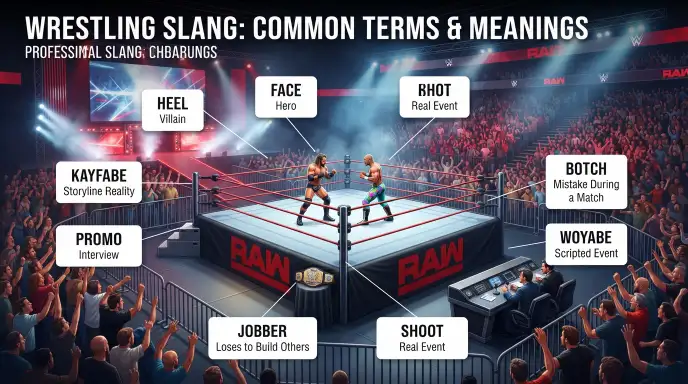
Professional wrestling has its own unique language that fans, wrestlers, commentators, and industry insiders use every day. From backstage conversations to live events, wrestling slang helps people describe matches, characters, and behindthescenes moments using short, memorable terms.
If you’ve ever watched WWE, AEW, NJPW, or independent wrestling promotions, you’ve probably heard words like “heel,” “face,” “jobber,” or “kayfabe.” These expressions can be confusing for new fans because they often have meanings that are completely different from everyday English.
Learning wrestling slang makes it easier to understand interviews, podcasts, documentaries, fan discussions, and online communities. It also helps you follow wrestling news and appreciate how the industry works behind the scenes.
Wrestling slang refers to the informal words and phrases used throughout professional wrestling. These terms describe wrestlers, match types, storylines, backstage roles, and inring actions. Wrestling slang is widely used by fans, commentators, wrestling journalists, and performers, making it an essential part of pro wrestling culture.
Quick Answer
Wrestling slang is the informal language used in professional wrestling to describe matches, wrestlers, storylines, backstage situations, and wrestling moves. Common terms include heel, face, kayfabe, jobber, promo, and work. You’ll hear these words in WWE, AEW, wrestling podcasts, YouTube videos, Reddit discussions, and fan communities.
What Is Wrestling Slang?
Meaning and Definition
Wrestling slang is a collection of informal words and expressions used in professional wrestling. These terms help wrestlers, commentators, promoters, and fans communicate quickly about matches, storylines, characters, and backstage events.
Many wrestling slang words have been part of the industry for decades, while others have become popular through social media, podcasts, and online wrestling communities.
Why Does Wrestling Have Its Own Slang?
Professional wrestling combines sports and entertainment. Over the years, performers developed their own vocabulary to discuss storylines and backstage operations, often without revealing details to the audience.
Today, many of these terms are widely known among wrestling fans around the world.
Where Is Wrestling Slang Commonly Used?
Professional Wrestling Shows
You’ll regularly hear wrestling slang during:
- WWE events.
- AEW broadcasts.
- TNA Wrestling.
- NJPW shows.
- Independent wrestling promotions.
Commentators, wrestlers, and analysts often use these expressions during matches and interviews.
Online Wrestling Communities
Wrestling slang is also common on:
- Reddit.
- YouTube.
- X (formerly Twitter).
- Instagram.
- TikTok.
- Discord.
- Wrestling forums.
- Podcasts.
Fans use these terms to discuss matches, rumours, and wrestling news.
Common Wrestling Slang Terms
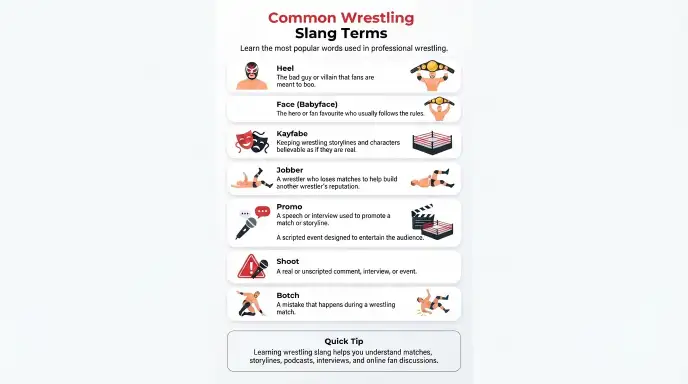
Heel
A heel is the villain or bad character in professional wrestling. Heels usually break rules, cheat, or provoke the audience.
Example:
- “The heel insulted the crowd before the match.”
Face
A face (or babyface) is the hero that fans are meant to support.
Example:
- “The face won the championship after a hardfought match.”
Kayfabe
Kayfabe refers to presenting wrestling storylines as if they are real, even though the outcomes are planned.
Example:
- “The wrestlers stayed in character to protect kayfabe.”
Jobber
A jobber is a wrestler whose role is to lose matches and help make other wrestlers appear stronger.
Example:
- “The rising star defeated a jobber in just a few minutes.”
Promo
A promo is a speech or interview given by a wrestler to build excitement for a match or storyline.
Example:
- “Her promo received millions of views online.”
Work
A work is something that is scripted or planned to make fans believe it’s real.
Example:
- “Many fans thought the argument was real, but it was actually a work.”
Shoot
A shoot refers to something genuine or unscripted.
Example:
- “The interview became a shoot after the unexpected comments.”
Pop
A pop is a loud, positive reaction from the audience.
Example:
- “The returning champion received a huge pop from the crowd.”
More Common Wrestling Slang Terms
Botch
A botch is a mistake or error during a wrestling match. It can happen when a move doesn’t go as planned or when wrestlers miscommunicate.
Example:
- “The wrestler quickly recovered after the botch.”
Bump
A bump is the act of falling or landing after receiving a wrestling move. Wrestlers train extensively to perform bumps safely.
Example:
- “He took a huge bump from the top rope.”
Over
When a wrestler is over, it means the audience strongly supports or reacts to them.
Example:
- “She’s incredibly over with wrestling fans.”
Push
A push is when a wrestling promotion gives a performer more television time, important victories, or championship opportunities.
Example:
- “The company is giving the young wrestler a major push.”
Sell
To sell means reacting realistically to an opponent’s moves so they look powerful and believable.
Example:
- “He sold the finishing move perfectly.”
Finisher
A finisher is a wrestler’s signature move that’s usually used to end a match.
Example:
- “She won the match with her famous finisher.”
Stable
A stable is a group of wrestlers who work together as a team or alliance.
Example:
- “The stable dominated the championship scene.”
Gimmick
A gimmick is a wrestler’s character, personality, appearance, and overall presentation.
Example:
- “His new gimmick became popular with fans.”
Why Is Wrestling Slang Important?
It Helps Fans Understand Wrestling
Learning wrestling slang makes it easier to follow matches, interviews, podcasts, documentaries, and backstage discussions.
It Explains Industry Terms
Many wrestling conversations include insider vocabulary. Knowing these expressions helps new fans understand what wrestlers and commentators are talking about.
It Connects Fans Worldwide
if you’re discussing WWE, AEW, NJPW, or independent wrestling, these slang terms create a shared language among fans.
Wrestling Slang on Social Media
Popular Platforms
Wrestling fans frequently use slang on:
- Reddit.
- YouTube.
- TikTok.
- Instagram.
- X (formerly Twitter).
- Discord.
- Facebook.
- Wrestling forums.
You’ll often see these terms in live event reactions, memes, fan theories, and match reviews.
Wrestling Podcasts and YouTube Channels
Many wrestling creators use industry slang naturally while discussing rumours, championships, backstage news, and match analysis.
Tips for Learning Wrestling Slang
Watch Wrestling Regularly
Watching live events helps you hear wrestling slang used naturally by commentators and wrestlers.
Follow Wrestling News
Reading wrestling news websites and listening to podcasts introduces you to new terms and industry language.
Learn the Context
Some wrestling slang has more than one meaning. Understanding the situation helps you interpret each term correctly.
Common Mistakes Beginners Make
Confusing Wrestling Slang with Everyday English
Many wrestling terms have special meanings that differ from their everyday definitions.
Thinking Every Match Is Real
Professional wrestling combines athletic competition with scripted entertainment. Some terms describe the fictional storyline, while others refer to genuine backstage events.
Using Insider Terms Incorrectly
Words such as kayfabe, work, and shoot have specific meanings. Learning when to use them makes conversations more accurate.
Should You Use Wrestling Slang?
When It’s Appropriate
Wrestling slang fits naturally when discussing wrestling with fans, joining online communities, or commenting on matches.
When to Avoid It
Avoid using wrestling slang in formal writing, business communication, or conversations where people may not understand the terminology.
Why Learning Wrestling Slang Is Useful
Better Match Understanding
Knowing wrestling slang helps you understand commentary, storylines, and backstage reports more clearly.
Enjoy Wrestling Content
You’ll find it easier to follow podcasts, documentaries, interviews, and social media discussions.
Join Wrestling Communities
Learning common wrestling terms makes it easier to participate in conversations with fans around the world.
Frequently Asked Questions
What Is Wrestling in Slang?
Wrestling slang is the informal language used to describe wrestlers, matches, storylines, and backstage events in professional wrestling.
What Are Some Wrestling Terms?
Common wrestling terms include heel, face, kayfabe, jobber, promo, work, and shoot.
What Is a Job in Wrestling Slang?
A job means intentionally losing a match to make another wrestler look stronger.
What Is the “F” in Wrestling Terms?
The “F” usually stands for Face (or Babyface), the heroic character fans support.
What Does Kayfabe Mean in Wrestling?
Kayfabe means presenting wrestling storylines as if they are real.
What Is a Heel in Wrestling?
A heel is the villain or bad character in professional wrestling.
What Is a Promo in Wrestling?
A promo is a speech or interview used to build a storyline or promote a match.
Is Wrestling Slang Used Outside Wrestling?
Yes. Some wrestling terms are also used in podcasts, social media, and online fan discussions.
Conclusion
Wrestling slang helps fans understand matches, storylines, and backstage discussions more easily. Learning common terms like heel, face, kayfabe, and jobber will make following professional wrestling more enjoyable and help you join conversations with confidence.
Read more about!

Daniel Carter – Short Bio (First Person)
Hi, I’m Daniel Carter, a slang language researcher and content writer. I enjoy exploring internet slang, texting abbreviations, and modern expressions to make them easy for everyone to understand. My goal is to explain slang in clear, simple English with real-life examples so readers can communicate confidently online and stay up to date with the latest language trends.