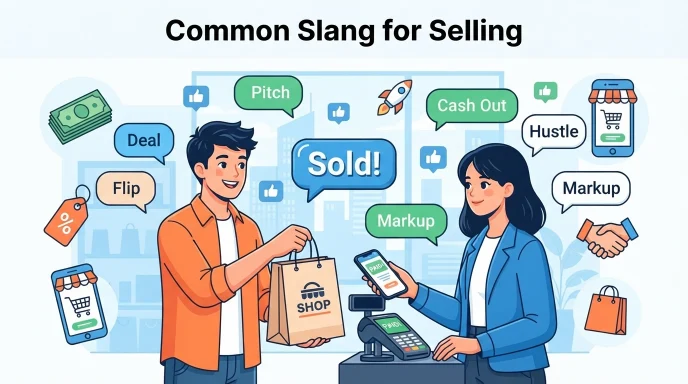
Common Slang for Selling refers to informal words and phrases people use to talk about selling products or services. These expressions are popular in sales, marketing, retail, and business conversations to make communication quicker and more natural.
Have you ever heard someone say, “I closed the deal,” “That lead is hot,” or “Let’s upsell the customer”? These are all examples of slang for selling. Salespeople use these informal words every day to communicate quickly and naturally.
if you work in sales, own a business, sell products online, or simply want to improve your English, learning slang for selling can help you understand business conversations better. These expressions are common in retail stores, marketing agencies, call centers, startups, and online marketplaces.
In this guide, you’ll discover the most popular sales slang, their meanings, simple examples, and when to use them. By the end, you’ll be able to understand and use sales slang with confidence.
What Is Slang for Selling?
Slang for selling refers to informal words and phrases people use instead of formal business language when talking about selling products or services.
For example:
Formal:
We successfully sold the product.
Slang:
We closed the deal.
Sales slang makes conversations shorter, faster, and more natural.
Why Learn Selling Slang?
There are many benefits of learning slang for selling, including:
- Speak more naturally in business conversations.
- Understand sales meetings and workplace English.
- Improve communication with customers.
- Write better marketing content.
- Understand YouTube videos and business podcasts.
- Increase your professional vocabulary.
40 Slang for Selling
1. Close the Deal
Meaning: Successfully complete a sale.
Example:
“After two meetings, she finally closed the deal.”
2. Seal the Deal
Meaning: Finish an agreement successfully.
Example:
“The free warranty helped seal the deal.”
3. Pitch
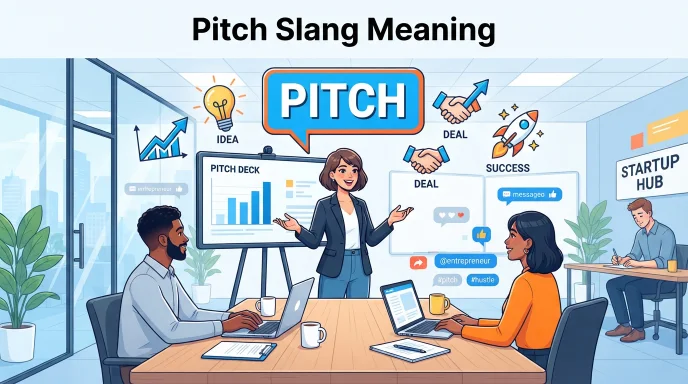
Meaning: Present a product or service to a customer.
Example:
“His sales pitch impressed everyone.”
4. Upsell
Meaning: Convince a customer to buy a more expensive product.
Example:
“The salesperson upsold me to the premium version.”
5. Cross-Sell
Meaning: Suggest related products.
Example:
“They cross-sold headphones with the new phone.”
6. Hot Lead
Meaning: A customer who is likely to buy soon.
Example:
“Our hot leads should be contacted today.”
7. Cold Call
Meaning: Contact a potential customer who hasn’t shown interest.
Example:
“He spent the morning making cold calls.”
8. Warm Lead
Meaning: A customer who has shown some interest.
Example:
“Follow up with the warm leads tomorrow.”
9. Hard Sell
Meaning: Aggressive selling techniques.
Example:
“Customers usually dislike a hard sell.”
10. Soft Sell
Meaning: Gentle and friendly selling.
Example:
“Our company prefers a soft-sell approach.”
11. Hook
Meaning: Something that catches a customer’s attention.
Example:
“The discount was the perfect hook.”
12. Sweeten the Deal
Meaning: Add extra benefits to encourage a purchase.
Example:
“They added free shipping to sweeten the deal.”
13. Push
Meaning: Promote a product strongly.
Example:
“Let’s push this product before the holiday season.”
14. Move Product
Meaning: Sell inventory quickly.
Example:
“The weekend sale helped move a lot of products.”
15. Cash In
Meaning: Make money from an opportunity.
Example:
“Many businesses cashed in on the new trend.”
16. Flip
Meaning: Buy something cheaply and sell it for profit.
Example:
“He flips used furniture online.”
17. Hustle
Meaning: Work hard to make sales.
Example:
“You have to hustle to succeed in sales.”
18. Bag the Sale
Meaning: Successfully complete a sale.
Example:
“She bagged the biggest sale of the month.”
19. Reel Them In
Meaning: Attract customers.
Example:
“The advertisement reeled them in.”
20. Win the Customer
Meaning: Earn a customer’s trust and business.
Example:
“Excellent service helped win the customer.”
21. Make the Sale
Meaning: Successfully sell a product or service.
Example:
“She made the sale within five minutes.”
22. Knock It Out of the Park
Meaning: Do an outstanding job in selling.
Example:
“He knocked it out of the park with his presentation.”
23. Bring Home the Bacon
Meaning: Earn money through successful sales.
Example:
“She works hard to bring home the bacon.”
24. Land a Client
Meaning: Gain a new customer.
Example:
“We landed three new clients this week.”
25. Convert
Meaning: Turn a visitor or lead into a customer.
Example:
“Our website converts many visitors into buyers.”
26. Follow Up
Meaning: Contact a customer again after the first conversation.
Example:
“Don’t forget to follow up tomorrow.”
27. Demo
Meaning: Show how a product works.
Example:
“The software demo impressed the customer.”
28. Prospect
Meaning: A potential customer.
Example:
“Every prospect deserves a friendly conversation.”
29. Qualify
Meaning: Determine if someone is likely to buy.
Example:
“The sales team qualified the lead before calling.”
30. Objection
Meaning: A concern or reason a customer gives for not buying.
Example:
“Price was the customer’s main objection.”
31. Buyer Persona
Meaning: A profile of the ideal customer.
Example:
“We created a buyer persona before launching the campaign.”
32. Pipeline
Meaning: The list of potential sales in progress.
Example:
“Our sales pipeline is full this month.”
33. Funnel
Meaning: The customer journey from interest to purchase.
Example:
“We improved every step of the sales funnel.”
34. Win Rate
Meaning: The percentage of successful sales.
Example:
“Our win rate increased to 40%.”
35. Touch Base
Meaning: Contact someone briefly.
Example:
“I’ll touch base with the client next week.”
36. Value Add
Meaning: An extra benefit offered to customers.
Example:
“Free installation is a great value add.”
37. Discount It
Meaning: Reduce the selling price.
Example:
“We discounted it by 20%.”
38. Freebie
Meaning: A free gift given with a purchase.
Example:
“Customers received a freebie with every order.”
39. Bundle
Meaning: Sell several products together.
Example:
“The laptop came bundled with a wireless mouse.”
40. BOGO (Buy One, Get One)
Meaning: A popular promotional offer.
Example:
“The store launched a BOGO sale this weekend.”
Slang Words for Selling and Selling Language
People use slang words for selling and informal selling language to talk about products, customers, and sales in a more casual way. When looking for slang for selling something, people may use different informal expressions depending on what they are selling. These expressions can also serve as selling synonym slang in everyday business conversations.
Sell Slang Meaning and Common Uses
The sell slang meaning can change depending on the situation. The selling meaning slang can also vary based on how the word is used in a conversation. When people talk about selling casually, sell slang may describe informal ways of saying that someone is trying to make a sale. If you’re wondering what does sell mean in slang, the answer depends on the conversation.
People may also search for slang for sell when looking for informal alternatives to the word “sell.”
Slang for Selling in Different Industries
Different industries have their own sales slang. Here are some common examples.
Retail Selling Slang
Retail workers often use these expressions:
- Ring it up
- Mark it down
- Clearance
- Fast seller
- Best seller
- Stock mover
Example
“That jacket is our best seller this month.”
Online Selling Slang
If you sell products online, you’ll hear these terms frequently.
- Product Drop
- Limited Drop
- Add to Cart
- Checkout
- Conversion
- Abandoned Cart
- Flash Sale
Example
“Our latest product drop sold out in two hours.”
Real Estate Selling Slang
Real estate agents commonly use these phrases.
- Listing
- Offer
- Closing
- Under Contract
- Open House
- Multiple Offers
Example
“The house went under contract yesterday.”
Car Sales Slang
Common terms include:
- Trade-In
- Sticker Price
- Walk-Around
- Test Drive
- Finance Deal
- Close
Example
“The customer scheduled a test drive today.”
Marketing and Advertising Slang
Marketing professionals often use these words.
- CTA (Call to Action)
- Conversion
- Lead Magnet
- Click-Through Rate (CTR)
- Landing Page
- Engagement
Example
“A stronger CTA improved our conversion rate.”
Funny Slang for Selling
Some salespeople enjoy using humorous slang.
- Sell sand in the desert
- Smooth talker
- Silver tongue
- Sales ninja
- Deal wizard
- Rainmaker
- Money machine
Example
“Everyone calls Sarah a sales ninja because she closes so many deals.”
Slang for Selling on Social Media
If you run an online business, you’ll often see these phrases.
- Link in Bio
- DM to Order
- Sold Out
- Limited Stock
- Grab Yours
- Shop Now
- Trending Product
- Viral Item
- Must-Have
- Flash Drop
Example
“The new skincare kit sold out just hours after the brand shared the Shop Now post.”
Seller Slang, Sale Slang, and Sales Person Jargon
Seller slang includes informal terms that sellers use when talking about customers, products, and deals. Sales person jargon is also common in professional sales conversations, while sale slang can refer to casual expressions used when discussing discounts, promotions, or completed sales.
If you’re searching for sale slang meaning or sale meaning slang, the exact meaning depends on the context. Someone may also use slang for buy when talking casually about making a purchase.
When Should You Use Slang for Selling?
Sales slang works best in casual business conversations where everyone understands the terms. It helps people communicate faster and sound more natural.
You can use slang for selling in:
- Sales meetings
- Retail stores
- Marketing agencies
- Startup companies
- Online businesses
- Customer support teams
- Networking events
- Social media marketing
- Sales training sessions
Example
Instead of saying:
“I successfully completed the sale.”
Many sales professionals simply say:
“I closed the deal.”
When Should You Avoid Sales Slang?
Although sales slang is useful, it isn’t appropriate in every situation.
Avoid using too much slang in:
- Academic writing
- Legal documents
- Business contracts
- Government reports
- Formal presentations
- Professional emails to new clients
In formal situations, use clear and professional language instead.
Tips for Using Selling Slang Naturally
If you’re new to sales vocabulary, these tips can help.
Learn the Meaning First
Never use a slang term unless you understand what it means.
Listen to Native Speakers
Watch sales podcasts, interviews, and business videos to hear how professionals use these expressions.
Practice in Real Conversations
Use one or two slang terms naturally instead of trying to use too many at once.
Match the Situation
Use informal sales slang with coworkers or experienced clients, but choose more formal language when speaking with new customers.
Keep It Simple
Good communication is always more important than using impressive vocabulary.
Common Mistakes to Avoid
Many beginners make these mistakes when using slang for selling.
- Using slang in formal business documents.
- Confusing upselling with cross-selling.
- Saying close the deal before the customer has agreed.
- Overusing business buzzwords.
- Assuming every customer understands sales slang.
Frequently Asked Questions FAQs
What is another slang word for selling?
Some popular alternatives include:
- Close the deal
- Seal the deal
- Flip
- Hustle
- Push
- Move product
- Cash in
- Bag the sale
What does “close the deal” mean?
It means successfully convincing a customer to buy a product or service and completing the sale.
What does “flip” mean in selling?
Flip means buying something at a low price and selling it later for a profit.
Example:
“He flipped an old bicycle for twice the price.”
What is the difference between upselling and cross-selling?
Upselling encourages the customer to buy a more expensive version of the same product.
Example:
Buying the premium smartphone instead of the basic model.
Cross-selling recommends related products.
Example:
Buying a phone case along with the smartphone.
What is a hot lead?
A hot lead is someone who is highly interested and likely to make a purchase soon.
Is sales slang used worldwide?
Yes. Many English sales slang terms are used in countries around the world, especially in international business, online marketing, and customer service.
Can beginners use selling slang?
Absolutely. Beginners can start with simple expressions like close the deal, follow up, pitch, and hot lead before learning more advanced terms.
Quick Recap
Here are some of the most useful slang for selling terms covered in this guide:
- Close the Deal
- Seal the Deal
- Pitch
- Upsell
- Cross-Sell
- Hot Lead
- Cold Call
- Warm Lead
- Follow Up
- Convert
- Pipeline
- Funnel
- Flip
- Bundle
- Cash In
- Bag the Sale
- Sell Like Hotcakes
- Touch Base
- Value Add
- Win Rate
Learning these expressions will make business conversations much easier to understand.
Final Thoughts
Understanding slang for selling is an excellent way to improve both your English vocabulary and your business communication skills. These informal expressions are used every day by salespeople, marketers, entrepreneurs, and customer service professionals to make conversations quicker and more natural.
if you’re preparing for a sales career, running an online store, studying business English, or simply expanding your vocabulary, learning these terms will help you communicate with greater confidence. Start by practicing a few common phrases like close the deal, upsell, and follow up, then gradually add more expressions to your daily conversations. With regular practice, you’ll soon understand and use slang for selling like an experienced professional.
.
Read more about!
JW Slang Meaning: What Does “JW” Mean in Text, Social Media, and Online Chats?
Froggy Meaning Slang: What It Means and How People Use It

Hi, I’m Michael Harris, a writer with a strong interest in language, communication, and modern slang. I enjoy researching the origins and meanings of everyday words and turning that knowledge into simple, engaging content. My goal is to help readers understand English expressions with clear explanations, practical examples, and easy-to-read guides.