British English is famous for its unique slang, but not every expression is friendly or harmless. Some words sound funny, while others can be rude or deeply offensive. If you’re learning English or visiting the UK, understanding these terms can help you avoid awkward or uncomfortable situations.
You may hear offensive British slang in everyday conversations, comedy shows, films, football matches, or on social media. However, these expressions don’t always have the same meaning. Their impact often depends on the speaker’s tone, the relationship between the people involved, and the situation.
Learning offensive British slang isn’t about using rude language. Instead, it’s about recognising these words, understanding their meaning, and knowing when they’re inappropriate. This knowledge can improve your English skills and help you communicate more confidently.
Offensive British slang refers to informal words and phrases that people use to insult, mock, or express frustration. While close friends may use some expressions jokingly, many people consider others highly offensive. Understanding their meanings, tone, and context will help you avoid misunderstandings and use British English more naturally.
Quick Answer
Offensive British slang includes informal words and phrases that can insult, offend, or criticise someone. Some expressions are mild and used jokingly between friends, while others are considered vulgar or highly offensive. Their meaning usually depends on the context, tone of voice, and the relationship between the speakers.
What Is Offensive British Slang?
Meaning and Definition
Offensive British slang is a group of informal expressions used to insult, mock, criticise, or express annoyance. These words are common in British English, but they aren’t suitable for every situation.
Some slang terms are fairly mild and often appear in friendly banter. Others contain strong profanity and can seriously offend people. That’s why it’s important to understand both the meaning and the context before using them.
Why Do People Use Offensive British Slang?
People use offensive British slang for different reasons, including:
- Expressing frustration.
- Joking with close friends.
- Teasing someone during friendly banter.
- Reacting to annoying behaviour.
- Adding humour to informal conversations.
Although these expressions are common in everyday speech, they should be avoided in professional or formal settings.
Why Does Context Matter?
The Same Word Can Mean Different Things
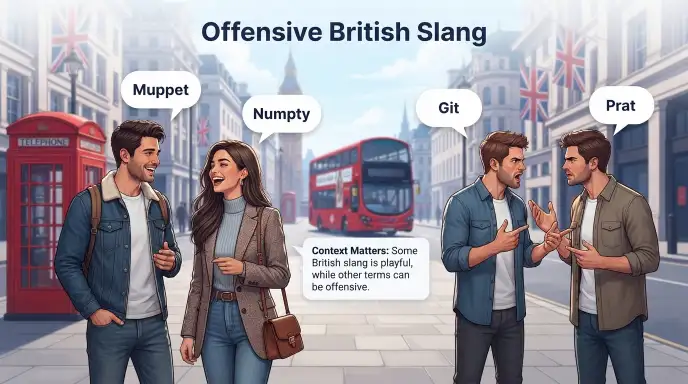
Many British slang words change meaning depending on how they’re used. A word spoken as a joke between friends may become offensive when said during an argument.
For example:
Friend: “You forgot your keys again, you muppet!”
Argument: “You’re such a muppet.”
The first example sounds playful, while the second sounds insulting because the speaker’s tone and intent have changed.
Consider Your Audience
Before using British slang, ask yourself:
- Who am I speaking to?
- Do I know this person well?
- Is this a casual or formal situation?
- Could someone misunderstand what I mean?
If the answer is uncertain, it’s always safer to choose polite, standard English.
Common Offensive British Slang Words
Twat
“Twat” is a vulgar British insult used for someone who is acting foolishly, unpleasantly, or irresponsibly. Most people consider it highly offensive.
Example:
- “Don’t be such a twat.”
Wanker
“Wanker” is one of the bestknown British insults. It’s commonly used to describe someone who is arrogant, irritating, selfish, or foolish.
Example:
- “That driver is a complete wanker.”
Tosser
“Tosser” is another common British insult for someone who behaves in an annoying, foolish, or irritating way.
Example:
- “Ignore him. He’s a tosser.”
Prat
“Prat” describes someone acting foolishly or making silly mistakes. Compared with stronger insults, it’s generally considered mild.
Example:
- “You forgot your wallet again, you prat.”
Git
A “git” is someone who is unpleasant, irritating, or difficult to deal with.
Example:
- “Stop being such a git.”
Pillock
“Pillock” is used for someone behaving foolishly or showing poor judgement.
Example:
- “Only a pillock would do that.”
Berk
“Berk” refers to someone acting foolishly. Although it has a stronger historical origin, most people today use it as a mild insult.
Example:
- “You silly berk.”
Muppet
Calling someone a “muppet” means they have done something silly or careless. It’s usually one of the least offensive British insults.
Example:
- “I left my phone at home. What a muppet!”
Where Is Offensive British Slang Commonly Used?
Everyday Conversations
Many British slang words appear in casual conversations between friends, family members, or colleagues. In these situations, people sometimes use mild insults as part of friendly banter rather than to offend someone.
Social Media and Online Communities
You’ll also find offensive British slang on platforms such as:
- TikTok.
- Reddit.
- Discord.
- Instagram.
- Snapchat.
- X (formerly Twitter).
- Facebook.
- Online gaming chats.
People often use these expressions in memes, comments, and humorous posts. However, because online messages lack tone of voice, they’re easier to misunderstand.
British TV Shows, Films, and Comedy
British television and films frequently include slang to make conversations sound natural and authentic. If you enjoy British entertainment, understanding these expressions will help you follow the dialogue more easily.
Are These Words Always Offensive?
It Depends on the Situation
No. The same slang word can sound friendly in one conversation and insulting in another. The speaker’s tone, facial expression, and relationship with the listener all affect how the word is understood.
Friendly Banter
British people often tease close friends using mild slang without intending to cause offence.
Example:
Friend: “You parked in the wrong place again.”
Friend: “I know. I’m such a muppet!”
In this example, the speaker is joking about themselves.
Genuine Insults
When these same words are spoken during an argument or directed at a stranger, they usually become offensive.
Example:
- “You’re a complete tosser.”
Here, the speaker clearly intends to insult the other person.
British Slang That Sounds Rude but Isn’t Always
Some British slang words sound offensive to nonnative speakers, but many people use them in a lighthearted way.
Muppet
“Muppet” describes someone who has made a silly mistake.
Example:
- “I forgot my laptop. What a muppet!”
Numpty
“Numpty” means someone has acted a little foolishly or absentmindedly.
Example:
- “You took the wrong train, you numpty.”
foolish
“foolish” simply means silly or lacking common sense. Most people don’t consider it a serious insult.
Example:
- “Don’t be foolish. It’ll be fine.”
Strong British Slang You Should Avoid
Highly Offensive Expressions
Some British slang terms contain strong profanity or are intended to insult someone seriously. These expressions can easily offend people and should generally be avoided.
Why You Should Avoid Them
Even if you hear these words in films, comedy shows, or online videos, don’t assume they’re acceptable in everyday conversations. Using them incorrectly can damage relationships or create unnecessary conflict.
Tips for Understanding Offensive British Slang
Listen Before You Use It
If you hear a slang word for the first time, take time to understand its meaning before repeating it.
Pay Attention to Context
Notice who’s speaking, how they’re saying the word, and if the conversation is friendly or argumentative.
Choose Standard English When Unsure
If you aren’t completely sure a slang term is appropriate, standard English is always the safer option.
Common Mistakes People Make
Assuming Every British Slang Word Is Offensive
Many British slang expressions are completely harmless. Only some are considered rude or insulting.
Copying TV or Movie Dialogue
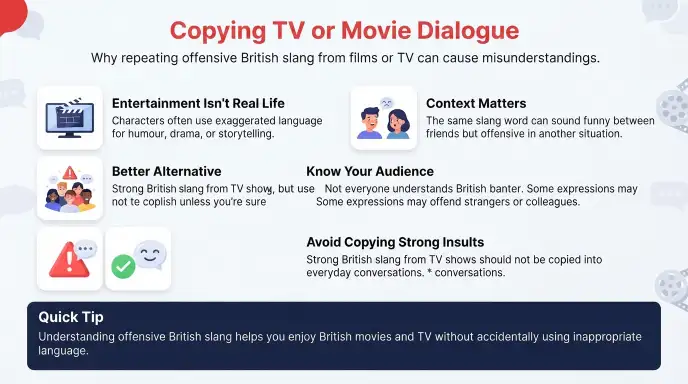
Characters in films and television often exaggerate their language for humour or drama. That doesn’t mean it’s suitable for everyday conversations.
Ignoring Regional Differences
Some slang words are common in England but less familiar in Scotland, Wales, or Northern Ireland. Meanings and offensiveness can also vary by region.
Using Slang in Professional Settings
Avoid offensive British slang in:
- Job interviews.
- Business meetings.
- Academic writing.
- Customer service.
- Professional emails.
- Workplace conversations.
Professional communication should always remain polite and respectful.
Why Learning Offensive British Slang Is Useful
Understand British Conversations
Knowing these expressions makes it easier to understand everyday conversations, podcasts, films, and television programmes.
Avoid Misunderstandings
Recognising offensive slang helps you avoid using inappropriate language accidentally and reduces the risk of offending others.
Improve Your English Naturally
Learning both formal English and informal slang gives you a better understanding of British culture and helps you communicate with greater confidence.
Frequently Asked Questions
What Is Bad in UK Slang?
Common Offensive UK Slang Words
Words such as “wanker,” “tosser,” and “twat” are commonly used as insults in the UK. Their offensiveness depends on the context, tone, and relationship between the speakers.
What Is the Most British Swear Word?
The Most Common British Swear Word
Many people consider “bloody” one of the most recognisable British swear words, although it’s now relatively mild. Stronger swear words also exist, but they are highly offensive and should be avoided in polite or professional conversations.
What Is British Slang for a Jerk?
Common British Slang Terms for a Jerk
British slang words such as “git,” “prat,” “pillock,” “tosser,” and “wanker” are commonly used to describe someone who is annoying, unpleasant, or foolish. Some are mild, while others are highly offensive.
How Do You Say “Rude” in British Slang?
British Slang Words for Someone Who Is Rude
Words like “cheeky,” “mouthy,” “lippy,” and “ignorant” are often used in British English to describe someone who is rude or disrespectful, depending on the situation.
Are All British Slang Words Offensive?
Friendly Slang vs Offensive Slang
No. Many British slang words are humorous or affectionate. Only certain expressions are considered offensive, and their meaning often depends on the context.
Can You Use Offensive British Slang with Friends?
It Depends on the Situation
Some close friends use mild British insults as playful banter. However, the same words may offend strangers or people who don’t share that style of humour.
Is Offensive British Slang Used on Social Media?
Where You Might See It Online
Yes. Offensive British slang is commonly found on TikTok, Reddit, Discord, Instagram, Snapchat, X (formerly Twitter), Facebook, and gaming chats, where people use it in informal conversations.
Conclusion
Understanding offensive British slang can help you recognise common UK expressions without using them inappropriately. While some terms are harmless between close friends, others can be highly offensive depending on the context and tone. Learning when and where these expressions are used will improve your understanding of British English while helping you communicate respectfully and confidently.
More internet slang!

Daniel Carter – Short Bio (First Person)
Hi, I’m Daniel Carter, a slang language researcher and content writer. I enjoy exploring internet slang, texting abbreviations, and modern expressions to make them easy for everyone to understand. My goal is to explain slang in clear, simple English with real-life examples so readers can communicate confidently online and stay up to date with the latest language trends.