Learn these common Irish slang words and meanings to understand everyday conversations, local culture, and casual English used across Ireland.
Have you ever heard an Irish person speak and wondered what some of their words meant? Irish English is full of fun, friendly, and unique expressions that may sound confusing at first. From casual greetings to funny sayings, Irish slang adds personality to everyday conversations.
Learning Irish slang words and meanings can help you understand local people, enjoy Irish movies and TV shows, and communicate with more confidence when visiting Ireland. if you are a student, traveler, or simply curious about different cultures, these expressions will make conversations much easier to follow.
In this guide, you will discover popular Irish slang terms, their meanings, examples, and tips for using them naturally.
What Are Irish Slang Words?
Irish slang words are informal expressions commonly used in Ireland. These words often come from Irish history, local traditions, and everyday life. Many are used among friends and family, while others are heard in shops, pubs, schools, and workplaces.
Although Ireland shares English with many countries, Irish slang gives the language its own unique style.
Why Learn Irish Slang?
Understand Local Conversations
Knowing common slang makes it easier to follow conversations with Irish speakers.
Enjoy Irish Entertainment
Irish movies, television shows, podcasts, and books often include local expressions.
Feel More Confident While Traveling
Using simple slang naturally can help you connect with local people.
Learn More About Irish Culture
Many slang words reflect Ireland’s humor, friendliness, and traditions.
Most Common Irish Slang Words and Meanings
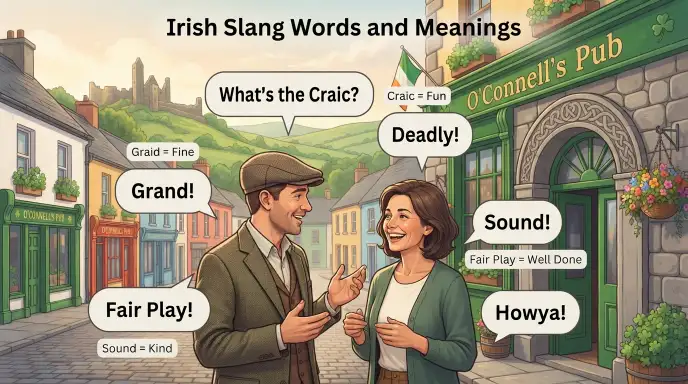
Craic
Meaning
Craic means fun, entertainment, or enjoyable conversation.
Example
“We had great craic at the festival.”
Grand
Meaning
Grand usually means everything is fine or okay.
Example
“I’m grand, thanks.”
Sound
Meaning
Sound describes someone who is kind, helpful, or friendly.
Example
“She’s really sound.”
Deadly
Meaning
Deadly often means excellent or amazing.
Example
“That new restaurant is deadly.”
Eejit
Meaning
An eejit is someone acting in a silly or foolish way.
Example
“Don’t be an eejit.”
Gas
Meaning
Gas means funny or entertaining.
Example
“That joke was gas.”
Fair Play
Meaning
People say fair play to praise someone’s effort or achievement.
Example
“Fair play for finishing the race.”
What’s the Craic?
Meaning
A casual greeting that asks what is happening or how someone is doing.
Example
“Hi Sarah, what’s the craic?”
Giving Out
Meaning
Giving out means complaining or scolding someone.
Example
“My teacher was giving out because we were late.”
Scarlet
Meaning
Scarlet means feeling very embarrassed.
Example
“I was scarlet after saying the wrong name.”
Wee
Meaning
Wee means small or little.
Example
“We stopped at a wee coffee shop.”
Gobshite
Meaning
A playful or rude word for someone behaving foolishly or being annoying.
Example
“Stop acting like a gobshite.”
Yer Man
Meaning
Used when talking about a man whose name is unknown or unnecessary.
Example
“Yer man at the station helped us.”
Yer Wan
Meaning
Used when talking about a woman in the same way.
Example
“Yer wan over there is my cousin.”
Acting the Maggot
Meaning
Behaving in a silly or playful way.
Example
“The children were acting the maggot all afternoon.”
Irish Slang Greetings
Howya
Meaning
A friendly way to say hello.
Example
“Howya! Good to see you.”
Well?
Meaning
A casual greeting asking how someone is.
Example
“Well? Everything going okay?”
How’s She Cuttin’?
Meaning
A regional greeting that means how are things going.
Example
“How’s she cuttin’ today?”
Alright?
Meaning
A simple greeting asking if someone is doing well.
Example
“Alright? Haven’t seen you in ages.”
Good Luck
Meaning
In Ireland, this phrase is often used when saying goodbye, not only before an event.
Example
“See you tomorrow. Good luck.”
Irish Slang for Describing People
Cute Hoor
Meaning
A person who is clever and knows how to get what they want.
Example
“He’s a cute hoor when it comes to business.”
Buck
Meaning
A lively young man.
Example
“That young buck plays rugby every weekend.”
Youngfella
Meaning
A casual word for a young boy or young man.
Example
“My youngfella starts college next month.”
Youngwan
Meaning
A casual word for a young girl or young woman.
Example
“The youngwan won first prize.”
Legend
Meaning
Someone who has done something impressive or helpful.
Example
“Thanks for helping us move. You’re a legend.”
Melter
Meaning
A person who is annoying or talks too much.
Example
“He’s a bit of a melter sometimes.”
Chancer
Meaning
Someone who takes risks hoping for success.
Example
“Only a chancer would ask for a free ticket.”
Thick
Meaning
A slang word for someone who is not acting very smart.
Example
“That was a thick mistake.”
Irish Slang About Feelings
Delira and Excira
Meaning
Extremely happy and excited.
Example
“The kids were delira after hearing the news.”
Chuffed
Meaning
Very pleased or proud.
Example
“She was chuffed with her exam results.”
Gutted
Meaning
Very disappointed or upset.
Example
“I was gutted when the concert was canceled.”
Raging
Meaning
Very angry or annoyed.
Example
“He was raging after losing his phone.”
Knackered
Meaning
Very tired.
Example
“I’m absolutely knackered after work.”
Irish Slang for Everyday Situations
Sure Look
Meaning
A phrase used when accepting a situation or moving on.
Example
“Sure look, tomorrow is another day.”
Ah Here
Meaning
Shows surprise, disbelief, or frustration.
Example
“Ah here, you’re joking.”
No Bother
Meaning
Means no problem or you’re welcome.
Example
“No bother. Happy to help.”
Away With You
Meaning
A playful way of saying you do not believe someone.
Example
“Away with you. That never happened.”
Jaysus
Meaning
A common expression of surprise.
Example
“Jaysus, that’s a beautiful view.”
On the Lash
Meaning
Going out to enjoy drinks with friends.
Example
“We’re on the lash this Friday night.”
Banjaxed
Meaning
Broken, damaged, or completely worn out.
Example
“My old laptop is banjaxed.”
Cat
Meaning
Something that is very bad or disappointing.
Example
“The weather was cat all weekend.”
Black Stuff
Meaning
A nickname for Guinness.
Example
“He ordered a pint of the black stuff.”
Irish Slang in Daily Conversations
Learning words is helpful, but seeing them in conversations makes them easier to remember.
Conversation Example 1
Emma: Howya! What’s the craic?
Jack: Not much. I’m grand. How about you?
Emma: I’m good. Want to grab some coffee?
Jack: Deadly idea.
Conversation Example 2
Tom: Fair play on your new job.
Ryan: Thanks. I’m really chuffed.
Tom: We should celebrate.
Ryan: Sounds good.
Conversation Example 3
Sarah: Ah here, you’re late again.
Mark: Sorry. The traffic was cat today.
Sarah: Sure look, you’re here now.
Tips for Using Irish Slang Naturally
Listen to Native Speakers
Watch Irish interviews, podcasts, movies, and TV shows to hear how slang is used in everyday conversations.
Learn the Context
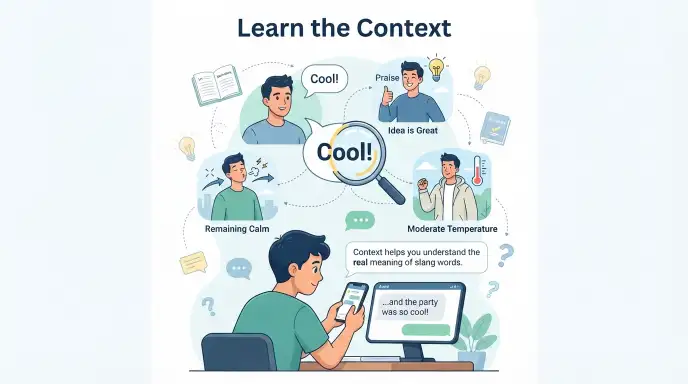
Some slang words can have different meanings depending on the situation, so always pay attention to how people use them.
Start with Common Expressions
Simple words like “grand,” “craic,” “sound,” and “fair play” are easy to learn and commonly used across Ireland.
Do Not Overuse Slang
Using too many slang words in one conversation may sound unnatural. Mix slang with standard English.
Irish Slang vs Standard English
Informal Language
Irish slang is mainly used with friends, family, and in casual conversations.
Formal Situations
In schools, business meetings, official emails, and professional settings, standard English is usually the better choice.
Regional Differences
Some slang words are common across Ireland, while others are mostly heard in specific cities or counties.
Common Mistakes to Avoid
Taking Every Phrase Literally
Many Irish slang expressions have meanings that are different from the actual words.
Example
“Great craic” has nothing to do with the English word “crack.” It means fun or enjoyable company.
Using Slang Without Understanding It
Always learn the meaning before using a new expression.
Forgetting the Situation
Friendly slang works well in casual conversations but may not be suitable in formal settings.
Quick Tips to Remember Irish Slang
| Slang | Meaning |
| Craic | Fun or good conversation |
| Grand | Fine or okay |
| Sound | Friendly or kind |
| Deadly | Excellent |
| Eejit | Silly person |
| Fair Play | Well done |
| Gas | Funny |
| Scarlet | Embarrassed |
| Knackered | Very tired |
| Banjaxed | Broken |
Frequently Asked Questions
What is the most common Irish slang word?
Craic is one of the most popular Irish slang words. It means fun, entertainment, or enjoyable conversation.
What does “grand” mean in Ireland?
Grand usually means fine, okay, or everything is going well.
Is Irish slang difficult to learn?
No. Many Irish slang words are simple and become easy to remember after hearing them in real conversations.
Can tourists use Irish slang?
Yes. Most Irish people appreciate visitors who learn a few common expressions and use them politely.
Is Irish slang used everywhere in Ireland?
Many expressions are understood across Ireland, although some regions have their own local slang.
Final Thoughts
Irish slang words and meanings make conversations more enjoyable and help you understand Irish culture in a deeper way. Popular expressions like craic, grand, sound, fair play, deadly, and eejit are heard every day and can make speaking with Irish people much easier. Start by learning a few common phrases, listen to native speakers, and practice them naturally. Over time, these expressions will become a fun and useful part of your English vocabulary.
Read more about!
Slang in the 1950s: Popular Words, Meanings, and Everyday Uses
Trill Slang Meaning: What It Means and How People Use It Today

Hi, I’m Liam Carter, a slang language enthusiast and content writer. I research internet slang, social media terms, texting abbreviations, and online expressions to help readers understand modern English. I enjoy breaking down trending slang into simple, easy-to-read explanations with real-world examples, making online communication clearer and more enjoyable.