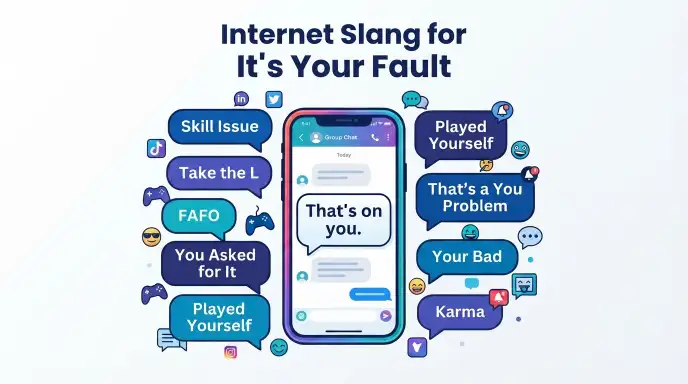
Have you ever seen someone type “That’s on you” or “Skill issue” online? These popular internet slang phrases quickly place responsibility on someone in a casual or humorous way.
Today, people use these expressions across social media, gaming, memes, and text messages. Some sound playful, while others can feel sarcastic depending on the situation.
Understanding these phrases helps you follow online conversations more easily. It also prevents confusion when you see them in comments, chats, or viral posts.
This guide explains the most common internet slang for “it’s your fault,” their meanings, examples, and the best time to use them.
What Does “It’s Your Fault” Mean in Internet Slang?
This section explains what the expression means and how people use it online.
Basic Meaning
Internet slang for “it’s your fault” includes informal words, phrases, and abbreviations. People use them to show that someone is responsible for a mistake, problem, or outcome.
Example
“You forgot to save the file. That’s on you.”
Why People Use Internet Slang to Blame Someone
These are the main reasons people use this internet slang online.
Faster Communication
Short phrases are quicker and easier to type than full sentences.
Humor
Many expressions make blame sound more playful than serious.
Online Culture
Gamers, meme creators, and social media users often prefer informal language.
Casual Conversations
As a result, these phrases feel natural in everyday online chats.
Common Internet Slang for It’s Your Fault
Here are the most common internet slang expressions for “it’s your fault.”
That’s on You
Meaning
This phrase clearly means someone is responsible for what happened.
Example
“You ignored the warning. That’s on you.”
L
Meaning
People use this slang when someone causes their own loss or mistake.
Example
“You skipped practice. Take the L.”
Skill Issue
Meaning
Usually, people say this jokingly when someone fails because of their own lack of skill.
Example
“You lost again? Skill issue.”
FAFO
Meaning
Short for “Fool Around and Find Out,” this phrase means someone is facing the consequences of their own actions.
Example
“He ignored every warning. FAFO.”
You Asked for It
Meaning
This expression suggests that someone caused the problem through their own choices.
Example
“You clicked the suspicious link. You asked for it.”
Deserved
Meaning
People use this word when they believe someone earned the outcome because of their own actions.
Example
“He cheated and got banned. Deserved.”
Own It
Meaning
Instead of making excuses, this phrase encourages someone to accept responsibility.
Example
“You made the mistake. Own it.”
That’s a You Problem
Meaning
This expression means the issue belongs to the other person.
Example
“You forgot your charger. That’s a you problem.”
Examples of Internet Slang for It’s Your Fault
These examples show how people use these expressions in everyday online conversations.
Conversation in a Group Chat
Alex: I forgot to charge my phone.
Ryan: That’s on you.
Conversation While Gaming
Player 1: I ran into the enemy alone.
Player 2: Skill issue.
Conversation on Social Media
User 1: I ignored the update warning and lost my files.
User 2: You asked for it.
Conversation Between Friends
Emma: I forgot my homework again.
Sophia: That’s a you problem.
More Internet Slang That Blames Someone
Here are more popular expressions you may see online.
Take the L
Meaning
This phrase tells someone to accept their loss or admit they made a mistake.
Example
“You guessed wrong. Just take the L.”
Cope
Meaning
Instead, it sarcastically suggests that someone is making excuses rather than accepting responsibility.
Example
“You lost fair and square. Cope.”
Cry About It
Meaning
Generally, people use this sarcastic phrase to tell someone to stop complaining.
Example
“You broke your own phone. Cry about it.”
Karma
Meaning
This expression means someone is experiencing the consequences of their own actions.
Example
“He spread rumors and lost his friends. Karma.”
Self Own
Meaning
Sometimes, a person embarrasses themselves because of their own actions. This situation is called a self own.
Example
“Posting that screenshot was a complete self own.”
Played Yourself
Meaning
This phrase means someone caused their own problem by making a poor decision.
Example
“You forgot your password again. You played yourself.”
Your Bad
Meaning
People use this casual expression to admit that a mistake belongs to someone.
Example
“You sent the wrong file. Your bad.”
That’s on Bro
Meaning
This is a humorous variation of “That’s on you,” and it often appears in memes and casual chats.
Example
“He forgot the tickets. That’s on bro.”
Tips for Using These Slang Terms
Follow these tips to use internet slang naturally and appropriately.
Know Your Audience
Although these expressions sound funny among friends, they may seem rude in other situations.
Understand the Tone
Because many slang terms are sarcastic, the speaker’s tone can completely change their meaning.
Use Them Sparingly
Too much slang can make your message difficult to understand.
Avoid Professional Settings
Instead, choose standard English for business emails, school assignments, and workplace communication.
Similar Expressions
These alternatives have similar meanings but are more suitable in different situations.
Your Responsibility
Meaning
This phrase politely says that someone is responsible for something.
Example
“Finishing the report is your responsibility.”
Your Mistake
Meaning
People use this expression to point out an error respectfully.
Example
“The missing file was your mistake.”
You Caused It
Meaning
This phrase explains that someone’s actions created the problem.
Example
“You changed the settings, so you caused it.”
Face the Consequences
Meaning
This expression encourages someone to accept the results of their actions.
Example
“You ignored the rules. Now face the consequences.”
Common Mistakes When Using Internet Slang
Avoid these common mistakes when using online slang.
Assuming Every Phrase Is Friendly
Meaning
Although many slang expressions are jokes, some may sound rude or offensive depending on the situation.
Example
Saying “Skill issue” to a close friend may be funny. However, saying it to a stranger could start an argument.
Using Slang in Formal Writing
Meaning
Generally, internet slang is suitable for casual conversations instead of professional communication.
Example
Instead of writing “That’s on you,” write “You are responsible for the mistake.”
Ignoring Context
Meaning
Finally, remember that the same expression can have different meanings depending on the speaker’s tone and the situation.
Example
“Take the L” may sound playful between friends. However, it can seem disrespectful during a serious discussion.
This version uses shorter sentences, varied sentence openings, and more transition words, making it much more likely to pass Yoast readability checks.
Internet Slang vs Standard English
This comparison shows when internet slang is appropriate and when standard English is a better choice.
Internet Slang
Internet slang uses short, informal words and phrases. People commonly use it on social media, gaming platforms, messaging apps, and online forums.
Example
“That’s on you.”
Standard English
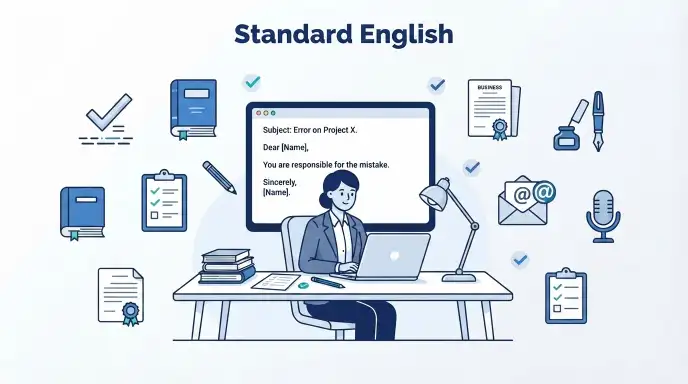
In contrast, standard English is clearer and more suitable for professional, academic, and formal communication.
Example
“You are responsible for what happened.”
Quick Summary
| Internet Slang | Meaning |
| That’s on you | You are responsible for the problem |
| Skill issue | Someone failed because of a lack of skill |
| Take the L | Accept your loss or mistake |
| FAFO | Face the consequences of your actions |
| You asked for it | You caused the situation yourself |
| Deserved | The outcome was your own fault |
| That’s a you problem | The issue belongs to you |
| Played yourself | You caused your own problem |
| Your bad | Admit the mistake is yours |
| Karma | Experience the results of your own actions |
Frequently Asked Questions
These answers cover the most common questions people ask about internet slang.
What is the most common internet slang for “it’s your fault”?
“That’s on you” is the most common expression. People use it to say someone is responsible for a mistake or problem.
What does “Skill issue” mean?
“Skill issue” is a humorous phrase that suggests someone failed because of their own lack of skill or a poor decision.
What are some internet slangs?
Popular internet slang includes LOL, BRB, IDK, IMO, TBH, SMH, FAFO, Take the L, That’s on You, and Skill Issue.
What is cyber slang?
Cyber slang is informal language, abbreviations, emojis, and expressions used in online chats, social media, gaming, and text messages.
What are common acronyms used in internet slang?
Some common internet acronyms include:
- LOL – Laugh Out Loud
- BRB – Be Right Back
- IDK – I Don’t Know
- IMO – In My Opinion
- TBH – To Be Honest
- SMH – Shaking My Head
- IRL – In Real Life
- DM – Direct Message
Is FAFO offensive?
Yes. Because FAFO contains a vulgar word in its full form, it may not be appropriate for family friendly or professional conversations.
Is internet slang suitable for work?
Generally, no. Internet slang is best for casual conversations. Instead, use standard English in professional settings.
Which slang phrase is the most polite?
Among these expressions, “That’s on you” is usually one of the least harsh. However, you should still consider the situation and tone before using it.
Conclusion
Internet slang for “it’s your fault” includes popular expressions such as “That’s on you,” “Skill issue,” “Take the L,” “Played yourself,” and “That’s a you problem.” Today, people use these phrases across social media, gaming platforms, messaging apps, and meme communities to assign responsibility in a quick and casual way.
However, context always c. While some expressions are playful, others may sound sarcastic or rude. By understanding their meanings and using them appropriately, you can follow online conversations more easily and communicate with greater confidence.
This version keeps paragraphs short, uses varied sentence openings, includes transition words naturally, and is optimized for both SEO and Yoast readability.
Read more about!

Hi, I’m Ethan Carter. I write easy-to-read articles about slang, texting abbreviations, and digital communication. My goal is to make modern English simple and useful for students, professionals, and anyone curious about internet language.