Oakland slang is more than just a collection of informal words. It represents the culture, history, and everyday communication style of Oakland, California, and the wider Bay Area. These expressions have been shaped by local communities, music, street culture, and generations of speakers who created their own unique way of talking. Some Oakland slang words remain mostly local, while others have spread across the United States through hip hop, TikTok, Instagram, and online conversations.
In this guide, you will learn what Oakland slang means, where these expressions come from, and how popular words are used in real conversations. if you are exploring Bay Area culture, trying to understand rap lyrics, or learning modern slang, this article explains Oakland expressions with simple meanings and examples.
Quick Answer
Oakland slang refers to the unique words and phrases used in Oakland, California, and the surrounding Bay Area. It is influenced by local culture, African American Vernacular English (AAVE), hip hop, and community traditions. Popular examples include “hella” (very or a lot), “hyphy” (energetic or excited), and “finna” (about to do something).
What Is Oakland Slang?
Oakland slang is a style of informal language that developed in Oakland, California. It includes words, phrases, and expressions that locals use in everyday conversations with friends, family, and community members.
Unlike formal English, slang is more relaxed and often depends on the situation. A word may have a different feeling or meaning depending on who says it, where it is used, and the tone of the conversation.
Oakland slang is not just about words. It reflects the city’s identity, creativity, and cultural history. Many expressions carry connections to music, neighbourhoods, and local experiences.
The History of Oakland Slang
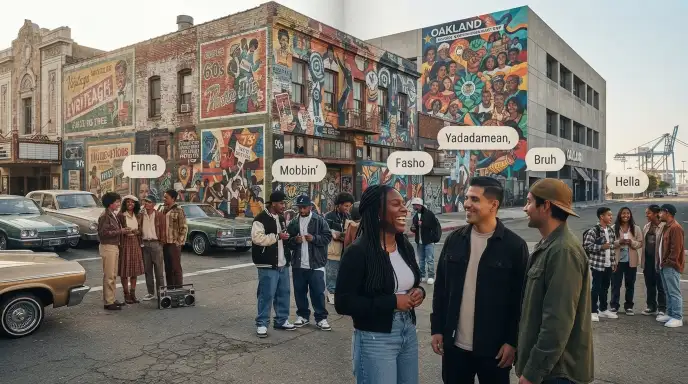
Oakland has a long history of cultural diversity, and this has strongly influenced the way people speak. Different communities have contributed expressions that became part of local communication.
Some major influences include:
- African American Vernacular English (AAVE)
- Bay Area hip hop culture
- Local neighbourhood communities
- Youth culture
- Sports and entertainment
- Internet communication
During the 1990s and early 2000s, Bay Area musicians helped introduce many local expressions to wider audiences. The Hyphy movement especially played an important role in spreading Oakland and Bay Area slang beyond California.
Today, social media platforms such as TikTok, Instagram, Reddit, and YouTube continue to introduce these expressions to new audiences.
Why Is Oakland Slang Unique?
Every city develops its own way of speaking, but Oakland slang has a strong cultural identity. Many expressions are connected to the city’s music, history, and community life.
Some things that make Oakland slang unique include:
- Creative expressions
- Strong local connections
- Influence from music and art
- Changing meanings over time
- Community based language
A person from outside the Bay Area may understand the words but may not always understand the cultural meaning behind them.
Popular Oakland Slang Words and Meanings
Oakland slang includes many words that are commonly heard in casual conversations. Some are used throughout Northern California, while others are more connected to specific communities.
| Slang Word | Meaning | Example |
| Hella | Very, extremely, or a lot | “That movie was hella good.” |
| Hyphy | Excited, energetic, or wild in a fun way | “The crowd got hyphy tonight.” |
| Finna | About to do something | “I’m finna leave soon.” |
| Bruh | Friend or expression of surprise | “Bruh, that’s wild.” |
| Slaps | Something that is very good | “This song slaps.” |
| Trippin | Acting unreasonable or overreacting | “You’re trippin right now.” |
| Fasho | For sure or definitely | “I’ll come, fasho.” |
| Cutty | Close friend or someone familiar | “That’s my cutty.” |
| Mob | Move together as a group | “Let’s mob over there.” |
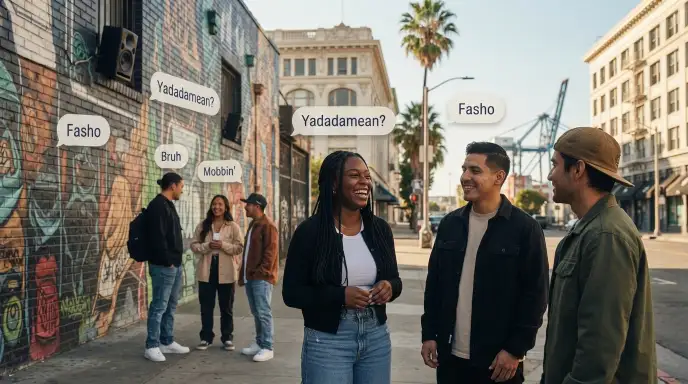
| Yadadamean | Do you know what I mean? | “That’s how it works, yadadamean?” |
What Does Hella Mean in Oakland Slang?
“Hella” is one of the most famous slang words associated with Oakland and Northern California.
It means:
- Very
- Extremely
- A lot of something
People use it to add extra emphasis to a sentence.
Examples:
- “That restaurant is hella good.”
- “There were hella people at the event.”
- “I’m hella tired today.”
Although many people across the United States recognise this word now, it remains strongly connected to Northern California culture.
What Does Hyphy Mean in Oakland Slang?
“Hyphy” is one of the most important terms connected to Oakland and Bay Area culture.
It describes being:
- Full of energy
- Extremely excited
- Wild in a fun way
- Ready to enjoy the moment
The word became especially popular during the Bay Area Hyphy movement in the early 2000s, which included music, dancing, and a unique local style.
Examples:
- “Everyone got hyphy at the concert.”
- “The party was getting hyphy.”
- “The crowd went hyphy when the song started.”
Hyphy usually has a positive meaning and represents excitement and celebration.
What Does Finna Mean?
“Finna” means “about to” or “going to.”
It is commonly used in casual speech and is not limited only to Oakland. The word is part of a wider informal English style that appears in many communities.
Examples:
- “I’m finna eat.”
- “She’s finna call you.”
- “We’re finna head home.”
Because it is casual slang, it is better suited for conversations, messages, and social media rather than formal writing.
What Does Slaps Mean?
When someone says something “slaps,” they mean it is excellent, enjoyable, or impressive.
The expression is often used for:
- Songs
- Food
- Movies
- Performances
Examples:
- “This track slaps.”
- “That burger slaps.”
- “The new game slaps.”
The word usually expresses excitement and approval.
What Does Bruh Mean?
“Bruh” is a casual way to address someone, similar to “bro” or “friend.” It can also show surprise, disbelief, or frustration.
The meaning depends on the tone.
Friendly Example:
“Bruh, that was amazing!”
Surprise Example:
“Bruh, you really did that?”
Frustrated Example:
“Bruh, come on.”
Because the same word can show different emotions, context is important.
More Popular Oakland Slang Words and Meanings
Oakland slang continues to grow as people create new expressions and adapt older ones. Some words are strongly connected to the Bay Area, while others are now common in many parts of the United States.
Understanding these words requires more than knowing the dictionary meaning. The tone, situation, and relationship between speakers often decide what the expression really means.
What Does Fasho Mean?
“Fasho” is a casual way of saying “for sure” or “definitely.”
People use it to show agreement, confidence, or confirmation. It is common in relaxed conversations and texting.
Examples:
- “You coming to the game?”
- “Yeah, fasho.”
Other examples:
- “I’ll help you tomorrow, fasho.”
- “That restaurant is good, fasho.”
The word gives a friendly and confident tone.
What Does Cutty Mean?
“Cutty” is often used to describe a close friend, someone familiar, or a person from your local area.
The meaning can change depending on the speaker and context. In some situations, it can also refer to something hidden or low key.
Examples:
- “That’s my cutty from Oakland.”
- “I haven’t seen my old cutty in years.”
The word usually shows familiarity and connection.
What Does Mob Mean in Oakland Slang?
In Oakland slang, “mob” can mean moving or going somewhere together as a group.
It does not always have the negative meaning associated with the word “mob” in other contexts.
Examples:
- “Let’s mob to the store.”
- “Everyone mobbed over after the event.”
- “We are going to mob together.”
The expression highlights group movement and togetherness.
What Does Yadadamean Mean?
“Yadadamean” is a phrase based on:
“Do you know what I mean?”
People use it to check if someone understands their point.
It is often used at the end of a sentence during casual conversations.
Examples:
- “We look after our own, yadadamean?”
- “That’s just how things work, yadadamean?”
The phrase is strongly connected with Bay Area speech patterns.
What Does Thizz Mean?
“Thizz” is a term closely connected with Bay Area hip hop culture and the Hyphy movement
It became widely recognised through music and local culture. The word can have different meanings depending on context, so understanding where and how it is used is important.
It is mainly associated with Bay Area music history rather than everyday conversation for many speakers.
Example:
- “That song has an old school Bay Area thizz sound.”
What Does Tight Mean?
In Oakland and wider Bay Area slang, “tight” can mean feeling angry, upset, or frustrated.
This is different from the standard meaning of “tight” as something fitting closely.
Examples:
- “He’s tight because he missed the event.”
- “Don’t get tight over a small mistake.”
The meaning depends completely on the situation.
What Does Sauce Mean?
“Sauce” refers to someone’s personal style, confidence, skill, or unique quality.
It is often used when someone stands out in a positive way.
Examples:
- “He got the sauce.”
- “Her outfit has a lot of sauce.”
- “That player plays with sauce.”
The word is common in modern slang and internet conversations as well.
What Does Gas Mean in Oakland Slang?
“Gas” can have different meanings depending on context.
In slang, it often means:
- To hype someone up
- To exaggerate something
- To praise something too much
Examples:
- “Don’t gas yourself.”
- “Everyone was gassing that new song.”
- “He always gases his friends.”
However, “gas” can also refer to fuel or other meanings, so context matters.
Oakland Slang in Text Messages
Oakland slang is often shortened or adapted in digital communication. People may use these expressions in texting, comments, and social media posts.
Common examples include:
- “fasho” instead of “for sure”
- “rn” instead of “right now”
- “bruh” as a reaction
- “hella” for emphasis
Example Text Conversation:
1: Are you heading over later?
2: Yeah, I’m about to pull up in a little while.
1: Cool, catch you there.
Online conversations often make slang spread faster because people from different regions see and copy expressions.
Oakland Slang in Music and Pop Culture
Music has played a major role in making Oakland slang known outside California.
Bay Area artists have used local expressions to represent their communities and experiences. Hip hop, especially during the Hyphy movement, helped introduce words like “hyphy” and other regional phrases to listeners around the world.
Oakland slang appears in:
- Rap lyrics
- Music videos
- Interviews
- Social media content
- Streetwear culture
However, hearing a slang word in a song does not always mean everyone in Oakland uses it in the same way today. Language changes over time.
Oakland Slang on TikTok, Instagram, and Reddit
Social media has transformed how regional slang spreads.
Today, Oakland related expressions can appear on:
- TikTok videos
- Instagram captions
- Reddit discussions
- YouTube comments
- Snapchat messages
Some users outside California may use these words after seeing them online. However, online usage can sometimes remove the original cultural context.
Learning the background of a slang word helps you understand its real meaning.
How to Use Oakland Slang Respectfully
Learning slang can be a fun way to understand another culture, but it is important to use expressions naturally.
Helpful tips:
- Understand the meaning before using a word.
- Pay attention to the situation.
- Avoid forcing slang into conversations.
- Respect the communities that created the language.
- Remember that slang is connected to culture and history.
Slang sounds most natural when it develops through genuine communication rather than imitation.
Common Questions About Oakland Slang
What are the Oakland slang words?
Popular Oakland slang words include hella, hyphy, finna, fasho, bruh, and slaps. These words are used in casual conversations and Bay Area culture.
Is Oakland slang the same as California slang?
No. California is a large state with many different regional speech styles.
Los Angeles, San Diego, and other areas have developed their own slang expressions.
Why does Oakland slang change over time?
Like all languages, slang changes because of new generations, music, technology, and social interactions. New words appear while older expressions may become less common.
Conclusion
Oakland slang represents much more than casual words. It reflects the city’s history, creativity, music, and community identity. From “hella” and “hyphy” to newer internet expressions, these terms show how language changes with culture and time.
if you hear Oakland slang in conversations, music, or social media, understanding the meaning and background helps you appreciate the expressions more deeply. Slang is not just about vocabulary it is a reflection of the people and places that create it.
Discover more slang!

Hi, I’m Ethan Carter. I write easy-to-read articles about slang, texting abbreviations, and digital communication. My goal is to make modern English simple and useful for students, professionals, and anyone curious about internet language.