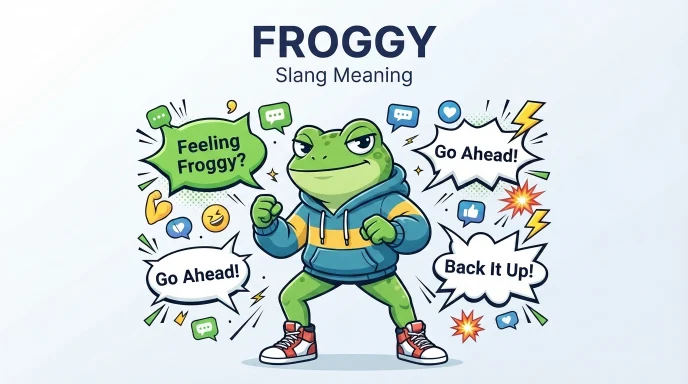
Froggy meaning slang usually refers to someone acting unusually bold, aggressive, or overly confident, often in a playful or mocking way. When someone says, “You’re feeling froggy,” they mean the person seems ready to challenge someone or start an argument.
Many people search for froggy meaning slang after seeing it on TikTok, X (Twitter), Reddit, Discord, or in text messages. The phrase can be confusing because it does not actually relate to real frogs. Instead, it is a figurative expression that describes someone’s attitude or behavior.
In this guide, you’ll learn what froggy meaning slang means, where it came from, when people use it, if it is offensive, and how to understand it in different online and everyday conversations.
Quick Answer: Froggy slang Meaning
The feeling froggy meaning slang refers to acting bold, confrontational, or eager to challenge someone. It is most commonly heard in the phrase “feeling froggy?” or “if you’re feeling froggy, jump,” which dares someone to act instead of just talking.
What Does Froggy Meaning Slang Mean?
Froggy slang describes a person who suddenly becomes brave, confrontational, or overly confident.
It often suggests that someone is:
- Acting tougher than usual
- Ready to argue or fight
- Talking big without backing it up
- Looking for a challenge
Sometimes the word is used jokingly among friends. In other situations, it can sound like a warning or a challenge.
Simple Definition
The froggy definition slang refers to acting bold, aggressive, or ready to challenge someone.
| Term | Meaning | Tone |
| Froggy | Acting bold, aggressive, or ready to challenge someone | Informal |
Does “Froggy” Stand for Anything?
No.
Froggy is not an acronym or abbreviation.
Unlike internet abbreviations such as “LOL” or “BRB,” froggy is simply a slang adjective based on the word frog.
Different Meanings of Froggy
The exact meaning depends on the conversation.
1. Acting Bold
This is the most common meaning.
Example:
“Why are you getting so froggy today?”
Meaning:
The person is acting unusually confident or confrontational.
2. Ready to Fight
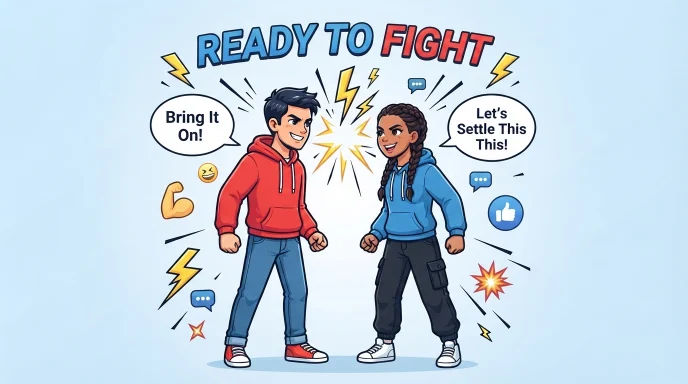
The “get froggy meaning” suggests that someone wants to start a physical or verbal fight.What does getting froggy mean?
It means someone is becoming bold, confrontational, or ready to challenge someone.
Example:
“He’s getting froggy with everyone.”
Meaning:
He is picking fights or challenging people.
3. Playful Teasing
Friends sometimes use it jokingly.
Example:
“Someone woke up feeling froggy!”
Meaning:
You’re acting extra confident today.
Where Is Froggy Commonly Used?
You may see or hear this slang in:
| Platform | Common? | Example |
| TikTok | Yes | Funny captions |
| Yes | Discussions and jokes | |
| Discord | Yes | Gaming chat |
| X (Twitter) | Yes | Reactions and memes |
| Sometimes | Comments | |
| Snapchat | Sometimes | Private chats |
| Gaming | Yes | Trash talk between players |
| Everyday speech | Yes | Informal conversations |
It is much less common in formal writing or business communication.
The Phrase “Feeling Froggy? Jump.”
The “feeling froggy meaning” refers to acting unusually bold, confident, or ready to challenge someone.
One of the most famous expressions is:
“Feeling froggy? Jump.”
This phrase means:
If you’re going to challenge someone, stop talking and do it.
It is usually:
- A dare
- A warning
- A challenge
- A response to someone making threats
Because of its confrontational tone, avoid using it in professional or serious situations.
Is Froggy Rude, Offensive, or Harmless?
Most of the time, froggy is harmless slang.
However, the tone matters.
| Situation | Appropriate? |
| Friends joking | ✅ Yes |
| Gaming chat | ✅ Common |
| Social media | ✅ Common |
| Workplace | ❌ Usually no |
| School assignment | ❌ Not recommended |
| Professional emails | ❌ Avoid |
It is not considered a swear word, but it can sound confrontational depending on how it is used.
Real Life Examples
Text Message
Alex: Why are you so froggy today?
Sam: I’m just confident.
Gaming
“Don’t get froggy unless you’re ready to play.”
TikTok Caption
“Me feeling froggy after one good workout.”
“That guy got froggy in the comments.”
Friends
“She got froggy after winning one game.”
Origin and History
The slang use of froggy is believed to come from the older American Southern expression, “Feeling froggy? Jump.” This expression is commonly linked to the feeling froggy origin, which describes someone acting bold or ready to take a challenge.
“Feeling froggy? Jump.”
The phrase has been used in spoken English for decades, especially in parts of the southern United States. Its exact origin is uncertain, but it became popular because it compares a bold person to a frog that is ready to leap.
More recently, the expression has spread through:
- Internet memes
- Gaming communities
- Social media
- Hip hop culture
- Viral videos
Today, many younger users recognize it from TikTok, Reddit, and online videos rather than from regional speech.
Why Do People Use Froggy?
People use this slang because it is:
- Funny
- Memorable
- Easy to understand
- Less harsh than direct insults
- A playful way to call out someone’s confidence
Instead of saying:
“You’re acting aggressive.”
Someone might simply say:
“You’re getting froggy.”
Similar Slang Terms
| Slang | Meaning |
| Cocky | Too confident |
| Mouthy | Talks back a lot |
| Bold | Brave or confident |
| Feisty | Energetic and ready to argue |
| Tough guy | Acts strong |
| Big talk | Makes confident claims |
| Brave | Shows courage |
These words have similar meanings, although each has a slightly different tone.
When Should You Avoid Using It?
Avoid using froggy when:
- Speaking with teachers
- Writing formal emails
- Talking to customers
- During workplace meetings
- In serious disagreements
- When someone may misunderstand it as a challenge
It works best in casual conversations with people who understand slang.
Polite Alternatives
Instead of saying:
“You’re getting froggy.”
You could say:
- You’re being very confident.
- You’re acting bold.
- You’re being assertive.
- You’re speaking confidently.
- You seem ready for a challenge.
These alternatives are more appropriate in professional settings.
Common Misunderstandings
Does Froggy Mean Happy?
No.
It usually refers to confidence or confrontation, not happiness.
Is It About Real Frogs?
No.
It is a figurative expression.
Is It Always Negative?
No.
Friends often use it humorously.
Sometimes it simply means someone feels unusually confident.
Does Everyone Use It the Same Way?
Not always.
Older speakers in the United States may recognize it from the long standing phrase “Feeling froggy? Jump.” Younger people may know it mainly from memes, gaming, or social media. In all cases, the common idea is someone acting bold or ready to challenge others.
Frequently Asked Questions
What does froggy mean in slang?
It means someone is acting bold, confrontational, or unusually confident.
Is froggy an insult?
Not usually.
It depends on the tone. It is often playful but can sound like a challenge.
Is froggy used on TikTok?
Yes.
Many creators use it in jokes, memes, reaction videos, and humorous captions.
Can I use froggy at work?
It is generally better to avoid it in professional settings because not everyone will understand the slang or appreciate its confrontational tone.
Is froggy still popular?
Yes, although it remains much more common in casual speech, gaming communities, memes, and social media than in everyday formal English.
What does feeling froggy mean?
It means someone seems ready to argue, compete, or challenge another person.
Conclusion
Froggy meaning slang refers to someone acting unusually bold, confident, or ready to challenge another person. It is most often heard in the phrase “feeling froggy?” or “feeling froggy? Jump.” While the expression is usually playful, it can also carry a confrontational tone depending on the situation.orio
If you’re chatting with friends, gaming online, or reading comments on TikTok, Reddit, or Discord, understanding this slang helps you recognize when someone is teasing, daring, or calling out another person’s attitude. For formal conversations, however, it’s best to choose more neutral words like confident or assertive.
Read more about!
JW Slang Meaning: What Does “JW” Mean in Text, Social Media, and Online Chats?

Daniel Carter – Short Bio (First Person)
Hi, I’m Daniel Carter, a slang language researcher and content writer. I enjoy exploring internet slang, texting abbreviations, and modern expressions to make them easy for everyone to understand. My goal is to explain slang in clear, simple English with real-life examples so readers can communicate confidently online and stay up to date with the latest language trends.