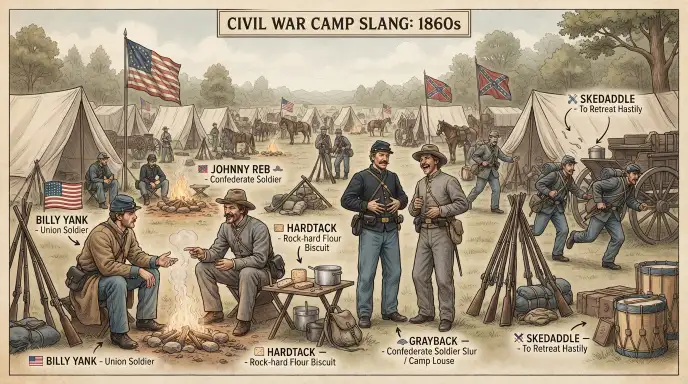
The American Civil War (1861–1865) introduced many slang words and nicknames used by soldiers, civilians, and newspapers. These expressions described daily camp life, battles, food, military roles, and the people involved in the conflict.
Learning Civil War slang helps you better understand historical letters, diaries, books, and military records. Many of these terms reveal how people communicated during one of the most significant periods in American history.
Some Civil War slang disappeared after the war, while a few expressions influenced later military language and everyday English. Each term reflects the experiences and culture of the time.
In this guide, you’ll learn the meaning, history, and examples of the most common Civil War slang terms in simple, easy to understand language.
What Is Civil War Slang?
1. Definition
Civil War slang refers to the informal words, nicknames, and expressions used during the American Civil War between 1861 and 1865. These terms appeared in military camps, battlefields, newspapers, and personal letters. They helped people communicate quickly and often reflected the humor, challenges, and daily experiences of the time.
2. Why It Developed
Civil War slang developed because soldiers from different states and backgrounds served together. As they interacted, they shared regional expressions and created new words for military life.
Why Civil War Slang Matters Today
1. Helps You Understand History
Many historical books, letters, and war records include Civil War slang. Knowing these expressions makes it easier to understand original sources and the experiences of soldiers and civilians during the war.
2. Shows How Language Changes
Civil War slang demonstrates how language evolves during major historical events. Some expressions disappeared after the war, while others influenced later military terms and everyday English.
Common Civil War Slang Terms
1. Billy Yank
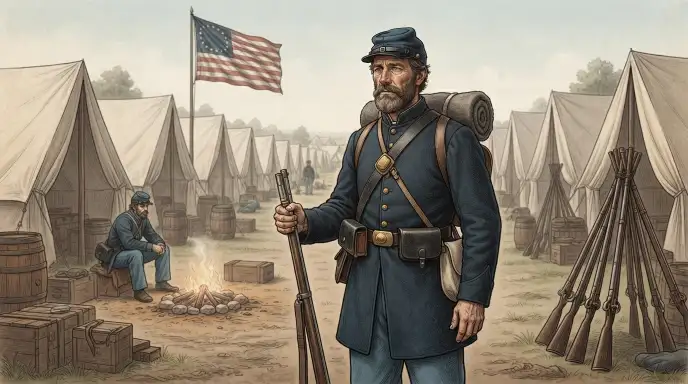
Billy Yank was the most common nickname for a Union soldier. Confederate soldiers and civilians often used this term when referring to members of the Union Army.
Example:
“The Billy Yanks marched into the town before sunrise.”
2. Johnny Reb
Johnny Reb was the nickname for a Confederate soldier. It became one of the best known terms used throughout the Civil War.
Example:
“The Johnny Rebs defended the hill against the attack.”
3. Blue Belly
Blue Belly was a Confederate nickname for Union soldiers because they wore blue uniforms.
Example:
“The Blue Bellies crossed the river at dawn.”
4. Grayback
Grayback referred to Confederate soldiers, whose uniforms were usually gray.
Example:
“The Graybacks held their position throughout the battle.”
5. Hardtack
Hardtack was the hard biscuit issued as a basic food ration for soldiers. It became one of the most recognizable foods of the Civil War.
Example:
“The soldiers ate hardtack with their evening meal.”
6. Salt Horse
Salt Horse was slang for salted beef served to soldiers in military camps. Many troops complained about eating it regularly.
Example:
“They were tired of eating salt horse every day.”
7. Skedaddle
Skedaddle meant to run away quickly or retreat from danger. It was commonly heard during battles.
Example:
“The troops had to skedaddle after heavy enemy fire.”
8. Dog Tent
A Dog Tent was a small canvas shelter shared by two soldiers while camping.
Example:
“They rested inside a dog tent during the storm.”
Common Civil War Slang Terms (Continued)
9. Hospital Steward
A Hospital Steward was an enlisted medical assistant responsible for medicines, supplies, and caring for injured soldiers in military hospitals.
Example:
“The hospital steward worked all night treating the wounded.”
10. Copperhead
Copperhead was a nickname for Northern civilians who opposed the Civil War and supported a negotiated peace with the Confederacy.
Example:
“Some newspapers accused the politician of being a Copperhead.”
11. Contraband
Contraband was the term used by the Union Army for enslaved people who escaped to Union controlled areas and were not returned to enslavers.
Example:
“Many contrabands found safety near the Union camp.”
12. Greenhorn
Greenhorn referred to a new or inexperienced soldier who had little military training.
Example:
“The greenhorn learned quickly from the experienced troops.”
13. Veteran
Veteran described a soldier with experience in previous battles. Veterans often guided newer recruits.
Example:
“The veterans prepared the camp before sunset.”
14. Sharpshooter
A Sharpshooter was a soldier known for excellent accuracy with a rifle, especially at long distances.
Example:
“The sharpshooter watched the battlefield from a hidden position.”
15. Picket
A Picket was a soldier assigned to guard duty outside the main camp to watch for enemy movement.
Example:
“The pickets stayed alert throughout the night.”
16. Camp Fever
Camp Fever referred to illnesses that spread in crowded military camps because of poor sanitation and limited medical care.
Example:
“Camp fever affected many soldiers during the winter.”
17. Bounty Jumper
A Bounty Jumper was someone who repeatedly enlisted to collect enlistment bonuses and then deserted before serving.
Example:
“The officers searched for suspected bounty jumpers.”
18. Bushwhacker
Bushwhacker referred to an irregular guerrilla fighter who carried out surprise attacks instead of fighting in organized armies.
Example:
“Bushwhackers attacked the supply wagons without warning.”
19. Jayhawker
Jayhawker was the name given to pro Union guerrilla fighters, especially those from Kansas.
Example:
“The Jayhawkers launched a raid across the border.”
20. Reb
Reb was a shortened nickname for a Confederate soldier and was widely used by Union troops.
Example:
“The scouts reported seeing several Rebs near the bridge.”
Civil War Slang in Daily Camp Life
1. Food and Rations
Much of Civil War slang centered on food because soldiers often ate the same meals for weeks. Words like “hardtack” and “salt horse” became part of everyday conversations in camp.
2. Military Nicknames
Nicknames such as “Billy Yank,” “Johnny Reb,” “Blue Belly,” and “Grayback” helped soldiers quickly identify Union and Confederate troops. These names also appeared in newspapers, letters, and personal diaries.
Did Civil War Slang Influence Modern English?
1. Some Words Are Still Used
A few Civil War slang terms, such as “skedaddle,” are still recognized today, although they are less common than they once were.
2. Most Terms Remain Historical
Many expressions are now found mainly in history books, museums, documentaries, and Civil War literature, where they help explain life during the 1860s.
Civil War Slang vs. Modern Military Slang
1. Similar Purpose
Both Civil War slang and modern military slang make communication quicker and build a sense of identity among service members. Nicknames, shortened words, and humorous expressions have always been part of military culture.
2. Different Vocabulary
While today’s military uses modern abbreviations and technical terms, Civil War slang focused on uniforms, camp life, food, equipment, and everyday experiences. Many older expressions are no longer used outside historical discussions.
Tips for Understanding Civil War Slang
1. Consider the Historical Context
Many Civil War slang terms have meanings that differ from modern English. Always read them in the context of the American Civil War to understand their intended meaning.
2. Read Original Sources
Letters, diaries, newspapers, and military memoirs are excellent places to see Civil War slang used naturally. These sources provide valuable insight into everyday life during the war.
3. Watch for Regional Differences
Union and Confederate soldiers sometimes used different words for the same idea. Regional speech also influenced the slang that developed during the conflict.
Frequently Asked Questions
1. What does it mean when they say Civil War?
A Civil War is a conflict fought between groups within the same country. In the U.S., it usually refers to the American Civil War of 1861–1865.
2. What are the funny names for the Civil War?
Informal names include “The Late Unpleasantness,” “The Recent Unpleasantness,” and “The Brothers’ War.”
3. What are the nicknames for the Civil War?
Common nicknames include “The War Between the States,” “The War of the Rebellion,” “The War of Secession,” and “The Blue and Gray War.”
4. What are other words for Civil War?
Other terms include internal conflict, domestic war, rebellion, insurrection, armed uprising, and internal war.
5. What is Civil War slang?
Civil War slang refers to the informal words and nicknames used by soldiers and civilians during the American Civil War.
6. What did Union soldiers call Confederate soldiers?
Union soldiers commonly called Confederate soldiers “Johnny Reb” or simply “Rebs.”
7. What did Confederate soldiers call Union soldiers?
Confederate soldiers often called Union troops “Billy Yank” or “Blue Bellies.”
8. Is Civil War slang still used today?
Most Civil War slang is historical, but a few words like “skedaddle” are still occasionally used today.
Conclusion
Civil War slang offers a fascinating look at the language of the American Civil War. From famous nicknames like “Billy Yank” and “Johnny Reb” to everyday terms such as “hardtack” and “skedaddle,” these expressions reveal how soldiers and civilians communicated during a challenging period in history.
Learning Civil War slang makes historical documents easier to understand and provides a deeper appreciation of the people, culture, and experiences that shaped the era. If you’re researching history, reading Civil War literature, or simply curious about historical language, these terms provide valuable insight into one of America’s most significant conflicts.
Discover more articles!

Hi, I’m Liam Carter, a slang language enthusiast and content writer. I research internet slang, social media terms, texting abbreviations, and online expressions to help readers understand modern English. I enjoy breaking down trending slang into simple, easy-to-read explanations with real-world examples, making online communication clearer and more enjoyable.