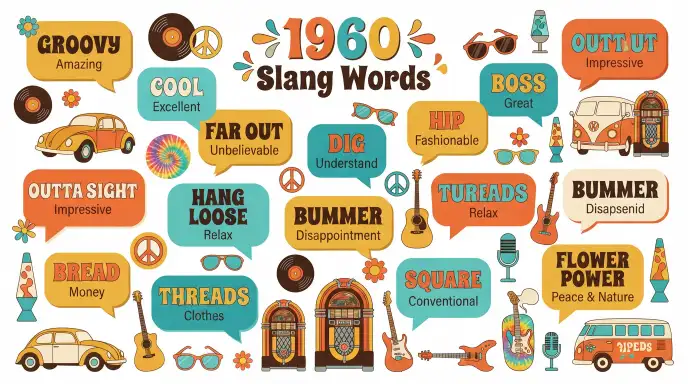
Discover the most popular 1960 slang words and learn how these classic expressions shaped everyday conversations.
The 1960s was a decade full of cultural changes, new music, and unique ways of speaking. People created fresh expressions to describe their feelings, fashion, friendships, and lifestyles.
Many 1960 slang words became popular through movies, television, music, and youth culture. These phrases showed creativity and helped people feel connected to their generation.
Today, these old slang terms are still found in classic films, songs, books, and online discussions about history and pop culture.
This guide explores famous 1960 slang words, their meanings, examples, and the cultural moments that made them popular.
What Are 1960 Slang Words?
1960 slang words were informal expressions used by people during the 1960s to communicate in a casual and creative way.
How Did 1960s Slang Develop?
The 1960s brought major changes in society, music, fashion, and entertainment. As a result, young people developed new words to express their attitudes and lifestyles.
Rock music, television shows, college culture, and social movements all influenced the language of the decade.
Why Are 1960 Slang Words Still Interesting?
These words give us a look into the culture and emotions of the time. They help people understand old movies, songs, and historical conversations.
Some expressions disappeared, while others became common parts of English.
Why Did Slang Become Popular in the 1960s?
The 1960s created a perfect environment for new language trends. Young people wanted words that represented their changing world.
Influence of Music
Music was one of the biggest sources of slang during the decade. Rock, folk, and psychedelic music introduced many new expressions.
Artists and fans often created words that reflected excitement, freedom, and creativity.
Influence of Television and Movies
TV shows and movies helped spread slang across different areas. A phrase used by a popular character could quickly become part of everyday speech.
Influence of Youth Culture
Teenagers and young adults used slang to create their own identity. These words helped separate younger generations from older ones.
Popular 1960 Slang Words and Their Meanings
These expressions were commonly used during the decade. Their meaning often depended on the situation and tone.
Groovy
Groovy was one of the most famous 1960 slang words. It meant something was excellent, enjoyable, or exciting.
People commonly used it when talking about music, fashion, or experiences.
Example:
“That new song is groovy.”
Cool
Cool meant something was stylish, impressive, or acceptable. Although the word existed earlier, it became extremely popular during the 1960s.
People used it to describe people, clothes, ideas, and events.
Example:
“That jacket looks really cool.”
Far Out
Far out was used to describe something amazing, surprising, or unusual.
The phrase became popular among young people and was often connected with music and creative culture.
Example:
“Your new artwork is far out.”
Dig
Dig meant to understand, enjoy, or appreciate something.
People often used it when talking about music, opinions, or new ideas.
Example:
“I really dig this band.”
Hip
Hip described someone who understood current trends, culture, and popular ideas.
A hip person was usually considered fashionable and aware.
Example:
“She is very hip and knows the latest music.”
Outta Sight
Outta sight meant amazing, excellent, or impressive.
It was a stronger way to show excitement about something.
Example:
“That concert was outta sight.”
The Scene
The scene referred to a particular social group, activity, or community.
People used it when discussing music, parties, or cultural events.
Example:
“He is well-known in the local music scene.”
Hang Loose
Hang loose meant to relax and stay calm.
The phrase encouraged people to avoid stress and enjoy the moment.
Example:
“Don’t worry about the problem. Just hang loose.”
1960s Slang From Music and Counterculture
Music and social movements strongly influenced the vocabulary of the decade.
Hippie
Hippie described people connected with peace movements, alternative lifestyles, and new cultural ideas.
The term became widely recognized during the late 1960s.
Example:
“Many hippies supported messages of peace and freedom.”
Flower Power
Flower power represented peace, love, and nonviolent change.
The phrase became a major symbol of the hippie movement.
Example:
“Flower power became famous during protests for peace.”
Peace and Love
Peace and love expressed a desire for kindness, harmony, and understanding.
It became one of the most recognizable ideas of 1960s youth culture.
Example:
“The movement focused on peace and love.”
Beatnik
Beatnik referred to people involved in an artistic and alternative cultural movement.
The word was connected with writers, poets, and creative communities.
Example:
“The café attracted many beatnik artists.”
More Popular 1960 Slang Words
The 1960s introduced many creative expressions. These words reflected the humor, style, and attitudes of the people during that time.
Bummer
Bummer meant a disappointing or unpleasant situation. People used it when something went wrong.
Example:
“Missing the concert was a real bummer.”
Bogart
Bogart meant to keep something for yourself instead of sharing it. The term became popular through smoking culture.
Example:
“Don’t bogart the snacks. Share them with everyone.”
Boss
Boss meant excellent, impressive, or very cool. It was often used to praise something.
Example:
“That new guitar is boss.”
Bread
Bread was slang for money. It was commonly used in casual conversations.
Example:
“I need to save some bread before buying a new phone.”
Burn
Burn meant to insult or embarrass someone with a clever comment.
Example:
“That comeback was a serious burn.”
Catch Some Rays
Catch some rays meant to relax in the sun or spend time outdoors.
Example:
“We are going to the beach to catch some rays.”
Chick
Chick was an informal term used for a young woman. Today, it can sound outdated or disrespectful depending on the context.
Example:
“He met a chick at the party.”
Dig It
Dig it meant to understand, enjoy, or agree with something.
Example:
“Do you dig it?”
Give Me Five
Give me five meant asking for a high-five as a celebration or greeting.
Example:
“We won the game. Give me five!”
Groovy Cat
Groovy cat described someone who was stylish, confident, or connected with modern culture.
Example:
“He is a groovy cat who loves jazz music.”
1960 Slang Words About Fashion and Style
Fashion changed quickly during the 1960s. As clothing styles changed, people also created new ways to describe appearance.
Threads
Threads meant clothes or an outfit. People used it to talk about fashionable clothing.
Example:
“Your new threads look amazing.”
Sharp
Sharp described someone who looked stylish and well-dressed.
Example:
“He looked sharp in his new suit.”
Mod
Mod described a modern fashion style connected with young people, especially in Britain.
Example:
“She loved the mod fashion style of the 1960s.”
Decked Out

Decked out meant wearing stylish or impressive clothing.
Example:
“He was decked out for the weekend party.”
Flashy
Flashy described something bright, noticeable, or attention-grabbing.
Example:
“That flashy jacket matched the 1960s style.”
1960 Slang Words Used in Social Groups
Different communities created their own expressions. These words helped people feel connected.
Solid
Solid meant reliable, good, or trustworthy.
Example:
“He’s a solid friend who always helps.”
Square
Square described someone who was old-fashioned or not interested in new trends.
Example:
“My parents thought that style was too wild, but they were just being square.”
Scene Maker
A scene maker was someone who attracted attention or influenced social events.
Example:
“She was a major scene maker at local gatherings.”
Dig the Vibe
This phrase meant enjoying or appreciating the feeling of a place, person, or event.
Example:
“I really dig the vibe of this café.”
Heavy
Heavy meant serious, deep, or emotionally powerful.
Example:
“That movie had a heavy message.”
1960 Slang in Everyday Conversations
These examples show how people might have used slang naturally.
Conversation About Music
Tom: “Have you heard the new band?”
Mike: “Yeah, their sound is totally groovy.”
Conversation About Clothes
Anna: “I bought a new jacket yesterday.”
Lisa: “Those threads are really sharp.”
Conversation Between Friends
John: “I finally finished my project.”
Mark: “That is boss. Great job.”
Conversation About Plans
Sam: “Are you coming to the beach?”
Alex: “Yeah, I want to catch some rays.”
1960 Slang Words That Are Still Used Today
Some expressions from the 1960s survived and are still recognized.
Cool
Cool remains one of the most common words in modern English.
People still use it to describe something impressive or acceptable.
Example:
“That idea sounds cool.”
Boss
Although less common today, boss is still understood as a way to praise something.
Example:
“That design looks boss.”
Burn
Burn is still used online and in conversations when someone makes a clever insult.
Example:
“That reply was a perfect burn.”
Hip
Hip is still used to describe awareness of trends and culture.
Example:
“He is hip to the latest technology.”
Why Do People Study 1960 Slang Today?
Understanding old slang helps people connect with history and culture.
Understanding Old Movies
Many classic films use expressions from the 1960s. Knowing these words makes the stories easier to understand.
Learning Language Change
Slang shows how English changes over time. New generations create new words based on their experiences.
Exploring Pop Culture
Music, fashion, and television from the 1960s still influence modern entertainment.
1960 Slang Words vs Modern Slang
Language changes with every generation. Comparing old and new slang shows how culture influences the way people communicate.
Similar Purpose, Different Words
Many modern slang words have the same purpose as 1960s expressions. They help people show excitement, approval, or connection.
For example, “groovy” was used to praise something in the 1960s. Today, people may use words like “awesome” or “amazing.”
Changes Through Technology
1960s slang spread through music, television, and face-to-face conversations. Today, slang spreads quickly through social media, texting, and online communities.
Platforms like TikTok, Instagram, and Reddit help new expressions become popular worldwide.
Slang Reflects Society
Both old and modern slang represent the values and interests of each generation. Words often show changes in music, fashion, technology, and social life.
How to Use 1960 Slang Words Today
These expressions can still be useful when discussing history, entertainment, or creative writing.
In Historical Discussions
Writers often use 1960 slang words when explaining the culture of the decade.
Example:
“The movie uses 1960s slang to create an authentic atmosphere.”
In Creative Writing
Authors may include old slang to make characters feel realistic.
Example:
“The character said the party was groovy.”
In Casual Conversations
Some classic terms can be used for fun. However, using too many old expressions may sound unnatural.
Example:
“That vintage car is really cool.”
Common Mistakes When Using 1960 Slang
Old slang can be interesting, but it is important to understand the context.
Using Slang Without Understanding the Meaning
Some words have changed over time. Therefore, always check the meaning before using them.
Example:
“Square” meant old-fashioned in the 1960s, but its meaning can be different in other situations.
Using Outdated Terms in Formal Situations
Slang is casual language. It is not usually suitable for professional writing or serious communication.
Example:
“A business report should use standard English instead of slang.”
Ignoring Historical Context
Some expressions were connected with specific movements or communities.
Example:
“Flower power” is strongly linked with the peace movement of the 1960s.
Quick Summary of Popular 1960 Slang Words
| 1960 Slang Word | Meaning |
| Groovy | Excellent or enjoyable |
| Cool | Stylish or impressive |
| Far Out | Amazing or surprising |
| Dig | Understand or enjoy |
| Hip | Trendy or aware |
| Outta Sight | Extremely impressive |
| Hang Loose | Relax and stay calm |
| Bummer | Disappointing situation |
| Boss | Excellent or impressive |
| Bread | Money |
| Burn | Clever insult |
| Threads | Clothes |
| Square | Old-fashioned person |
| Heavy | Serious or deep |
| Hippie | Person connected with alternative culture |
| Flower Power | Peace and nonviolent change |
Frequently Asked Questions
What are 1960 slang words?
1960 slang words are informal expressions used during the 1960s. They were popular among young people, musicians, and different cultural groups.
What was the most popular slang word in the 1960s?
“Groovy” was one of the most recognized 1960s slang words. People used it to describe something exciting, enjoyable, or impressive.
What did cool mean in the 1960s?
In the 1960s, cool meant stylish, impressive, or acceptable. The word became widely popular and is still used today.
What did groovy mean in the 1960s?
Groovy meant excellent, fashionable, or enjoyable. It was commonly connected with music, fashion, and youth culture.
What are some hippie slang words from the 1960s?
Popular hippie-related slang included groovy, far out, flower power, peace and love, and dig.
What slang words did teenagers use in the 1960s?
Teenagers commonly used words like cool, hip, groovy, boss, dig, and far out during casual conversations.
Are 1960 slang words still used today?
Yes, some words like cool, burn, and hip are still used. Others are mainly used when discussing history or vintage culture.
Why did 1960s slang become popular?
1960s slang became popular because of music, movies, television, youth movements, and major cultural changes during the decade.
Where can I hear 1960s slang today?
You can hear these expressions in classic movies, old songs, documentaries, historical books, and vintage-themed content.
What are the top 10 slang words?
Some popular slang words include cool, groovy, lit, vibe, chill, awesome, flex, sus, rizz, and no cap.
What are some 1950s slang words?
Common 1950s slang words included daddy-o, cool cat, hip, swell, far out, and square.
What are some old slang words?
Old slang words include groovy, boss, swell, rad, dig, hip, cool, and far out.
What was the most popular slang in 1964?
In 1964, words like cool, hip, groovy, boss, and dig were among the popular slang terms used by young people.
Conclusion
1960 slang words represent one of the most creative periods in English language history. These expressions reflected the music, fashion, and social changes of the decade.
Words like groovy, cool, far out, and dig show how people used language to express personality and culture. While some terms are less common today, they remain an important part of American history and pop culture.
Learning these classic expressions helps you better understand old conversations, movies, and music from the 1960s. It also shows how language continues to change with every generation.
Read more about!

Daniel Carter – Short Bio (First Person)
Hi, I’m Daniel Carter, a slang language researcher and content writer. I enjoy exploring internet slang, texting abbreviations, and modern expressions to make them easy for everyone to understand. My goal is to explain slang in clear, simple English with real-life examples so readers can communicate confidently online and stay up to date with the latest language trends.