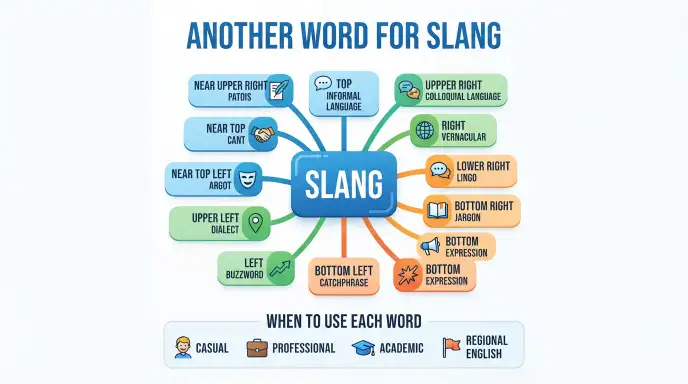
Learn another word for slang with simple meanings, common alternatives, and real-life examples to improve your English vocabulary.
One simple word can change how your writing sounds. Learning another word for slang helps you choose the right language for every situation.
People use the word “slang” every day. However, it is not always the best choice in formal or professional writing.
Choosing the right alternative improves your vocabulary. It also makes your writing clearer and more engaging.
What Does Another Word for Slang Mean?
Here are the most common words that can replace “slang.”
Simple Definition
Another word for slang is a term that describes informal or casual language. These words often replace “slang” in writing or conversation.
Why It Matters
Different situations need different words. Therefore, selecting the right synonym makes your message clearer.
Quick Example
Instead of saying, “Teenagers use a lot of slang,” you can write, “Teenagers use a lot of informal language.”
Why Learn Another Word for Slang?
Using different words makes your writing stronger. It also helps readers stay interested.
Improve Your Vocabulary
Learning synonyms gives you more ways to express the same idea. As a result, your writing becomes more natural.
Avoid Repeating Words
Repeating the same word too often makes content sound dull. Therefore, using alternatives improves readability.
Write More Professionally
Formal writing usually avoids the word “slang.” Instead, writers often choose more suitable alternatives.
Match Your Audience
Some readers prefer simple language. Meanwhile, others expect more formal or academic terms.
Common Alternatives for Slang
Each synonym has a different purpose. Therefore, choose the one that matches your situation.
Informal Language
Informal language is the easiest alternative to slang. It describes relaxed and natural communication.
Example:
“My friends usually speak in informal language after school.”
Colloquial Language
Colloquial language refers to everyday speech. People use it naturally during daily conversations.
Example:
“The author used colloquial language to make the dialogue realistic.”
Vernacular
Vernacular means the everyday language spoken by people in a specific region or community.
Example:
“The novel includes local vernacular from the countryside.”
Lingo
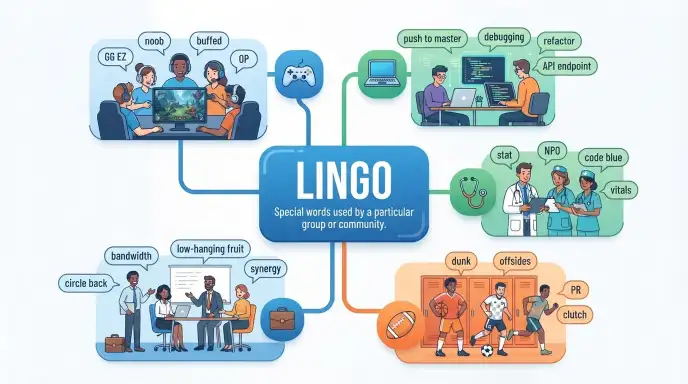
Lingo describes the special words used by a group of people. It is common in hobbies, workplaces, and online communities.
Example:
“Gamers understand their own lingo.”
Expression
An expression is a common word or phrase people use naturally. Some expressions become popular through culture and media.
Example:
“That expression became popular on social media.”
Catchphrase
A catchphrase is a memorable phrase that many people recognize. It often appears in movies, television, or online videos.
Example:
“His catchphrase became famous around the world.”
Buzzword
A buzzword is a trendy word that becomes popular for a period of time. Businesses and the media often use buzzwords.
Example:
“Sustainability is an important business buzzword.”
Less Common Synonyms
These words appear less often. However, they are useful in specific situations.
Jargon
Jargon includes technical words used by professionals. Unlike slang, it belongs to a particular field.
Example:
“Medical jargon can confuse many patients.”
Dialect
A dialect is a regional variety of a language. It includes different words, pronunciation, and grammar.
Example:
“People across the country speak different dialects.”
Argot
Argot is special language used by a particular social group. In some cases, it helps members communicate privately.
Example:
“The book explains the argot used by criminals.”
Cant
Cant refers to language shared by a particular group. Today, it mostly appears in historical or linguistic discussions.
Example:
“The researcher studied the cant of traveling merchants.”
Patois
Patois is a local form of speech connected to a region or culture. It reflects local traditions and history.
Example:
“Older villagers still speak the traditional patois.”
Are These Words Exactly the Same?
Although these words are similar, they are not identical.
Meaning Changes with Context
Some alternatives describe everyday speech. Others refer to technical or regional language.
Choose the Right Word
Always think about your audience first. Then choose the synonym that best matches your purpose.
Formal vs Informal
Words like “informal language” work almost everywhere. However, terms such as “argot” or “cant” are more specialized.
When Should You Use These Alternatives?
The best synonym depends on your purpose. Therefore, always think about your audience before choosing a word.
Everyday Conversations
Simple alternatives work best in casual discussions. They sound natural and are easy to understand.
Example:
“My grandparents do not understand much modern informal language.”
Academic Writing
Formal terms are better for school and research. They make your writing sound more professional.
Example:
“The study examined colloquial language in modern English.”
Business Communication
Professional documents should avoid casual words. Instead, choose clear and formal alternatives.
Example:
“The report recommends avoiding informal language in customer emails.”
Language Studies
Some synonyms belong to linguistics. Therefore, use them only when they fit the topic.
Example:
“The researcher compared regional dialects and local vernacular.”
Another Word for Slang vs Similar Terms
These words look similar. However, each one has a different meaning.
Slang vs Informal Language
Slang includes trendy words used by specific groups. Informal language covers everyday speech in general.
Example:
“Friends usually speak in informal language, but not every word is slang.”
Slang vs Colloquial Language
Slang changes quickly over time. In contrast, colloquial language includes natural speech used every day.
Example:
“The novel contains colloquial language instead of formal English.”
Slang vs Jargon
Slang is common in casual conversations. On the other hand, jargon belongs to a profession or industry.
Example:
“Doctors use medical jargon, not slang.”
Slang vs Dialect
Slang focuses on vocabulary. Meanwhile, a dialect includes pronunciation, grammar, and local words.
Example:
“People in different regions often speak different dialects.”
Slang vs Vernacular
Vernacular refers to the everyday language of a community. Slang is only one part of that language.
Example:
“The writer used local vernacular throughout the book.”
Real Life Examples
These examples show how each synonym works in daily life.
Informal Language
Example:
“We used informal language during our family dinner.”
Colloquial Language
Example:
“The teacher explained the meaning of colloquial language.”
Vernacular
Example:
“The documentary focused on local vernacular.”
Lingo
Example:
“Every online gaming community has its own lingo.”
Jargon
Example:
“The lawyer avoided legal jargon while speaking.”
Catchphrase
Example:
“That catchphrase became popular on TikTok.”
Buzzword
Example:
“Artificial intelligence is a common technology buzzword.”
Dialect
Example:
“My grandparents still speak their regional dialect.”
Tips for Choosing the Right Word
The right synonym depends on the situation. Therefore, think carefully before making your choice.
Know Your Audience
Simple words work best for most readers. They also improve readability.
Think About the Purpose
Formal writing needs formal language. Casual writing gives you more flexibility.
Avoid Repetition
Repeating one word too often weakens your writing. Instead, use suitable alternatives naturally.
Keep the Meaning Clear
Do not replace a word unless it keeps the original meaning. Clarity should always come first.
Common Mistakes
Many people confuse these language terms. Fortunately, these mistakes are easy to avoid.
Treating Every Informal Word as Slang
Not every casual word is slang. Some words are simply part of everyday English.
Example:
“Hello” is informal, but it is not slang.
Mixing Slang with Jargon
These words have different meanings. Therefore, do not use them as exact synonyms.
Example:
“Engineers use technical jargon during meetings.”
Using Formal Terms Incorrectly
Words like argot and cant have specific meanings. Use them only in the correct context.
Example:
“The article discussed criminal argot.”
Using Slang in Professional Writing
Business emails and academic papers should use standard English. This approach keeps your writing clear and professional.
Example:
Instead of writing slang, choose formal language.
How to Improve Your Vocabulary
A stronger vocabulary makes communication easier. It also helps you write with confidence.
Read Different Types of Content
Books, articles, and magazines introduce new words every day.
Listen to Native Speakers
Podcasts and interviews show how people naturally use different expressions.
Practice Writing
Try replacing repeated words with suitable synonyms. As a result, your writing will sound more natural.
Learn Words in Context
Study complete sentences instead of single words. This method helps you remember new vocabulary longer.
Slang vs Standard English
Understanding the difference helps you choose the right words in every situation.
Slang
Slang is informal language used by specific groups or communities. It often changes as trends and culture evolve.
Example:
“That phrase became popular through social media.”
Standard English
Standard English follows accepted grammar and vocabulary rules. It is the best choice for school, work, and formal writing.
Example:
“The report was written in clear Standard English.”
Quick Summary
Here is a quick comparison of the most common alternatives.
| Word | Best Use |
| Informal Language | Everyday conversations |
| Colloquial Language | Natural spoken English |
| Vernacular | Regional speech |
| Lingo | Shared group vocabulary |
| Jargon | Professional fields |
| Expression | Common phrases |
| Catchphrase | Popular sayings |
| Buzzword | Trending topics |
| Dialect | Regional language |
| Argot | Secret group language |
| Cant | Historical group language |
| Patois | Local speech |
Frequently Asked Questions
What is another word for slang?
Common alternatives include informal language, colloquial language, lingo, vernacular, expression, and jargon. The best choice depends on the context.
What is a formal word for slang?
Formal alternatives include informal language, colloquial language, and non standard language. These terms are common in academic and professional writing.
What’s another way to say slang words?
You can say informal expressions, casual language, everyday expressions, colloquial terms, or popular phrases.
What are 5 slang words?
Five common slang words are lit, sus, vibe, flex, and ghost. These words are widely used in casual conversations and online communities.
What are Gen Z slang terms?
Popular Gen Z slang includes rizz, delulu, no cap, bet, aura, cooked, and slay. These terms are common on TikTok, Instagram, Snapchat, and Discord.
Is slang the same as jargon?
No. Slang is informal language used in casual conversations. In contrast, jargon is technical language used by professionals or specific industries.
Can slang become Standard English?
Yes. Some slang words become widely accepted over time and eventually enter dictionaries as standard English.
Why do people use slang?
People use slang to communicate quickly, sound natural, express identity, and connect with others in informal conversations.
Where is slang commonly used?
Slang is common on social media, texting apps, online games, forums, and everyday conversations among friends.
Is slang appropriate in formal writing?
No. Formal writing should usually use Standard English. However, you may mention slang when explaining its meaning or usage.
Conclusion
Many words can replace “slang.” However, each synonym has a slightly different meaning. Therefore, choosing the right one depends on your audience and purpose.
Many words can replace “slang.” However, each synonym has a slightly different meaning. Therefore, choosing the right one depends on your audience and purpose.
Words such as informal language, colloquial language, vernacular, and lingo are excellent alternatives in different situations. By understanding these terms, you can write more naturally, communicate more clearly, and expand your English vocabulary with confidence.
Discover more articles!

Daniel Carter – Short Bio (First Person)
Hi, I’m Daniel Carter, a slang language researcher and content writer. I enjoy exploring internet slang, texting abbreviations, and modern expressions to make them easy for everyone to understand. My goal is to explain slang in clear, simple English with real-life examples so readers can communicate confidently online and stay up to date with the latest language trends.