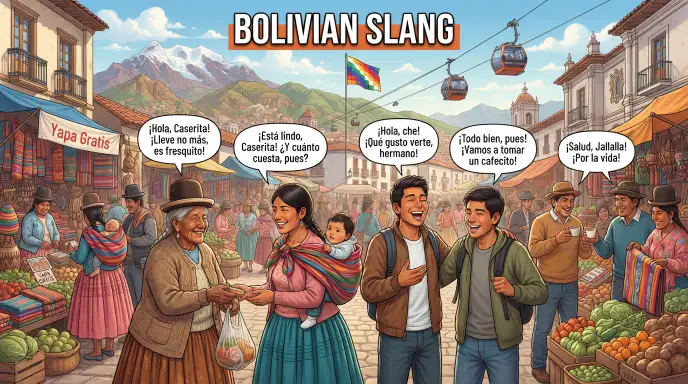
Bolivian slang is full of colorful words and expressions that help people communicate in a natural and friendly way. Many travelers, Spanish learners, and language enthusiasts search for Bolivian slang because they want to understand real conversations instead of only textbook Spanish. if you’re visiting Bolivia, talking with native speakers, or exploring Latin American culture, learning local slang can make communication easier and more enjoyable.
Like every country, Bolivia has its own unique vocabulary shaped by its history, Indigenous languages, and regional traditions. Some slang words are used nationwide, while others are more common in cities such as La Paz, Santa Cruz, or Cochabamba. In this guide, you’ll discover the meanings of popular Bolivian slang terms, when to use them, and examples that show how locals use them in everyday life.
Quick Answer
Bolivian slang refers to informal words and expressions commonly used by people in Bolivia. These terms often reflect local culture, humor, and everyday life, making conversations sound more natural and authentic.
What Is Bolivian Slang?
Bolivian slang includes informal words, phrases, and expressions that people use in everyday conversations. These terms are different from formal Spanish and often carry meanings that only locals immediately understand.
Many Bolivian slang words come from:
- Everyday conversations
- Regional traditions
- Indigenous languages such as Quechua and Aymara
- Youth culture
- Music and popular media
Learning these expressions helps you understand how people naturally communicate in Bolivia instead of relying only on standard Spanish.
Why Is Bolivian Slang Unique?
Bolivian slang stands out because Bolivia is home to many different cultures and languages. While Spanish is the official language, Indigenous communities have influenced local vocabulary for centuries.
As a result, Bolivian Spanish often includes words that visitors may not hear in other Spanish speaking countries.
The slang also varies by region. A phrase commonly heard in Santa Cruz may be less common in La Paz, and some expressions are only used within specific communities.
The History of Bolivian Slang
Bolivian slang has developed over hundreds of years through cultural exchange and everyday communication.
Several influences shaped today’s slang:
- Indigenous languages
- Spanish colonization
- Local traditions
- Migration between regions
- Modern media and youth culture
Because Bolivia has many cultural identities, its slang continues to evolve while preserving traditional expressions that have been passed down through generations.
Common Bolivian Slang Words
Many Bolivian slang terms are friendly, humorous, and used in daily conversations.
Chévere
Meaning: Great, cool, or excellent.
Tone: Positive and casual.
Example:
Person A: “¿Cómo estuvo la fiesta?”
Person B: “¡Estuvo chévere!”
Meaning:
“The party was great.”
Choco
Meaning: Someone with curly or messy hair.
Tone: Casual and descriptive.
Example:
“My cousin is choco, so everyone recognizes him easily.”
Macanudo
Meaning: Nice, friendly, or excellent.
Tone: Positive.
Example:
“Our new neighbor is really macanudo.”
Yapa
Meaning: A little extra given for free after a purchase.
Tone: Friendly.
Example:
“The shopkeeper gave us a small yapa with our order.”
Popular Bolivian Slang Phrases
Bolivians often use informal phrases to make conversations sound more natural. These expressions may not translate literally into English, so understanding the context is important.
¡Qué pues!
Meaning: “What’s up?” or “What’s going on?”
Tone: Friendly and informal.
Example:
Person 1: “¡Qué pues!”
Person 2: “Todo bien. ¿Y tú?”
Meaning:
“What’s up?”
“I’m doing well. How about you?”
No hay problema
Meaning: No problem.
Tone: Polite and casual.
Example:
Person 1: “Thanks for your help.”
Person 2: “No hay problema.”
Dale
Meaning: Okay, let’s do it, or go ahead.
Tone: Friendly and encouraging.
Example:
Person 1: “Ready to leave?”
Person 2: “Dale.”
Bolivian Slang by Region
Not all slang is used across the entire country. Some expressions are more common in certain regions.
La Paz
People in La Paz often mix Spanish with words influenced by Aymara culture. Local expressions can sound different from those used elsewhere in Bolivia.
Santa Cruz
Santa Cruz is known for its relaxed way of speaking. Some slang words used here may not be common in western Bolivia.
Cochabamba
Cochabamba combines traditional and modern expressions. Younger speakers often mix local slang with modern internet language.
Where Is Bolivian Slang Commonly Used?
People use Bolivian slang in many everyday situations, including:
- Casual conversations
- Family gatherings
- School and university
- Local markets
- Social media
- Text messages
- Community events
Most slang is informal, so it is best used with friends, relatives, or people you know well.
Can Tourists Use Bolivian Slang?
Yes. Tourists can use common Bolivian slang, but they should use it carefully and respectfully.
Simple expressions can help conversations feel friendlier. However, learning the meaning before using a slang word helps avoid misunderstandings.
If you are unsure about a phrase, listen to how native speakers use it first.
Tips for Learning Bolivian Slang
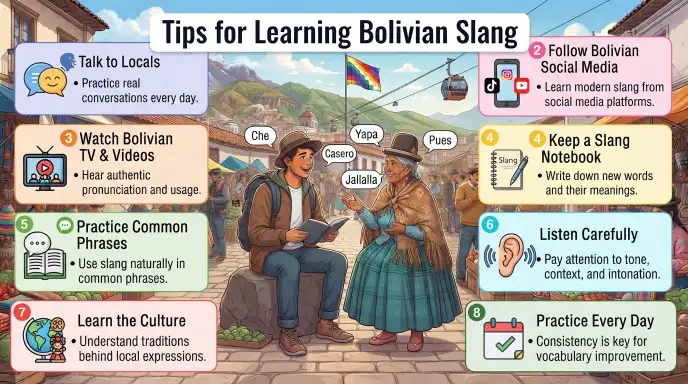
Learning slang becomes easier when you hear it in real conversations.
Helpful tips include:
- Talk with native speakers.
- Watch Bolivian TV shows and interviews.
- Listen to local podcasts or radio programmes.
- Read comments on Bolivian social media pages.
- Practice new expressions in casual conversations.
- Learn the meaning before using unfamiliar slang.
Using slang naturally takes time, but regular practice improves your understanding.
Bolivian Slang vs Standard Spanish
Although both are forms of Spanish, there are noticeable differences.
| Standard Spanish | Bolivian Slang |
| Uses formal vocabulary | Uses informal local expressions |
| Understood across Spanish speaking countries | Often unique to Bolivia or specific regions |
| Common in education and business | Common among friends and family |
| More neutral language | More expressive and cultural |
Understanding both styles helps you communicate more naturally with native speakers.
Common Mistakes to Avoid
When learning Bolivian slang, avoid these common mistakes:
- Assuming every Spanish speaking country uses the same slang.
- Using slang in formal situations.
- Translating expressions word for word.
- Using unfamiliar words without understanding their meaning.
- Believing every region uses identical expressions.
Learning the cultural context is just as important as learning the words themselves.
Frequently Asked Questions
What is Bolivian slang?
Bolivian slang is a collection of informal words and phrases commonly used in everyday conversations across Bolivia.
Is Bolivian slang different from Spanish?
Yes. Bolivian slang is based on Spanish but includes unique local expressions influenced by regional cultures and Indigenous languages.
Can tourists use Bolivian slang?
Yes. Visitors can use common slang respectfully after learning its meaning and context.
Why is Bolivian slang unique?
Bolivian slang reflects the country’s diverse cultures, regional traditions, and Indigenous language influences.
Conclusion
Bolivian slang adds personality and local flavor to everyday conversations. From friendly greetings to unique regional expressions, these words reflect Bolivia’s rich culture and diverse communities. Learning common slang helps you understand native speakers more easily and communicate with greater confidence.
if you’re travelling to Bolivia, studying Spanish, or simply exploring Latin American culture, understanding Bolivian slang will give you a deeper appreciation of how people naturally speak in daily life.
Discover more slang!

Daniel Carter – Short Bio (First Person)
Hi, I’m Daniel Carter, a slang language researcher and content writer. I enjoy exploring internet slang, texting abbreviations, and modern expressions to make them easy for everyone to understand. My goal is to explain slang in clear, simple English with real-life examples so readers can communicate confidently online and stay up to date with the latest language trends.