Have you ever received a text that simply said “K” and wondered what it really meant? The k slang is one of the shortest and most common internet expressions used in texting, social media, and online chats. While it often means “okay,” its tone can change depending on the conversation. Sometimes it sounds friendly, while other times it may seem cold, annoyed, or dismissive. Understanding the context is the key to interpreting k slang correctly. This guide explains its meanings, where people use it, and how to respond with confidence.
What Does K Mean in Slang?
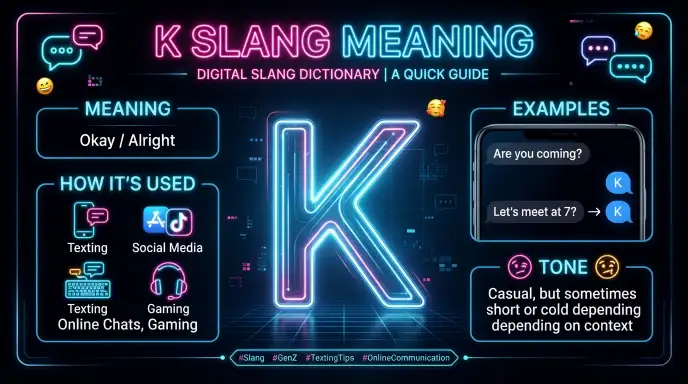
The k slang is usually a shortened version of the word “okay.” People use it to quickly acknowledge a message or show they understand what someone has said.
Quick Answer
- Most common meaning: Okay
- Tone: Casual, brief, or neutral
- Commonly used in texting, social media, gaming, and online messaging
- Meaning depends on the conversation and the relationship between the people chatting
For example:
- “I’ll be there at 8.”
- “K.”
In this example, K simply means “Okay, I understand.”
Where Is K Slang Commonly Used?
You’ll find k slang almost everywhere people communicate online. Because it’s quick to type, many people use it instead of writing the full word “okay.”
Text Messages
Texting is the most common place to see K. Friends, family members, and coworkers often use it in casual conversations.
Examples:
- “Dinner is ready.”
- “K.”
- “Don’t forget the meeting.”
- “K, thanks.”
Social Media
People also use K in direct messages and comments on platforms like:
- TikTok
- Snapchat
- Facebook Messenger
- X (formerly Twitter)
On social media, the tone depends on the conversation. A simple K may sound perfectly normal between close friends but can seem distant in a disagreement.
Gaming Chats
Gamers often use K during multiplayer matches because they need fast responses.
Examples:
- “Defend the base.”
- “K.”
- “Meet at the next checkpoint.”
- “K.”
Online Communities
You’ll also notice K on Reddit, Discord, forums, and other online communities where short replies help keep conversations moving quickly.
Why Do People Use K Instead of Okay?
Many people prefer K because it’s fast and convenient. It saves time while still showing that the message has been received.
Common Reasons
- It’s quicker to type.
- It keeps conversations moving.
- It’s common in casual texting.
- It’s easy to use on mobile devices.
- It works well in fast paced chats and games.
Although it’s convenient, K isn’t always the best choice. Because it’s so short, some people may misunderstand the tone.
The Tone of K Slang
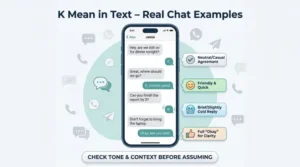
One interesting thing about k slang is that the meaning changes based on tone and context. The same single letter can sound friendly in one conversation and unfriendly in another.
Neutral Tone
Most of the time, K simply means “Okay.”
Example:
- “The movie starts at 7.”
- “K.”
There’s no hidden meaning here.
Friendly Tone
Close friends often use K without any negative feelings.
Example:
- “See you tomorrow!”
- “K 😊”
Adding an emoji usually makes the message feel warmer.
Annoyed or Cold Tone
Sometimes K can seem short or distant, especially during an argument.
Example:
- “I’m sorry about earlier.”
- “K.”
In this situation, the sender may sound upset or uninterested, even if they don’t mean to.
Is K Rude?
Not always. Many people use K without intending to be rude. However, because it’s so brief, some readers may think the sender is annoyed or doesn’t want to continue the conversation.
When It Doesn’t Sound Rude
- Quick replies
- Casual chats
- Gaming conversations
- Talking with close friends
When It Might Sound Rude
- During an argument
- After a long message
- In emotional conversations
- When no other words or emojis are included
If you’re unsure, writing “Okay” instead of “K” can help avoid misunderstandings.
K vs OK vs Okay
These expressions all have the same basic meaning, but they create different impressions.
| Expression | Tone | Best Used For |
| K | Very short and casual | Quick texting and gaming |
| OK | Neutral | Everyday conversations |
| Okay | Friendly and clear | Most casual conversations |
| Okay! | Positive and enthusiastic | Showing excitement or agreement |
Choosing the right version depends on the situation and the person you’re talking to.
Different Meanings of K Slang
Although k slang usually means “okay,” it can express different feelings depending on the conversation. Understanding the context will help you know what the sender really means.
K as “Okay”
This is the most common meaning. It simply shows that someone has read your message and agrees or understands.
Examples:
- “I’ll send the file tonight.”
- “K.”
- “Meet me outside.”
- “K, see you soon.”
K as a Quick Acknowledgment
Sometimes people use K just to confirm they received a message. They may be busy and don’t have time to type a longer reply.
Examples
- “The package has arrived.”
- “K.”
- “I’ll text you later.”
- “K.”
In these situations, K doesn’t carry any emotion. It’s simply a fast acknowledgment.
K During an Argument
In some conversations, K can sound cold or dismissive. This usually happens when people are upset or don’t want to continue talking.
Examples
- “Can we discuss this?”
- “K.”
- “I’m trying to explain.”
- “K.”
The word itself hasn’t changed, but the situation makes it feel different.
K on Social Media
You’ll often see k slang in comments, captions, and direct messages across social media platforms.
TikTok
Users may reply with K to keep conversations short or react casually to a comment.
Example:
- “I’ll post Part 2 tomorrow.”
- “K.”
Friends often use K in direct messages when making plans or responding quickly.
Example:
- “Let’s meet after work.”
- “K 👍”
Snapchat
Because Snapchat focuses on fast conversations, K is very common.
Example:
- “I’ll send the Snap later.”
- “K.”
Discord and Reddit
In gaming servers and discussion forums, K is often used to acknowledge instructions or agree with other users.
K in Gaming
Gamers frequently use K because they need short responses while playing.
Examples
- “Guard the left side.”
- “K.”
- “Ready for the next round?”
- “K.”
Typing a single letter is much faster than writing a full sentence during competitive matches.
How to Reply to K
If someone sends you K, your response depends on the conversation.
If the Conversation Is Friendly
Continue chatting as usual.
Example:
- “K.”
- “See you later!”
If You’re Unsure About the Tone
Don’t assume the person is upset. Ask a friendly follow up question if needed.
Example:
- “K.”
- “Everything okay?”
If It’s During an Argument
Avoid reacting emotionally to a single letter. Try to continue the conversation calmly instead of assuming the worst.
Common Mistakes When Using K
Because K is so short, it’s easy for people to misunderstand it.
Using It in Formal Messages
Avoid using K in professional emails, work chats, or school assignments. Writing Okay sounds more polite.
Assuming It’s Always Rude
Many people send K simply because they’re busy. It doesn’t always mean they’re angry.
Ignoring the Context
The same K can mean different things depending on the relationship, previous messages, and overall tone.
Overusing It
Replying with only K to every message can make conversations feel cold. Adding a few extra words often makes your response sound friendlier.
Tips for Using K Slang Correctly
Using k slang isn’t difficult, but paying attention to the situation can help avoid misunderstandings.
Keep These Tips in Mind
- Use K in casual conversations.
- Think about the tone before sending it.
- Add an emoji if you want to sound friendlier.
- Use Okay instead of K in formal situations.
- Read the full conversation before deciding what someone means.
Understanding these simple tips will help you use K naturally and interpret it correctly in everyday conversations.
Similar Slang Terms to K
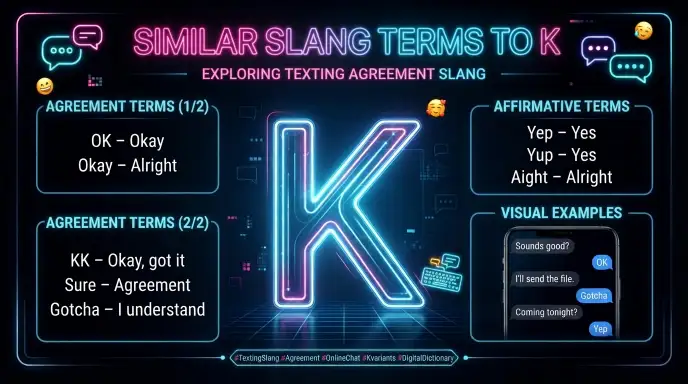
People often use other short expressions instead of K. These have similar meanings but may sound more friendly or enthusiastic.
OK
A simple and neutral way to show agreement.
Example:
- “I’ll call you tonight.”
- “OK.”
Okay
Slightly warmer and more polite than just K.
Example:
- “Let’s meet at 6.”
- “Okay!”
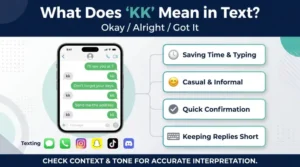
KK
Often means “Okay, okay.” It usually sounds friendlier than K.
Example:
- “Don’t forget your keys.”
- “KK!”
Got It
Shows that you understand the message.
Example:
- “Please send the report today.”
- “Got it.”
Sounds Good
A more positive response that shows agreement.
Example:
- “Let’s have lunch tomorrow.”
- “Sounds good!”
Should You Use K Slang?
Using k slang is perfectly fine in casual conversations with people you know well. However, because its tone can sometimes seem cold or dismissive, it’s worth thinking about the situation before sending it.
Best Times to Use K
- Texting close friends
- Family conversations
- Gaming chats
- Quick replies
- Casual social media messages
When to Avoid K
- Business emails
- Work chats
- School assignments
- Customer support messages
- Serious or emotional conversations
Frequently Asked Questions
What does K mean in slang?
In slang, K usually means “okay.” It’s a quick way to acknowledge a message or show agreement in casual conversations. Depending on the context, it can sound neutral, friendly, or sometimes a little cold.
What does K mean in texting?
In texting, K is a shortened form of “okay.” People use it to respond quickly when they understand or agree with a message. The tone depends on the conversation and the relationship between the people chatting.
What does K mean in Gen Z slang?
In Gen Z slang, K still means “okay,” but it can sometimes carry extra meaning. A simple K may suggest someone is busy, uninterested, annoyed, or ending the conversation, especially if it’s is sent without emojis or additional words.
What does K mean on social media?
On social media platforms like TikTok, Instagram, Snapchat, X, and Facebook, K is commonly used as a short version of “okay.” People use it in comments, replies, and direct messages to quickly acknowledge a post or message.
Is K considered rude?
Not always. K is usually a neutral response, but in emotional conversations or arguments, it may come across as cold or dismissive. Reading the full conversation helps you understand the intended tone.
What’s the difference between K and OK?
Both mean “okay,” but OK generally sounds more polite and complete. K is shorter, more casual, and is mainly used in texting, gaming, and social media conversations.
Is K used in gaming?
Yes. Gamers often use K to acknowledge teammates quickly during matches. Its short length makes it easy to reply without interrupting gameplay.
Final Thoughts
The k slang is one of the most common abbreviations used in modern digital communication. While it usually means “okay,” its tone can vary depending on the context, relationship, and platform. In friendly conversations, it simply acknowledges a message, but during serious discussions, it may seem brief or dismissive. Understanding the context will help you interpret K correctly and use it naturally in texting, social media, gaming, and online chats.
Read more about!

Hi, I’m Liam Carter, a slang language enthusiast and content writer. I research internet slang, social media terms, texting abbreviations, and online expressions to help readers understand modern English. I enjoy breaking down trending slang into simple, easy-to-read explanations with real-world examples, making online communication clearer and more enjoyable.