The 1930’s slang of America reflected the unique culture, humor, and challenges of the decade. The Great Depression affected everyday life, radio was becoming a major source of entertainment, Hollywood was growing, and jazz and swing shaped popular culture. Naturally, the way people spoke also reflected the mood of the decade.
Many informal expressions from this period sound unusual today, while others have survived into modern English. Words like swell, hep, dame, jalopy, bread, dough, and wise guy can still be found in old movies, books, songs, and historical writing.
Understanding 1930’s slang can make classic films and literature easier to follow. It also shows how American English has changed over time.
What Was Slang Like in the 1930s slang?
Slang in the 1930s was influenced by several parts of American culture. Jazz musicians, Hollywood stars, radio personalities, working-class communities, and young people all helped popularize informal expressions.
The decade also carried some vocabulary over from the 1920s. At the same time, new expressions developed around cars, music, money, entertainment, and everyday life.
People could encounter slang in:
- Everyday conversations
- Jazz clubs
- Hollywood movies
- Radio programs
- Newspapers and magazines
- Popular songs
- Novels and fiction
- Street conversations
However, slang was not identical across the United States. Different regions and social groups had their own expressions.
Popular 1930s Slang Words
Here are some of the most recognizable expressions associated with American speech during the era.
1. Swell
Swell meant excellent, wonderful, or very good.
Someone might say:
“We had a swell time.”
The word was commonly used to express approval or enthusiasm.
2. Hep
Hep described someone who was fashionable, knowledgeable, or aware of current trends, especially in jazz culture.
For example:
“He’s a hep guy.”
A person described as hep was considered someone who knew what was happening in modern music and culture.
3. Hepcat
A hepcat was someone associated with jazz culture, especially a person who understood or enjoyed jazz.
For example:
“That hepcat knows all the latest records.”
The term became closely connected with musicians and jazz fans.
4. Dame
Dame was an informal word for a woman or girl.
For example:
“That dame works at the theater.”
The term appears frequently in older American movies and books. Today, it can sound old-fashioned or disrespectful depending on how it is used.
5. Guy
Guy was an informal word for a man or fellow.
For example:
“Who’s that guy over there?”
Unlike many expressions from the period, guy remains extremely common in modern English.
6. Pal
Pal meant friend or companion.
For example:
“He’s an old pal of mine.”
The word usually had a friendly and informal tone.
7. Chum
Chum referred to a close friend or companion.
For example:
“He’s my old school chum.”
Although the word sounds dated today, it was familiar in earlier forms of English.
8. Fella
Fella was an informal word for a man or fellow.
For example:
“That fella owns the store.”
It had a relaxed, conversational feel.
9. Doll
Doll could describe an attractive woman or girl.
For example:
“She’s a real doll.”
This expression appeared frequently in older American popular culture and can sound dated today.
10. Tomato
Tomato was historical slang for an attractive woman.
For example:
“He was talking to a tomato at the club.”
The term reflects the playful but sometimes objectifying language found in older slang.
Slang for Money
Money was an important subject during the Great Depression, and Americans used several informal terms for cash.
11. Bread
Bread meant money.
For example:
“I need some bread.”
The expression became part of a long tradition of using food-related words to refer to money.
12. Dough
Dough was another slang word for money.
For example:
“He doesn’t have enough dough.”
The term is still recognizable today, although it is less common than simply saying “money.”
13. Bucks
Bucks meant dollars or money.
For example:
“It costs five bucks.”
This expression has survived and remains common in American English.
14. Scratch
Scratch could refer to money or cash.
For example:
“I need some scratch.”
It was an informal expression used when talking about having or needing money.
15. Cabbage
Cabbage could also mean money.
For example:
“He made plenty of cabbage.”
This unusual expression shows how creative slang could be when describing cash.
Slang for Cars and Transportation
Cars had become an important part of American life by the 1930s. Naturally, people developed informal names for automobiles.
16. Jalopy
A jalopy was an old, worn-out car.
For example:
“My old jalopy barely made it home.”
The word is strongly associated with older American slang.
17. Tin Lizzie
Tin Lizzie was a nickname for the Ford Model T.
The Model T had transformed American transportation and remained culturally important even after production ended.
Today, the expression is mainly historical.
18. Flivver
Flivver was an informal word for a small, inexpensive, or old automobile.
For example:
“He drove an old flivver around town.”
The term is mostly encountered in historical writing today.
19. Gas
Gas was an informal abbreviation for gasoline.
For example:
“We need to get some gas.”
This usage remains common in American English.
Slang for People
The 1930s also had many colorful expressions for describing someone’s personality or behavior.
20. Wise Guy
A wise guy was someone who acted smart, sarcastic, or disrespectful.
For example:
“Don’t be a wise guy.”
The phrase remains familiar today.
21. Wisecracker
A wisecracker was someone who regularly made sarcastic or clever remarks.
For example:
“He’s always been a wisecracker.”
The word describes someone who enjoys making jokes, especially at someone else’s expense.
22. Tough Guy
A tough guy described a man who appeared strong, fearless, or aggressive.
For example:
“He likes to act like a tough guy.”
The expression is still used in modern English.
23. Mug
Mug could refer to a person or someone’s face, depending on the context.
For example:
“Look at that mug.”
In this sentence, mug refers to someone’s face.
24. Sap
A sap was a foolish or gullible person.
For example:
“Don’t be such a sap.”
It could be insulting, although its seriousness depended on the situation.
25. Sucker
Sucker described someone who was easily fooled or taken advantage of.
For example:
“Don’t let them make a sucker out of you.”
The term continues to be used in modern informal English.
Slang for Something Excellent
People in the 1930s had many creative ways to say that something was wonderful or impressive.
26. The Bee’s Knees
The bee’s knees meant something excellent or outstanding.
For example:
“That singer is the bee’s knees.”
The expression was especially popular in the colorful slang of the Jazz Age and remained recognizable afterward.
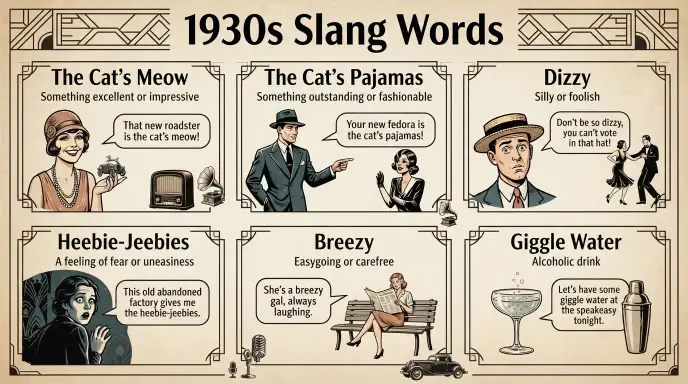
27. The Cat’s Meow
The cat’s meow described something excellent, impressive, or fashionable.
For example:
“That new car is the cat’s meow.”
It is one of the memorable expressions associated with early 20th-century American slang.
28. The Cat’s Pajamas
The cat’s pajamas meant something wonderful, impressive, or fashionable.
For example:
“This radio is the cat’s pajamas.”
Like the bee’s knees, it reflects the playful style of slang from the period.
29. Tops
Tops meant excellent or the best.
For example:
“That restaurant is tops.”
It was a simple way to express strong approval.
30. Keen
Keen could mean excellent, attractive, or fashionable in informal speech.
For example:
“That’s a keen outfit.”
The word had other meanings too, so context was important.
Jazz and Music Slang in the 1930s
Jazz had a huge influence on American culture during the 1930s. Musicians, dancers, and fans developed informal expressions that eventually became part of wider American speech.
31. Hot
In jazz culture, hot could describe music that was exciting, energetic, or strongly played.
Example:
“That band plays some hot jazz.”
Here, hot describes the energy of the music rather than its temperature.
32. Jam
A jam referred to an informal musical performance, especially when musicians played together without a formal concert arrangement.
Example:
“The musicians stayed after the show for a jam.”
The musical meaning of jam is still used today.
33. Gig
A gig meant a performance or job for a musician or entertainer.
Example:
“The band has a gig tonight.”
This meaning has survived and remains common among musicians.
34. Swing
Swing referred to a style and feeling of jazz music and dancing that became highly popular during the era.
Example:
“The crowd loved the swing music.”
Swing eventually became one of the defining sounds of the period.
35. Cats
In jazz slang, cats could refer to people, particularly musicians or jazz enthusiasts.
Example:
“Those cats can really play.”
Here, cats does not refer to animals.
Slang for Being in Trouble
People also had colorful ways to describe difficult situations.
36. In a Jam
In a jam meant to be in trouble or facing a difficult situation.
Example:
“I’m in a jam and need your help.”
The expression is still familiar today.
37. In Hot Water
In hot water meant to be in trouble.
Example:
“He’s in hot water with his boss.”
The expression existed before the 1930s but remained common in everyday speech.
38. On the Spot
On the spot could describe being put in a difficult, uncomfortable, or pressured situation.
Example:
“The question put him on the spot.”
This expression also remains common today.
Slang for Joking and Fooling Around
Casual speech in the period included several expressions for teasing or deceiving someone.
39. Pulling My Leg
Pulling my leg meant joking with or teasing someone.
Example:
“Are you pulling my leg?”
The phrase is still used today.
40. String Along
String along meant to keep someone waiting or make them believe something that may not be true.
Example:
“He kept stringing me along.”
It could describe someone who continued giving another person false hope.
41. Put On
Put on could mean to fool, tease, or joke with someone.
Example:
“Don’t put me on.”
The expression was informal and depended heavily on context.
Slang for Dating and Romance
Romantic relationships also influenced informal language during the decade.
42. Sweetie
Sweetie was an affectionate term for someone you cared about.
Example:
“She’s my sweetie.”
The word is still used today, although its popularity and tone can vary.
43. Sweetheart
Sweetheart was a term of affection for a loved one or romantic partner.
Example:
“She’s his sweetheart.”
Unlike some period slang, this expression has remained common.
44. Dreamboat
A dreamboat was an extremely attractive person, especially a romantic interest.
Example:
“Everyone thought the actor was a dreamboat.”
The term sounds distinctly old-fashioned today.
45. Going Steady
Going steady meant being in an established romantic relationship.
Example:
“They’ve been going steady for months.”
The phrase became a familiar part of American dating language.
Slang for Appearance and Style
Fashion and appearance also produced informal expressions.
46. Snappy
Snappy could mean stylish, smart-looking, or well dressed.
Example:
“That’s a snappy suit.”
It described someone or something that looked attractive and fashionable.
47. Ritzy
Ritzy meant fancy, luxurious, or expensive-looking.
Example:
“They stayed at a ritzy hotel.”
The word remains recognizable today.
48. Classy
Classy described something that appeared elegant, stylish, or high-quality.
Example:
“She wore a classy dress.”
The expression has survived into modern English.
49. Dressed to the Nines
Dressed to the nines meant dressed very elegantly or stylishly.
Example:
“Everyone was dressed to the nines for the event.”
The expression refers to someone making a strong effort with their appearance.
Slang for Having Fun
The 1930s had several informal expressions for enjoying yourself.
50. Having a Ball
Having a ball meant having a very good time.
Example:
“We had a ball at the dance.”
The phrase is still widely understood.
51. Having a Blast
Having a blast meant having an exciting or enjoyable time.
Example:
“We had a blast at the party.”
The expression has continued into modern informal English.
52. Cutting a Rug
Cutting a rug meant dancing, especially dancing energetically.
Example:
“Everyone was cutting a rug on the dance floor.”
The phrase is strongly associated with older American dance culture.
53. Let’s Blow
Let’s blow could mean let’s leave or go somewhere.
Example:
“It’s getting late. Let’s blow.”
It was a casual way to suggest leaving.
Slang for Leaving
People also used informal expressions when they wanted to leave a place.
54. Beat It
Beat it meant go away or leave.
Example:
“It’s late, so let’s beat it.”
Depending on tone, it could also be a command telling someone to leave.
55. Skedaddle
Skedaddle meant to leave quickly or hurry away.
Example:
“We’d better skedaddle before the rain starts.”
The word was playful and informal.
56. Make Tracks
Make tracks meant to leave or start moving quickly.
Example:
“We should make tracks before dark.”
The expression remains understandable today.
Slang for Food and Drinks
Everyday eating and drinking also produced colorful expressions.
57. Grub
Grub meant food or a meal.
Example:
“Let’s get some grub.”
The word remains informal but recognizable today.
58. Java
Java was slang for coffee.
Example:
“I need a cup of java.”
The term became associated with American coffee culture.
59. Joe
Joe could also mean coffee.
Example:
“Let’s grab a cup of joe.”
This expression is still used occasionally.
60. Hooch
Hooch was slang for alcoholic liquor, particularly cheap or illegally produced alcohol.
Example:
“They were caught with a bottle of hooch.”
The term is strongly associated with historical American slang.
Slang Connected to the Great Depression
The economic hardship of the 1930s affected both language and culture. Some terms became associated with unemployment, poverty, and people looking for work.
61. Breadline
A breadline was a line of people waiting for free or low-cost food, especially during economic hardship.
Example:
“Families waited in the breadline.”
Unlike many slang expressions, this term described a very real part of Depression-era life.
62. Bum
Bum could refer to a homeless person, unemployed person, or someone viewed as idle, depending on the context.
Example:
“He was traveling around as a bum.”
The word could be insulting, so historical context matters.
63. Hobo
A hobo was a person who traveled from place to place, often looking for temporary work.
Example:
“The story follows a hobo traveling across the country.”
The term became especially associated with Depression-era America.
64. Hooverville
A Hooverville was an informal name for a makeshift settlement of people who had lost their homes during the Great Depression.
Example:
“Many unemployed families lived in Hoovervilles.”
The term came from President Herbert Hoover’s name and reflected the political frustrations of the period.
Slang From Hollywood Culture
Hollywood was becoming increasingly influential during the 1930s. Movies helped spread certain expressions across the country.
65. Star
A star referred to a famous movie actor or actress.
Example:
“She became a Hollywood star.”
The word remains common today.
66. Picture
Picture could refer to a movie or film.
Example:
“We’re going to see a picture tonight.”
The expression was common in older American English.
67. Big Shot
A big shot was an important or powerful person.
Example:
“He acts like a big shot.”
The expression remains familiar today.
68. Glamour Girl
A glamour girl described a very attractive, stylish, or glamorous woman, especially one associated with entertainment.
Example:
“The magazine featured a famous glamour girl.”
The expression reflected the growing influence of Hollywood fashion.
How 1930s Slang Spread
Radio
Radio allowed people across the country to hear the same expressions and catchphrases.
Movies
Hollywood films introduced regional vocabulary to much larger audiences.
Music
Jazz and swing musicians helped spread expressions associated with nightlife and entertainment.
Newspapers and Magazines
Popular publications recorded and promoted many informal terms, although slang was not always used in formal reporting.
Everyday Conversation
Friends, workers, students, and families continued creating and adapting expressions in their own communities.
How 1930s Slang Influenced Modern English
Many expressions associated with the 1930s did not completely disappear. Some survived with almost the same meaning, while others changed over time.
Words That Survived
Expressions such as bucks, gig, pal, guy, dough, and in a jam can still be understood or used today.
Words That Became Old-Fashioned
Terms such as hepcat, flivver, dreamboat, and dame are now more likely to appear in historical writing, old films, or humorous references.
Expressions That Changed Meaning
Some words developed new meanings over the decades. This is one reason historical slang can sometimes be confusing.
The same word may have a different meaning in a 1930s movie than it does in a modern conversation.
1930s Slang in Movies and Books
Classic American movies are one of the easiest ways to encounter slang from this period. Characters often used informal expressions that reflected the speech patterns of the time.
You may come across words such as:
- Swell
- Dame
- Pal
- Wise guy
- Big shot
- Jalopy
- Doll
- Dreamboat
- Hepcat
Older books can also contain these terms, especially stories about cities, musicians, workers, criminals, or young people.
Why Context Matters
A historical slang word should not always be translated literally.
For example:
“That car is a jalopy.”
The speaker is not simply naming a car. They are describing it as an old or unreliable vehicle.
Likewise:
“That guy is a wise guy.”
The meaning is not simply “a knowledgeable person.” It suggests someone who is being smart, sarcastic, or disrespectful.
1930s Slang and Jazz Culture
Jazz was one of the strongest cultural influences on informal American language during the period.
Hep
Hep described someone who was considered knowledgeable about current jazz culture and trends.
Hepcat
A hepcat was a person associated with jazz, especially someone who understood the music and its culture.
Cats
In jazz circles, cats could refer to musicians or people in the scene.
Jam
A jam was an informal musical session where musicians played together.
Hot
Hot could describe energetic or exciting jazz.
These expressions show how music can influence everyday vocabulary.
1930s Slang and the Great Depression
The Great Depression had a major effect on American society. Naturally, some expressions from the era were connected with work, money, poverty, and survival.
Bread and Dough
Both bread and dough could mean money.
Breadline
A breadline referred to a line where people waited for food assistance.
Hobo
A hobo was someone who traveled around, often looking for temporary work.
Hooverville
A Hooverville referred to a makeshift settlement occupied by people who had lost their homes during the Depression.
These terms are important because they reveal the economic conditions behind the language.
1930s Slang for Cars
The automobile was an important symbol of American life, and people developed colorful names for older vehicles.
Jalopy
A jalopy was an old or unreliable car.
Flivver
A flivver was an inexpensive or small automobile, often an older vehicle.
Tin Lizzie
Tin Lizzie was a nickname for the Ford Model T.
These expressions are especially useful when reading stories or watching films set around the early automobile era.
1930s Slang for Money
Money-related expressions were common in everyday speech.
Bread
Bread meant money.
Dough
Dough also meant money.
Bucks
Bucks referred to dollars.
Scratch
Scratch could mean cash or money.
Cabbage
Cabbage was another informal term for money.
Although several of these expressions sound unusual today, they show how creative slang can become when people talk about everyday subjects.
1930s Slang for People
Older American speech included many colorful ways to describe people.
Pal
A pal was a friend.
Chum
A chum was a close friend or companion.
Fella
A fella was a man or fellow.
Doll
A doll could refer to an attractive woman.
Wise Guy
A wise guy was someone who acted smart or sarcastic.
Big Shot
A big shot was an important or powerful person.
Sap
A sap was a foolish or gullible person.
These expressions often depended heavily on tone.
1930s Slang for Something Excellent
People in the 1930s had many playful expressions for saying that something was great.
Swell
Swell meant excellent or wonderful.
The Bee’s Knees
The bee’s knees meant something outstanding.
The Cat’s Meow
People used the cat’s meow to describe something excellent, impressive, or highly appealing.
The Cat’s Pajamas
Something considered excellent, fashionable, or outstanding could be called the cat’s pajamas.
Tops
Tops meant the best or excellent.
Keen
Keen could mean attractive, fashionable, or excellent.
These phrases help explain why slang from this period often sounds colorful and humorous to modern readers.
1930s Slang for Fun and Entertainment
Entertainment was a major part of American culture during the decade.
Having a Ball
Having a ball meant having a great time.
Example:
“We had a ball at the dance.”
Cutting a Rug
Cutting a rug meant dancing.
Example:
“They were cutting a rug all night.”
Gig
A gig was a performance or job, especially for a musician.
Example:
“The band has a gig tonight.”
Jam
A jam was an informal musical performance.
Example:
“The musicians started a jam after the show.”
1930s Slang for Leaving
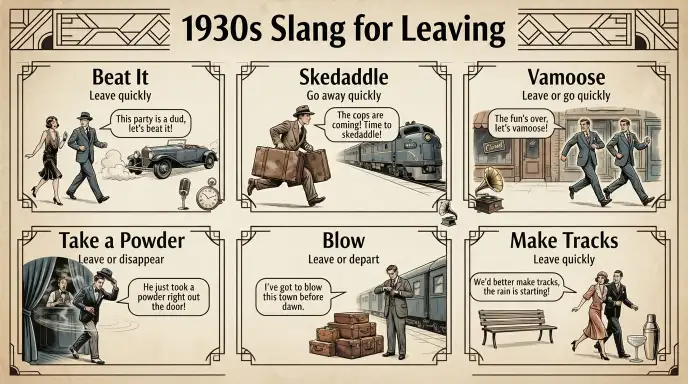
Several expressions were used when someone wanted to leave.
Beat It
Beat it meant go away or leave.
Example:
“It’s getting late. Let’s beat it.”
Skedaddle
Skedaddle meant leave quickly.
Example:
“We’d better skedaddle.”
Make Tracks
Make tracks meant leave or start moving.
Example:
“We should make tracks before dark.”
These expressions had a playful and informal tone.
1930s Slang for Dating
Romantic relationships also had their own vocabulary.
Dreamboat
A dreamboat was a very attractive person.
Example:
“Everyone thought the actor was a dreamboat.”
Sweetheart
Sweetheart was an affectionate term for a romantic partner or loved one.
Example:
“She is his sweetheart.”
Going Steady
Going steady meant being in an established romantic relationship.
Example:
“They have been going steady for months.”
These expressions can help readers understand romance-related dialogue in older stories.
1930s Slang vs. Modern Slang
Slang changes constantly, but the basic purpose remains similar. People use slang to sound casual, express emotion, create humor, or show that they belong to a particular group.
| 1930s Expression | Meaning | Modern Equivalent |
| Swell | Very good | Awesome |
| Hep | Fashionable / informed | In the know |
| Dame | Woman | Woman / girl |
| Pal | Friend | Buddy |
| Chum | Friend | Buddy |
| Bread | Money | Cash |
| Dough | Money | Cash |
| Jalopy | Old car | Beater |
| Wise guy | Sarcastic person | Smart-aleck |
| Bee’s knees | Excellent | Amazing |
| Cat’s meow | Excellent | Awesome |
| Big shot | Important person | VIP / big deal |
| Gig | Performance | Gig |
| Jam | Music session | Jam session |
| In a jam | In trouble | In trouble |
| Beat it | Leave | Get out |
| Grub | Food | Food |
| Java | Coffee | Coffee |
| Hooch | Alcohol | Booze |
How to Recognize 1930s Slang
Look at the Setting
If a story takes place during the Great Depression, Prohibition era, or early Hollywood period, unusual expressions may have historical meanings.
Consider the Speaker
A jazz musician, factory worker, Hollywood character, or wealthy socialite might use very different vocabulary.
Read the Whole Sentence
Never rely on one word alone. The surrounding sentence usually provides clues.
Check the Tone
Some words were friendly, some humorous, and others insulting. The speaker’s attitude can change the meaning.
Why Learn 1930s Slang?
It Helps You Understand History
Language reflects the society that created it. Learning old expressions gives you another way to understand the 1930s.
It Makes Classic Movies Easier
Older films often contain expressions that are unfamiliar to modern viewers.
It Helps With Historical Fiction
Writers sometimes use period vocabulary to make dialogue sound authentic.
It Shows How English Changes
Some expressions disappear, while others survive for generations.
It Explains Modern Slang
Many modern expressions have roots in earlier forms of informal English.
Frequently Asked Questions
What was popular slang in the 1930s?
Popular expressions included swell, hep, hepcat, dame, jalopy, bread, dough, wise guy, and the bee’s knees.
What did “swell” mean in the 1930s?
Swell meant excellent, wonderful, or very good.
What did “hep” mean?
Hep described someone who was fashionable, knowledgeable, or connected with current jazz culture.
What did “dame” mean?
Dame was an informal word for a woman or girl. Today, it can sound dated or disrespectful.
What did “jalopy” mean?
A jalopy was an old, worn-out, or unreliable automobile.
What did “bread” mean in 1930s slang?
Bread was slang for money.
What did “dough” mean?
Dough was another informal word for money.
What did “the bee’s knees” mean?
The bee’s knees meant something excellent, impressive, or outstanding.
What did “the cat’s pajamas” mean?
The cat’s pajamas described something considered excellent, fashionable, or impressive.
What did “wise guy” mean?
A wise guy was someone who acted smart, sarcastic, or disrespectful.
What did “hepcat” mean?
A hepcat was someone associated with jazz culture, particularly a knowledgeable jazz fan or musician.
Was 1930s slang used everywhere in America?
No. Slang varied according to region, age, occupation, culture, and social group. Radio and movies helped some expressions spread nationally.
Final Thoughts
The language of the 1930s gives us a fascinating look at American culture during a decade shaped by the Great Depression, jazz, Hollywood, radio, and changing social life.
Expressions such as swell, hep, dame, jalopy, bread, dough, wise guy, and the bee’s knees capture the colorful character of the era. Some disappeared completely, while others survived and remain recognizable today.
If you’re watching a classic movie, reading historical fiction, researching American culture, or simply interested in the history of English, learning these expressions can make the language of the 1930s much easier to understand.
Explore more slang!

Daniel Carter – Short Bio (First Person)
Hi, I’m Daniel Carter, a slang language researcher and content writer. I enjoy exploring internet slang, texting abbreviations, and modern expressions to make them easy for everyone to understand. My goal is to explain slang in clear, simple English with real-life examples so readers can communicate confidently online and stay up to date with the latest language trends.