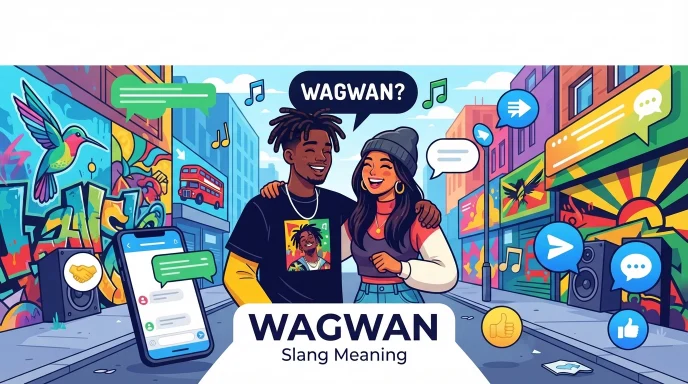
If you’ve spent time on TikTok, Instagram, Snapchat, YouTube, or online gaming chats, you’ve probably seen someone type “wagwan.” It may look unusual if you’ve never heard it before, but it’s actually a friendly greeting that has become popular in many English-speaking communities.
In simple words, wagwan slang means “What’s going on?” or “What’s up?” People use it to greet friends and ask how they are doing. It is casual, friendly, and often used in conversations between people who know each other well.
Today, the phrase appears in text messages, memes, social media captions, and online chats. It has become part of internet culture, especially among younger users who enjoy modern slang.
If you’re learning English, creating content, or just trying to understand a message from a friend, knowing what wagwan slang means can help you follow conversations more naturally.
What Does Wagwan Slang Mean?
The most common meaning of wagwan is:
“What’s going on?”
It can also mean:
- What’s up?
- How are you?
- What’s happening?
- What’s new?
- What’s good?
Unlike formal greetings such as Hello or How are you?, wagwan sounds relaxed and informal.
Example
Friend 1: Wagwan, bro?
Friend 2: Not much. Just watching Netflix.
Here, the first person is simply saying “What’s up?”
How Do You Pronounce Wagwan?
Most people pronounce it like:
Wag-won
or
Wah-gwan
The pronunciation comes from Jamaican Patois, where the phrase originally sounded closer to “Wah gwaan.”
Where Did Wagwan Come From?
The phrase comes from Jamaican Patois, an English-based language spoken in Jamaica.
The original expression is:
“Wah gwaan?”
It literally means:
“What’s going on?”
Over time, Jamaican music, especially reggae and dancehall, helped spread the phrase around the world.
Artists, musicians, and entertainers used it regularly, making it familiar even outside Jamaica.
Later, British youth culture, particularly in London, adopted the expression. Today, many people simply write it as wagwan in texts and online conversations.
Wagwan Slang Origin
The wagwan slang origin can be traced to the Jamaican Patois phrase “Wah gwaan?” meaning “What’s going on?” Jamaican music and culture later helped spread the expression internationally.
Why Is Wagwan So Popular?
Several reasons explain why this slang has become so common.
1. Social Media
Platforms like TikTok and Instagram helped popularize the word through short videos and funny skits.
People often begin videos with:
“Wagwan everyone!”
instead of saying:
“Hello everyone!”
2. Music Culture

Many reggae, dancehall, UK rap, and grime artists use wagwan in lyrics and interviews.
Fans naturally began using it in daily conversations.
3. Online Gaming
Gamers often greet teammates by saying:
- Wagwan boys
- Wagwan squad
- Wagwan everyone
It feels relaxed and friendly before starting a game.
4. Text Messaging
Instead of typing:
“How are you?”
many friends simply send:
Wagwan?
It’s shorter and sounds more casual.
Is Wagwan Only Used in Jamaica?
No.
Although the phrase started in Jamaica, it is now widely used in:
- United Kingdom
- Canada
- United States
- Australia
- Online communities worldwide
Many people who are not Jamaican also use the word because they hear it in music, movies, and social media.
However, it’s important to remember that the phrase has Jamaican roots and is part of Jamaican culture.
Different Meanings of Wagwan Slang
Although the basic meaning stays the same, the phrase can express slightly different ideas depending on the conversation.
1. A Friendly Greeting
This is the most common use.
Example
Alex: Wagwan!
Jake: Hey! Good to see you.
2. Asking What’s Happening
Someone wants to know what’s going on.
Example
Wagwan at school today?
Meaning:
What’s happening at school today?
3. Asking About Someone’s Day
Sometimes people use it instead of asking how someone feels.
Example
Wagwan, you okay?
Meaning:
How are you doing?
4. Starting a Conversation
Instead of saying hello, people simply type:
Wagwan
This starts a casual chat.
When Should You Use Wagwan?
Use it in informal situations.
Good examples include:
- Talking with friends
- Group chats
- Online games
- Snapchat conversations
- Instagram DMs
- TikTok comments
- Discord servers
- Casual texting
When Should You Avoid Using Wagwan?
Avoid using it in professional situations.
For example:
During job interviews
In business emails
For school essays
During formal presentations
Instead, use:
- Hello
- Good morning
- Hi
- How are you?
Examples of Wagwan in Everyday Conversations
Example 1
A: Wagwan?
B: Nothing much. You?
Example 2
A: Wagwan this weekend?
B: I’m going hiking.
Example 3
A: Wagwan bro?
B: Just got home.
Example 4
A: Wagwan everyone!
Group: Hey!
Example 5
A: Wagwan fam?
B: All good.
Wagwan on Social Media
You’ll often see wagwan slang used on different platforms.
TikTok
Creators often begin videos with:
Wagwan guys!
It feels energetic and friendly.
People write captions like:
Wagwan people ❤️
or
Wagwan everyone!
Snapchat
Friends commonly send:
Wagwan?
instead of
Hey.
Discord
Gaming communities frequently greet new players with:
Wagwan team!
On Reddit, you’ll occasionally see the word in communities discussing British slang, Jamaican culture, music, or memes. It is less common than on TikTok or Instagram but still recognizable to many users.
How to Reply to “Wagwan”
If someone says “wagwan” to you, they’re usually greeting you or asking what’s happening. Your reply doesn’t have to be complicated. Just answer naturally, the same way you would respond to “What’s up?”
Here are some common replies:
- Not much, you?
- All good!
- Just chilling.
- Nothing much.
- I’m doing well.
- Just working today.
- What’s up with you?
- Everything’s good here.
- Hey! How’s it going?
Wagwan Slang Reply
A wagwan slang reply can be simple and casual, such as “Not much, you?” or “All good!” The best response depends on what the person is asking and how familiar you are with them.
Conversation Example
Person A: Wagwan!
Person B: Not much, just relaxing. You?
Different Ways People Spell Wagwan
Because slang is informal, people don’t always spell it the same way. You might see several versions online.
Common spellings include:
- Wagwan
- Wah Gwaan
- Wahgwan
- Wagwaan
- Wah gwaan
All of these generally mean the same thing: “What’s going on?” or “What’s up?”
Is Wagwan Positive or Negative?
Most of the time, wagwan has a positive or neutral tone.
It is usually used to:
- Greet someone
- Start a conversation
- Check in on a friend
- Keep a chat casual
By itself, the word is not rude or offensive.
However, the tone of the conversation matters. For example:
Friendly Tone
Wagwan, bro!
This sounds warm and welcoming.
Serious Tone
Wagwan? Why didn’t you answer my message?
Here, the greeting is followed by a serious question, changing the mood.
Is Wagwan Offensive?
People often ask is wagwan offensive because the word may sound unfamiliar. In normal use, wagwan is a casual and friendly greeting, not an offensive term. However, the tone and context can affect how it is received.
Wagwan vs. What’s Up
Many learners wonder if these phrases mean the same thing.
| Wagwan | What’s Up |
| Comes from Jamaican Patois | Standard English slang |
| Very casual | Casual |
| Popular in UK and online culture | Common worldwide |
| Often used among friends | Used by almost everyone |
| Strong cultural roots | General English greeting |
In everyday conversation, both expressions usually work the same way.
Wagwan vs. Sup
Another greeting people use is “Sup?”
| Wagwan | Sup |
| Slightly longer | Very short |
| Jamaican origin | American English slang |
| Popular in music and internet culture | Common in texting |
| Means “What’s going on?” | Means “What’s up?” |
Both are informal greetings.
Wagwan vs. Yo
People also compare wagwan with yo.
Yo
- Gets someone’s attention
- Can simply mean “Hey”
Wagwan
- Asks how someone is doing
- Starts a conversation
Example:
Yo!
just means hello.
Wagwan?
means hello and “What’s happening?”
Common Situations Where People Use Wagwan
Here are some real-life situations where you’ll hear or see the phrase.
Meeting Friends
“Wagwan, everyone!”
Sending a Text
“Wagwan?”
Joining a Voice Chat
“Wagwan guys, ready to play?”
Starting a Livestream
“Wagwan chat!”
Seeing Someone After a Long Time
“Wagwan! It’s been forever.”
Greeting Classmates
“Wagwan, how was your weekend?”
Examples in Text Messages
Example 1
Jake: Wagwan?
Ryan: Just finished work.
Example 2
Emma: Wagwan girl!
Sophia: Hey! Nothing much.
Example 3
Chris: Wagwan tonight?
Mark: We’re watching a movie.
Example 4
Alex: Wagwan fam.
Jordan: All good here.
Example 5
Ben: Wagwan?
Sam: Just playing games.
Examples on Social Media
TikTok
Caption:
“Wagwan everyone! Today’s video is going to be fun.”
Story:
“Wagwan people ❤️”
Discord
“Wagwan squad, who’s online?”
Snapchat
“Wagwan 😂”
Gaming Chat
“Wagwan team, let’s win this.”
Common Mistakes People Make
Even though wagwan slang is simple, some people use it incorrectly.
Mistake 1: Using It in Formal Situations
❌ Wagwan, Professor.
✅ Good morning, Professor.
Mistake 2: Using It With Strangers
Some strangers may not understand the slang.
Instead, simply say:
- Hello
- Hi
- Good afternoon
Mistake 3: Thinking It’s Offensive
Many people assume the word is rude because it sounds unfamiliar.
In reality, it is simply a casual greeting.
Mistake 4: Using It Too Often
Like any slang, using it in every sentence can sound unnatural.
Mix it with other greetings such as:
- Hey
- Hi
- What’s up?
- How’s it going?
- Good to see you
Slang Words Similar to Wagwan
If you understand wagwan, you’ll probably recognize these similar greetings too.
- What’s up?
- What’s good?
- Yo
- Sup
- How’s it going?
- What’s happening?
- How you doing?
- What’s new?
- Hey
- Morning
Each one is used to greet people casually.
Is Wagwan Still Popular?
Yes. Wagwan is still widely used, especially among younger people and online communities.
You’ll continue to see it in:
- TikTok videos
- Instagram captions
- Snapchat messages
- Discord chats
- Reddit discussions
- Gaming communities
- YouTube comments
- UK street culture
- Music lyrics
While it may not be part of formal English, it remains a well-known and recognizable slang greeting in many parts of the world.
Frequently Asked Questions
What does wagwan mean in slang?
In slang, wagwan means “What’s going on?”, “What’s up?”, or “How are you?” It is a casual greeting used to start a conversation with friends.
Is wagwan a Jamaican word?
Yes. Wagwan comes from the Jamaican Patois phrase “Wah gwaan?” Over time, it became popular in other countries through music, movies, and social media.
Is wagwan rude?
No. Wagwan is generally not rude. It is a friendly and informal greeting. However, it is best used with friends or in casual conversations rather than in professional settings.
Can I use wagwan in a text message?
Yes. Many people use wagwan in text messages, group chats, and direct messages instead of writing “What’s up?” or “How are you?”
Example:
Friend: Wagwan?
You: Not much. Just relaxing.
What is the best reply to wagwan?
Some natural replies include:
- Not much, you?
- All good!
- Just chilling.
- Everything’s fine.
- What’s up with you?
Is wagwan used on TikTok?
Yes. You’ll often hear creators begin videos with phrases like “Wagwan everyone!” It is also common in comments, captions, and short comedy videos.
Is wagwan common in the UK?
Yes. Wagwan is especially popular in parts of the UK, particularly in multicultural communities and among younger people. It has become a familiar part of casual street slang.
Is wagwan proper English?
No. Wagwan is slang, not formal English. It should be used in casual conversations, while greetings like “Hello” or “How are you?” are better for formal situations.
Can adults use wagwan?
Yes. Anyone can use wagwan if they understand its meaning and use it naturally in the right context. However, it is most commonly heard among younger people and in informal settings.
Is wagwan still popular in 2026?
Yes. Wagwan continues to be widely recognized in 2026. It remains common on social media, in online gaming, music culture, and casual conversations.
Final Thoughts
Wagwan is more than just an internet slang term. It is a friendly greeting with deep roots in Jamaican Patois that has grown into a familiar expression across the UK, Canada, and online communities worldwide.
Today, you’ll see wagwan on TikTok, Instagram, Snapchat, Discord, Reddit, YouTube, and in gaming chats. Most of the time, it simply means “What’s going on?” or “What’s up?” and is used to start relaxed, friendly conversations.
If you’re learning modern English slang, understanding wagwan can help you follow social media posts, text messages, and everyday conversations more easily. Just remember to use it in informal settings with friends, and choose more formal greetings for work, school, or professional communication.
As with any slang, the key is knowing when and where to use it. Once you understand the context, wagwan becomes an easy and natural way to greet people in today’s online and real-world conversations.
Read more about!
Funny Canadian Slang: 35 Words and Phrase
JW Slang Meaning in Text and Social Media
Froggy Meaning Slang: What It Means and How People Use It

Daniel Carter – Short Bio (First Person)
Hi, I’m Daniel Carter, a slang language researcher and content writer. I enjoy exploring internet slang, texting abbreviations, and modern expressions to make them easy for everyone to understand. My goal is to explain slang in clear, simple English with real-life examples so readers can communicate confidently online and stay up to date with the latest language trends.