Have you ever heard someone call another person a “cowboy” even though they have never worked on a ranch? In modern English, slang for cowboy can have different meanings. The cowboy definition usually describes a person who works with cattle or horses, especially in a Western setting. Depending on the situation, it can describe someone who is careless, takes unnecessary risks, or ignores rules. In other cases, it can be used positively to describe someone who is confident and independent.
Understanding the cowboy meaning in slang helps you avoid confusion in conversations, movies, social media posts, and news articles. The word can refer to a real cowboy, but it can also describe someone’s behavior, attitude, or style. Learning these different meanings makes it easier to understand how people use “cowboy” in modern English.
What Does Cowboy Mean in Slang?
Basic Meaning
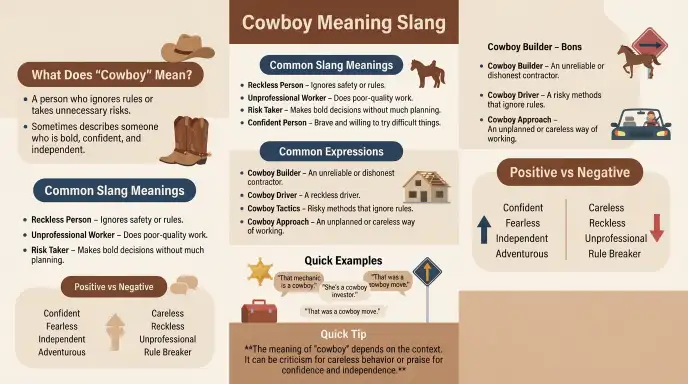
Cowboy is a slang term for someone who behaves in a reckless, careless, or unprofessional way, especially by ignoring rules or safety.
Example
“The builder was a cowboy who rushed the job.”
Positive Meaning
Sometimes cowboy describes a person who is brave, independent, or willing to take risks.
Example
“He’s a bit of a cowboy, but he always finds a solution.”
Where Did the cowboy Slang Meaning Come From?
Original Meaning
A cowboy was originally a person who looked after cattle on ranches, especially in the American West.
Modern Slang Meaning
Over time, people started using cowboy as slang for someone who works without following proper rules, training, or professional standards.
Common Meanings of Cowboy in Slang
Someone Who Ignores Rules
Meaning
A person who refuses to follow accepted methods or instructions.
Example
“He’s a cowboy driver who never follows traffic laws.”
An Unprofessional Worker
Meaning
Someone who does poor quality work or cuts corners.
Example
“Don’t hire that company. They’re complete cowboys.”
A Risk Taker
Meaning
Someone who enjoys taking chances without thinking about the consequences.
Example
“She’s a cowboy investor who buys stocks without research.”
A Confident Person
Meaning
In some situations, cowboy can describe someone who is bold and fearless.
Example
“Our team needs a cowboy who isn’t afraid of difficult decisions.”
Cowboy Double Meaning
The word cowboy can have two meanings. It may describe someone who ignores rules or takes unnecessary risks, or it can describe a confident and independent person.Easy there cowboy meaning is a casual phrase used to tell someone to slow down, calm down, or not take things too far.
Slang for Cowboy in Modern Culture
“Slang for cowboy” refers to informal words used for cowboys or people with a Western style. These terms are often heard in Western movies, music, and casual speech.
Is Cowboy Slang Positive or Negative?
Negative Use
The slang is often negative when describing someone who is careless, irresponsible, or dishonest.
Example
“The mechanic was a cowboy and charged too much.”
Positive Use
Cowboy attitude meaning refers to being confident, independent, and willing to take risks, sometimes without following usual rules or procedures. Some people use cowboy positively to describe confidence, courage, and independence. This is one common example of cowboys meaning slang in modern English.A cowboy job meaning refers to work related to ranching, horses, cattle, or the traditional Western lifestyle.
Example
“He has a cowboy attitude that helps him stay calm under pressure.”
Cowboy Slang in Different Situations
At Work
Cowboy may describe an employee who ignores company rules.
Example
“He fixed the problem his own way like a cowboy.”
In Business
Businesses sometimes use cowboy to describe contractors who deliver poor quality work.
Example
“They warned customers about cowboy builders.”
In Sports
Athletes who play aggressively or take unusual risks may be called cowboys.
Example
“His cowboy style surprised the other team.”
Online
On social media, cowboy may describe someone making bold decisions without enough planning.
Example
“That was a cowboy move.”
Examples of Cowboy Slang in Everyday Conversations
Conversation at Work
Manager: Who changed the project without approval?
Employee: Jake did.
Manager: That was a real cowboy move.
Conversation About Driving
Friend: Did you see that driver?
Friend: Yes, he drives like a cowboy.
Conversation About Home Repairs
Customer: How was the repair service?
Neighbor: I wouldn’t recommend them. They were cowboy builders.
Conversation Online
Person A: He invested all his money in one company.
Person B: That’s a cowboy decision.
Common Phrases That Use Cowboy as Slang
Cowboy Builder
Meaning
A builder who does poor quality work or behaves dishonestly.
Example
“Always check reviews before hiring a cowboy builder.”
Cowboy Driver
Meaning
A driver who ignores traffic rules or drives dangerously.
Example
“The police stopped a cowboy driver on the highway.”
Cowboy Tactics
Meaning
Risky methods that ignore rules or accepted procedures.
Example
“The company was criticized for using cowboy tactics.”
Cowboy Approach
Meaning
Handling a task without proper planning or professional standards.
Example
“We need a proper plan instead of a cowboy approach.”
Similar Slang Words
Maverick
Meaning
Someone who thinks independently and follows their own path.
Example
“She’s known as a maverick in the industry.”
Daredevil
Meaning
A person who enjoys dangerous activities.
Example
“He’s a daredevil who loves extreme sports.”
Loose Cannon
Meaning
Someone whose actions are unpredictable.
Example
“He’s a loose cannon during meetings.”
Rogue
Meaning
Someone who ignores rules or behaves independently.
Example
“He has a rogue style of leadership.”
Risk Taker
Meaning
A person who willingly accepts uncertainty to achieve a goal.
Example
“Successful entrepreneurs are often risk takers.”
When Should You Avoid Using Cowboy?
Formal Writing
The slang term may sound informal in reports, academic writing, or official documents.
Professional Conversations
Calling someone a cowboy at work may sound insulting if used carelessly.
People From Different Cultures
Not everyone understands this slang, so explain the meaning if necessary.
Tips for Understanding Cowboy Slang
Pay Attention to Context
The meaning depends on the situation. It may describe someone who is careless or someone who is confident.
Notice the Speaker’s Tone
A serious tone usually gives the word a negative meaning, while a friendly tone may make it sound humorous or complimentary.
Learn Common Expressions
Phrases like “cowboy builder” and “cowboy driver” are widely used, especially in British English.
Common Mistakes About Cowboy Slang
Thinking It Always Refers to Ranch Workers
Meaning
In everyday conversations, cowboy often has a figurative meaning rather than referring to someone who works with cattle.
Example
“He’s not a real cowboy. People call him a cowboy because he ignores the rules.”
Assuming It Is Always Negative
Meaning
Although cowboy usually has a negative meaning, it can sometimes describe someone who is bold, confident, or independent.
Example
“Her cowboy attitude helped the team solve the problem quickly.”
Using It in Formal Situations
Meaning
The word is informal and is best used in casual conversations.
Example
“It is better to use ‘unprofessional’ instead of ‘cowboy’ in a business report.”
Cowboy Slang in British and American English
British English
In British English, cowboy is often used to describe dishonest or unqualified workers who provide poor quality services.
Example
“People should avoid hiring cowboy builders.”
American English
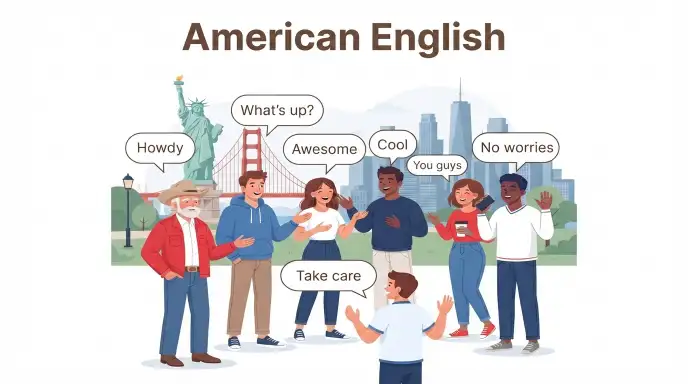
In American English, the slang may describe someone who takes risks or acts independently. It can be negative or positive depending on the context.
Example
“He’s known for his cowboy style of leadership.”
Quick Summary
| Slang Term | Meaning |
| Cowboy | Someone who ignores rules or takes unnecessary risks |
| Cowboy Builder | A dishonest or low quality builder |
| Cowboy Driver | A reckless driver |
| Cowboy Tactics | Risky methods that ignore accepted rules |
| Cowboy Approach | An unplanned or unprofessional way of doing something |
Frequently Asked Questions
What does cowboy mean in slang?
Cowboy is slang for someone who behaves recklessly, ignores rules, or works without proper care. In some situations, it can also describe a bold and confident person.
What does it mean when someone calls you a cowboy?
When someone calls you a cowboy, they usually mean you take risks, ignore rules, or act without following standard procedures. Depending on the tone, it can be criticism for being careless or praise for being confident and independent.
What is cowboy slang for?
As slang, cowboy usually refers to a reckless, unprofessional, or rule breaking person. In some situations, it can also describe someone who is fearless, adventurous, or willing to take bold risks.
What does “cowboy” mean in dating?
In dating, cowboy often describes someone who avoids commitment, enjoys their independence, or moves from one relationship to another without wanting anything serious. The exact meaning depends on the conversation and the speaker.
What is a cowboy in British slang?
In British slang, a cowboy is usually someone who does poor quality work, ignores professional standards, or behaves dishonestly. The term is especially common in phrases like “cowboy builder” or “cowboy contractor.”
Is cowboy slang offensive?
Not always. It can be used jokingly among friends, but it may sound insulting when describing someone’s work or behavior as careless or unprofessional.
What is a cowboy builder?
A cowboy builder is a contractor or tradesperson who provides poor quality work, cuts corners, or behaves dishonestly.
Is cowboy slang used in the UK?
Yes. It is widely used in British English, especially to describe unreliable workers, unsafe practices, or people who ignore professional standards.
Can cowboy have a positive meaning?
Yes. In some contexts, cowboy describes someone who is brave, confident, independent, or willing to take calculated risks.
Cowboy Meaning in Relationship: What Does It Mean?
In a relationship, cowboy can describe someone who avoids commitment, values independence, or does not want anything serious.
Conclusion
The cowboy meaning in slang depends on the context, but it usually describes someone who ignores rules, takes unnecessary risks, or works in an unprofessional way. In British English, it commonly refers to unreliable workers, while in American English it can sometimes have a more positive meaning, describing a bold or independent person. By understanding the context and tone, you can easily recognize if the word is being used as criticism, humor, or even praise in everyday conversations.
Read more about!

Hi, I’m Ethan Carter. I write easy-to-read articles about slang, texting abbreviations, and digital communication. My goal is to make modern English simple and useful for students, professionals, and anyone curious about internet language.