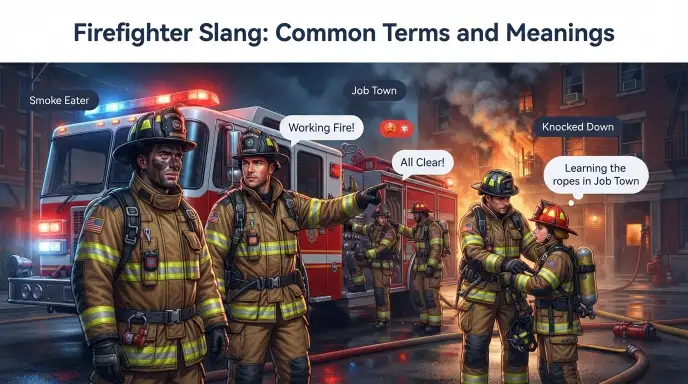
If you’ve ever watched firefighters responding to an emergency or listened to fire department radio traffic, you’ve probably heard words and phrases that sound unfamiliar. Terms like “working fire,” “mayday,” or “smoke eater” are part of firefighter slang a unique way of communicating that helps crews work quickly and efficiently.
Firefighter slang includes informal words, nicknames, and expressions used by professional and volunteer firefighters. Some terms improve communication during emergencies, while others reflect the traditions and culture of the fire service. Understanding these expressions can help you follow conversations, TV shows, podcasts, and social media content related to firefighting.
In this guide, you’ll learn the meaning of common firefighter slang, where it’s used, real life examples, and the difference between slang and official firefighting terminology.
Quick Answer
Firefighter slang refers to the informal words, nicknames, and phrases firefighters use while working and communicating with one another. Common terms include “working fire,” “smoke eater,” “rookie,” “job town,” and “mayday.” Some slang improves communication during emergencies, while other expressions reflect the traditions and teamwork of the firefighting community.
Example
Firefighter 1: “We’ve got a working fire.”
Firefighter 2: “Copy that. Let’s gear up.”
Meaning: The fire is active and requires firefighters to respond immediately.
What Is Firefighter Slang?
Definition of Firefighter Slang
Firefighter slang is a collection of informal words, phrases, and nicknames commonly used by firefighters during training, emergency calls, and everyday conversations. While some expressions are understood across many fire departments, others may vary depending on the country, region, or local department.
Unlike official emergency codes or technical terms, firefighter slang is more conversational and reflects the unique culture of the fire service.
Why Firefighters Use Slang
Firefighters often work in fast paced and dangerous environments where clear communication is essential. Slang helps them communicate quickly while also building teamwork and a shared identity.
Common reasons firefighters use slang include:
- Speeding up communication
- Building trust among crew members
- Describing situations more naturally
- Continuing long standing fire service traditions
Is Firefighter Slang Different from Everyday Slang?
Yes. Everyday slang is used by the general public, while firefighter slang is mainly understood within the firefighting community.
For example, the word “rookie” generally means someone who is new at a job or activity. In a fire department, it specifically refers to a firefighter who has recently joined the service and is still gaining experience.
Common Firefighter Slang Terms
Job Town
Job Town is an informal term for a busy area where firefighters regularly respond to emergency calls. Departments located in these areas often gain more real world experience because of the higher number of incidents.
Example:
“Station 8 is in Job Town they’re always responding to fires.”
Working Fire
A working fire means the fire is active enough to require firefighters to take immediate action. It usually indicates that the incident is more serious than a small fire and that additional resources may be needed.
Example:
“Dispatch confirmed a working fire at the apartment building.”
All Clear
All Clear means firefighters have searched the building or area and determined that no one remains inside or that the immediate danger has passed.
Example:
“The captain announced an all clear after the final room search.”
Rekindle
A rekindle happens when a fire starts burning again after it was believed to be completely extinguished.
Firefighters often monitor fire scenes carefully to prevent rekindles.
Example:
“Crews returned because of a small rekindle in the attic.”
Knocked Down
When firefighters say a fire has been knocked down, they mean the main flames have been controlled. However, crews may still need to extinguish remaining hot spots.
Example:
“The fire is knocked down, but overhaul operations have started.”
RIT (Rapid Intervention Team)
The Rapid Intervention Team (RIT) is a group of firefighters assigned to rescue other firefighters if they become trapped or injured during an emergency.
Although RIT is an official firefighting term, firefighters often mention it casually during operations.
Example:
“RIT is standing by outside the building.”
Mutual Aid
Mutual aid refers to assistance provided by neighbouring fire departments during large emergencies.
Example:
“Three neighbouring departments responded through mutual aid.”
Leather
Leather is a nickname for the traditional leather firefighter helmet, which remains popular in many departments because of its history and distinctive appearance.
Example:
“He proudly wears a leather helmet passed down through generations.”
Rookie
A rookie is a firefighter who has recently completed training or joined a department. Rookies are still learning practical skills under the guidance of experienced firefighters.
Example:
*”The rookie handled his first house fire with confidence.”
Common Firefighter Slang Terms
Salty
A salty firefighter is someone with many years of experience. The term often describes a veteran firefighter who has seen many emergency situations and shares valuable knowledge with younger crew members.
Example:
“Ask the salty firefighter he’s handled hundreds of calls.”
Grab
A grab refers to rescuing someone from a dangerous situation, especially during a fire.
Example:
“The crew made a successful grab from the second floor.”
Mayday
In firefighting, mayday is an emergency distress call used when a firefighter is lost, trapped, injured, or in immediate danger. It signals that firefighter rescue operations must begin at once.
Example:
“The firefighter called a mayday after becoming trapped inside the building.”
The Big One
The Big One is an informal phrase used for a large or especially challenging fire that requires significant resources and coordination.
Example:
“Everyone knew this warehouse fire was the big one.”
Job
Among firefighters, a job often means a fire or emergency call rather than regular daily work.
Example:
“We’ve got another job across town.”
Smoke Eater
Smoke Eater is a traditional nickname for a firefighter. It reflects the demanding work firefighters do while battling smoke and flames.
Example:
“Being a smoke eater takes courage and dedication.”
Buff
A buff is a person who enjoys watching firefighting operations, collecting fire service history, or learning about fire departments. They are not necessarily firefighters themselves.
Example:
“The fire buff photographed the vintage fire engine at the parade.”
Why Firefighters Use Slang?
Faster Communication
During emergencies, every second matters. Short, familiar expressions help firefighters communicate quickly without slowing down operations.
For example, saying “working fire” immediately tells responding crews that the incident is serious.
Teamwork and Camaraderie
Firefighter slang strengthens relationships within the crew. Shared expressions create a sense of trust and belonging among team members who often work in stressful situations together.
Tradition in the Fire Service
Many slang terms have been passed down through generations of firefighters. These expressions help preserve the history and culture of the fire service while connecting experienced firefighters with new recruits.
Firefighter Slang Used on the Job
At the Fire Scene
Firefighters commonly use slang while responding to fires, vehicle accidents, rescue calls, and other emergencies.
You’ll often hear terms such as:
- Working fire
- Knocked down
- All clear
- Mayday
- Rekindle
These expressions help crews communicate efficiently during active incidents.
During Emergency Calls
Firefighters also use slang while travelling to emergencies and speaking over the radio. Although official radio procedures remain important, informal terms often appear during conversations between crew members.
Inside the Fire Station
At the station, slang becomes part of everyday conversation. Firefighters may talk about recent jobs, training exercises, equipment, or experiences using familiar expressions understood by everyone on the crew.
Firefighter Slang in Text Messages and Social Media
Firefighter Slang on TikTok
Many firefighters share training videos, station life, equipment demonstrations, and educational content on TikTok. Captions often include slang terms like “rookie,” “working fire,” or “smoke eater.”
Firefighter Slang on Instagram and Facebook
Fire departments and firefighters use Instagram and Facebook to post photos from community events, training sessions, and fire safety campaigns. Slang is usually kept informal and appropriate for the audience.
Firefighter Slang in Online Communities
Online forums, Reddit communities, and firefighter discussion groups often use slang naturally when discussing equipment, emergency responses, and life in the fire service. New firefighters frequently learn many of these expressions through conversations with experienced members.
Firefighter Slang Examples
At a Fire Scene
Captain: “We’ve got a working fire.”
Firefighter: “Copy. Let’s make entry.”
At the Fire Station
Firefighter 1: “The rookie handled today’s job well.”
Firefighter 2: “He’s learning fast.”
In Casual Conversations
Friend: “How was your shift?”
Firefighter: “Busy we had three jobs before lunch.”
Firefighter Slang vs Firefighter Jargon
What’s the Difference?
Although they’re often confused, slang and jargon are not the same.
| Firefighter Slang | Firefighter Jargon |
| Informal expressions | Official technical terms |
| Used in everyday conversations | Used in training and operations |
| May vary by department | More standardised across departments |
Why the Difference Matters
Understanding the difference helps avoid confusion. Slang builds workplace culture, while jargon ensures accurate communication during emergencies and professional training.
Who Uses Firefighter Slang?
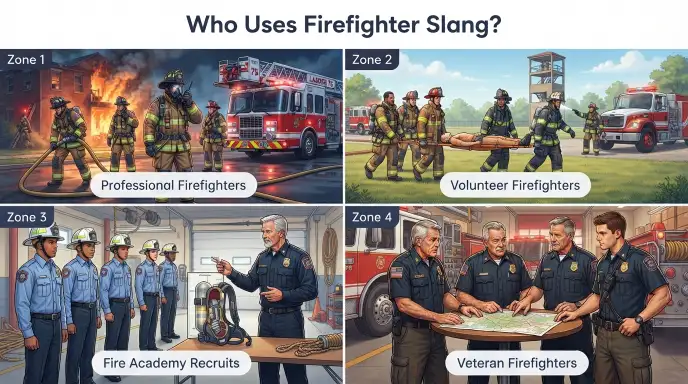
Professional Firefighters
Career firefighters use slang during training, emergency responses, and everyday conversations at the station.
Volunteer Firefighters
Volunteer firefighters also use many of the same slang terms, although some expressions may vary by department.
Fire Academy Recruits
New recruits learn firefighter slang as they gain experience and become familiar with fire service culture.
Can Civilians Use Firefighter Slang?
When It’s Appropriate
It’s fine to use firefighter slang when discussing firefighting, watching training videos, or talking with firefighters in casual conversations.
When to Avoid It
Avoid using firefighter slang during emergencies or pretending to understand terms that could cause confusion.
Is Firefighter Slang Formal or Informal?
Informal Workplace Language
Firefighter slang is informal and mainly used between firefighters.
Professional Communication
Official reports, emergency documentation, and public announcements usually use standard firefighting terminology instead of slang.
Common Misunderstandings About Firefighter Slang
Slang Doesn’t Mean Disrespect
Most firefighter slang is simply part of the profession’s culture and teamwork.
Some Terms Vary by Department
Not every fire department uses the same slang. Meanings can differ depending on the region or organization.
Frequently Asked Questions
What is firefighter slang?
Firefighter slang includes informal words, nicknames, and phrases firefighters use during work and everyday conversations.
What is the slang term for a firefighter?
Common slang terms for a firefighter include Smoke Eater and Jake. These nicknames are widely used in the firefighting community.
What is the Gen Z term for fire?
In Gen Z slang, fire means excellent, exciting, or impressive. For example, “That song is fire.”
What does fireman mean in slang?
Fireman usually refers to a firefighter. Today, firefighter is the preferred and more inclusive term used by most fire departments.
What is a Jake in firefighter slang?
A Jake is slang for a skilled, dependable, and hardworking firefighter who is respected by fellow crew members.
What do firefighters call each other?
Firefighters often call each other brother, sister, Jake, rookie, or smoke eater, depending on the situation and department.
What does “Job Town” mean?
Job Town refers to an area where firefighters frequently respond to emergency calls.
Why are firefighters called smoke eaters?
The nickname Smoke Eater honors firefighters who regularly work in smoky and dangerous conditions.
What does “working fire” mean?
A working fire is an active fire that requires firefighters to respond and take action.
What is a mayday in firefighting?
A mayday is an emergency distress call made when a firefighter is trapped, injured, or in immediate danger.
Is firefighter slang different in every department?
Yes. Some slang terms are widely used, while others vary by region or fire department.
Can anyone use firefighter slang?
Yes, but it’s best used in casual conversations and with an understanding of its meaning.
Final Thoughts
Firefighter slang is an important part of fire service culture. It helps firefighters communicate quickly, strengthens teamwork, and preserves traditions that have been passed down through generations. While some terms are nearly universal, others vary between departments and regions.
if you’re interested in firefighting, preparing for the fire academy, or simply curious about the language firefighters use, learning these slang terms can help you better understand conversations both on and off the job.
Read more about!

Hi, I’m Ethan Carter. I write easy-to-read articles about slang, texting abbreviations, and digital communication. My goal is to make modern English simple and useful for students, professionals, and anyone curious about internet language.