The 1960s was one of the most influential decades for slang in the English language. Music, television, fashion, surfing, and the hippie movement all shaped the way people spoke. Teenagers and young adults created fun, creative expressions that reflected the changing culture of the time. Some of these words disappeared as trends changed, while others are still recognized and used today.
if you’re researching vintage English, writing a story set in the 1960s, or simply curious about classic American slang, learning these expressions can help you better understand the language and culture of the era. In this guide, you’ll discover the meanings of the most popular 60s slang words, learn when people used them, and see real life examples that make each expression easy to understand.
What Are 60s Slang Words?
Quick Answer
60s slang words are informal words and phrases that became popular during the 1960s. They were commonly used by teenagers, surfers, musicians, hippies, and young adults to describe people, music, fashion, emotions, and everyday experiences in a fun and creative way.
Many of these expressions reflected the social and cultural changes of the decade, making them an important part of 1960s history.
Why Did Slang Change So Much in the 1960s?
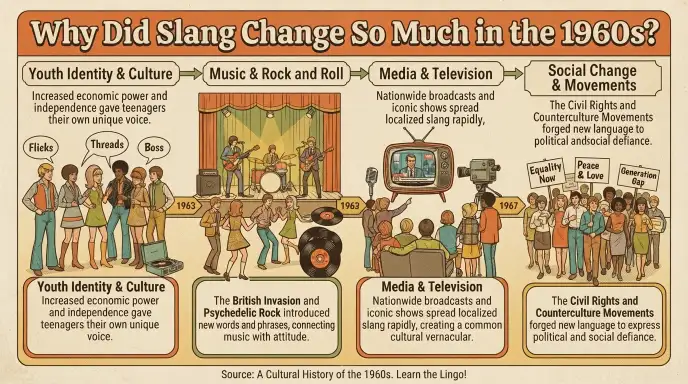
The 1960s was a decade of rapid cultural change. Rock and roll music, the British Invasion, surf culture, television, Hollywood films, and the hippie movement introduced new ideas and trends. Young people wanted a fresh way to express themselves, so they created slang that sounded modern, exciting, and different from previous generations.
Many of these expressions spread across the United States through music, movies, radio, and magazines before becoming recognized around the world.
Popular 60s Slang Words
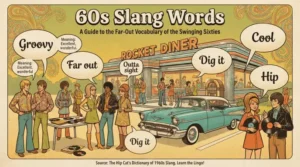
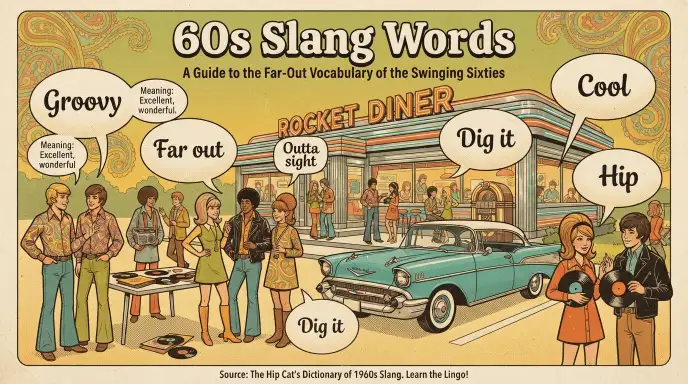
1. Groovy
Meaning
“Groovy” was one of the most famous slang words of the 1960s. It meant something was excellent, fashionable, enjoyable, or very cool.
Tone and Context
People used “groovy” to compliment music, clothes, parties, artwork, or almost anything they liked. It had a positive and relaxed tone and was especially popular among hippies.
Example
“That new album is groovy.”
2. Far Out
Meaning
“Far out” meant something was amazing, exciting, unbelievable, or impressive.
Tone and Context
This phrase expressed surprise and admiration. It was commonly heard in conversations about music, art, and unusual experiences.
Example
“Far out! That guitar solo was incredible.”
3. Dig
Meaning
“Dig” meant to understand, appreciate, or enjoy something.
Tone and Context
People often used it when talking about music, ideas, fashion, or someone’s personality.
Example
“I really dig your new style.”
4. Hip
Meaning
Someone who was “hip” understood modern trends and knew what was fashionable or popular.
Tone and Context
Calling someone “hip” was considered a compliment because it meant they were stylish and well informed.
Example
“She’s one of the hippest people in school.”
5. Cool Cat
Meaning
A “cool cat” was someone who was confident, stylish, calm, and admired by others.
Tone and Context
The phrase came from jazz culture and remained popular throughout the 1960s.
Example
“He’s a cool cat who gets along with everyone.”
6. Boss
Meaning
“Boss” meant excellent, impressive, or outstanding.
Tone and Context
Young people often used it to praise something they liked.
Example
“Those sunglasses look boss.”
7. Threads
Meaning
“Threads” was a slang word for clothes or fashionable outfits.
Tone and Context
It was commonly used when talking about someone’s appearance or new clothing.
Example
“I like your new threads.”
8. Pad
Meaning
“Pad” referred to someone’s home, apartment, or place to hang out.
Tone and Context
Friends often used this word when inviting people over.
Example
“Come over to my pad after school.”
9. Bread
Meaning
“Bread” was a popular slang word for money.
Tone and Context
It was commonly used in casual conversations about earning or spending money.
Example
“I need some more bread before the weekend.”
10. Foxy
Meaning
“Foxy” described someone who was attractive, stylish, or fashionable.
Tone and Context
The word was often used as a compliment.
Example
“She looks foxy in that dress.”
11. Right On
Meaning
“Right on” was a phrase used to show agreement, support, or approval.
Tone and Context
It was especially common among people involved in the peace movement and youth culture.
Example
“Right on! That’s exactly what I was thinking.”
12. Square
Meaning
A “square” was someone who was considered old fashioned, boring, or unwilling to try new ideas.
Tone and Context
The term was usually playful but could also be mildly insulting depending on how it was used.
Example
“Don’t be such a square. Come to the concert with us.”
13. Bummer
Meaning
“Bummer” described something disappointing, frustrating, or unfortunate.
Tone and Context
People used it to react to bad news or unpleasant situations.
Example
“It’s a bummer that the festival was canceled.”
14. Outta Sight
Meaning
“Outta sight” meant fantastic, amazing, or extremely impressive.
Tone and Context
This expression was often used to praise music, performances, or exciting experiences.
Example
“That dance performance was outta sight.”
15. Hang Loose
Meaning
“Hang loose” meant to stay relaxed, calm, and not worry too much.
Tone and Context
The phrase became popular through surf culture and reflected the laid back lifestyle of the 1960s.
Example
“Everything will work out. Just hang loose.
16. Flip Your Wig
Meaning
“Flip your wig” meant to become extremely excited, surprised, or shocked.
Tone and Context
People used this playful expression when reacting to unexpected news or something amazing.
Example
“You’ll flip your wig when you hear who won the contest.”
17. Flower Child
Meaning
A “flower child” was a young person associated with the hippie movement who believed in peace, love, and freedom.
Tone and Context
The phrase was commonly used during the late 1960s and became a symbol of the hippie lifestyle.
Example
“She dressed like a flower child and loved folk music.”
18. Peace
Meaning
“Peace” was used as both a greeting and a way to say goodbye.
Tone and Context
It reflected the peace movement and the values of many young people during the 1960s.
Example
“Peace! I’ll see you tomorrow.”
19. Cop Out
Meaning
“Cop out” meant to avoid responsibility or back out of something.
Tone and Context
It usually had a negative tone because it suggested someone wasn’t doing what they promised.
Example
“Don’t cop out now—we still need your help.”
20. Blast
Meaning
A “blast” meant a lot of fun or a very enjoyable experience.
Tone and Context
People used it when talking about parties, vacations, or exciting events.
Example
“We had a blast at the beach.”
21. Can You Dig It?
Meaning
This phrase meant “Do you understand?” or “Do you agree?”
Tone and Context
It was friendly and often heard in casual conversations.
Example
“We’re leaving early tomorrow. Can you dig it?”
22. Heavy
Meaning
“Heavy” described something emotionally powerful, serious, or deeply meaningful.
Tone and Context
It was often used when talking about important conversations or life changing experiences.
Example
“That movie was really heavy.”
23. Mellow
Meaning
“Mellow” meant calm, peaceful, or relaxed.
Tone and Context
It was commonly used to describe people, music, or moods.
Example
“I like listening to mellow music after work.”
24. Righteous
Meaning
“Righteous” meant excellent, admirable, or morally good.
Tone and Context
It was often used to praise a person, idea, or action.
Example
“That’s a righteous thing to do.”
25. Psyched
Meaning
“Psyched” meant excited or enthusiastic about something.
Tone and Context
People often used it before concerts, trips, or special events.
Example
“I’m psyched for the weekend.”
26. Sock It to Me
Meaning
This phrase meant “Give it your best” or “Show me what you’ve got.”
Tone and Context
It became especially popular through television and music.
Example
“Go ahead sock it to me!”
27. Lay It On Me
Meaning
“Lay it on me” meant “Tell me the truth” or “Give me the information.”
Tone and Context
It was used when someone wanted an honest answer.
Example
“If there’s bad news, just lay it on me.”
28. Gas
Meaning
“Gas” described something that was very funny or highly entertaining.
Tone and Context
People used it when talking about jokes, comedy shows, or amusing situations.
Example
“That comedian was a real gas.”
29. Hang Up
Meaning
A “hang up” was something that caused emotional worry, insecurity, or frustration.
Tone and Context
It often referred to personal fears or problems.
Example
“Don’t let that little mistake become a hang up.”
30. Fink
Meaning
A “fink” was someone who betrayed others or informed on them.
Tone and Context
The word usually had a negative meaning.
Example
“Nobody trusted him after he acted like a fink.”
How 60s Slang Was Used in Everyday Life
During the 1960s, slang was much more than casual vocabulary—it reflected people’s personalities, interests, and lifestyles. Teenagers used these expressions at school, friends used them while hanging out, surfers spoke them at the beach, and musicians helped spread them through popular songs.
Many expressions also appeared in television shows, radio programs, and magazines, allowing them to become part of everyday American English.
Did All 60s Slang Come From Hippies?
No. Although the hippie movement introduced many famous expressions, not all 60s slang came from hippie culture.
Some words originated from:
- Surf culture
- Jazz music
- Rock and roll
- College students
- Television shows
- Urban communities
This mix of influences made the slang of the 1960s rich, creative, and diverse.
Are 60s Slang Words Still Used Today?
Yes, several 60s slang words are still used today, although some are more common than others. Words like “cool,” “dig,” “bummer,” “blast,” “mellow,” and “peace” have remained part of everyday English. Others, such as “groovy,” “far out,” and “outta sight,” are now mostly used humorously or to give conversations a vintage feel.
You may also hear classic 1960s slang in old movies, TV shows, documentaries, songs, and books set during that era.
How 60s Slang Influenced Modern English
The slang of the 1960s had a lasting impact on modern English. Many expressions introduced during that decade inspired later generations of slang and helped shape the casual language people use today.
Words like “cool” became even more popular, while expressions such as “dig” and “peace” continue to appear in everyday conversations. Even when older slang isn’t used regularly, many people still recognize these phrases because they remain part of American pop culture.
Tips for Using 60s Slang Today
If you want to use 60s slang naturally, it’s important to understand the context.
Use It in Casual Conversations
These expressions work best when talking with friends, discussing classic music, or referencing the 1960s.
Know the Meaning First
Some words have changed over time, while others are rarely used today. Learning the original meaning helps you avoid using them incorrectly.
Don’t Overuse Vintage Slang
Using one or two classic expressions can sound fun and nostalgic. Using too many in one conversation may sound unnatural unless you’re intentionally speaking in a 1960s style.
Common Mistakes About 60s Slang
Thinking Every Slang Word Came From Hippies
While the hippie movement popularized many expressions, other slang words came from surf culture, jazz, rock music, television, and everyday youth culture.
Assuming People Still Speak This Way
Most 1960s slang is no longer part of everyday conversation. Although many people recognize these expressions, modern slang has replaced many of them.
Using Old Slang in Formal Writing
Like modern slang, 60s slang is informal. It’s not suitable for business emails, academic papers, or professional documents.
Frequently Asked Questions
What are 60s slang words?
60s slang words are informal expressions that became popular during the 1960s. They were commonly used by teenagers, musicians, surfers, hippies, and young adults.
What was the most popular slang word in the 1960s?
“Groovy” is widely considered one of the most iconic slang words of the 1960s. Other popular expressions included “far out,” “dig,” “right on,” and “peace.”
What did “groovy” mean in the 1960s?
“Groovy” meant something was excellent, fashionable, enjoyable, or very cool. It was one of the defining expressions of the decade.
What does “far out” mean?
“Far out” was used to describe something amazing, surprising, or impressive. It expressed excitement and admiration.
What did “dig” mean in 60s slang?
“Dig” meant to understand, appreciate, or enjoy something.
For example:
“I really dig that song.”
Is 60s slang still used today?
Some expressions, such as “cool,” “bummer,” “blast,” and “peace,” are still used today. Others, like “groovy” and “outta sight,” are mostly heard in retro themed conversations or entertainment.
Why did the 1960s have so much slang?
The 1960s was a time of major cultural change. Music, television, surf culture, fashion, the civil rights movement, and the hippie movement all influenced the language people used.
Can I use 60s slang today?
Yes. Many classic expressions are still understood and can add a fun, nostalgic touch to casual conversations. Just remember that some words may sound old fashioned to younger audiences.
Final Thoughts
The 1960s was a defining decade for English slang, introducing memorable expressions that reflected a generation’s creativity, optimism, and changing culture. From timeless favorites like “groovy,” “dig,” and “right on” to lesser known phrases such as “flip your wig” and “outta sight,” these words offer a fascinating look at how people communicated during one of history’s most influential eras.
if you’re exploring vintage language, writing historical fiction, or simply expanding your vocabulary, learning 60s slang words helps you better understand the music, fashion, and social movements that shaped the decade. Many of these expressions continue to influence modern English, proving that great slang can stand the test of time.
Discover more slang!

Hi, I’m Liam Carter, a slang language enthusiast and content writer. I research internet slang, social media terms, texting abbreviations, and online expressions to help readers understand modern English. I enjoy breaking down trending slang into simple, easy-to-read explanations with real-world examples, making online communication clearer and more enjoyable.